Kyiv Prepares for Independence Day While Ukrainian Drones Target Russian E-Commerce Giants
Usagevpn.com – The weekend before Ukraine’s Independence Day celebrations brought a convergence of diplomacy and drone warfare to the capital and beyond. Western heads of state and senior lawmakers descended on Kyiv in the run-up to Monday’s national holiday, even as Ukrainian strike aircraft and unmanned systems pressed a new phase of their campaign against Russian online retail infrastructure.
Diplomatic Arrivals Ahead of the National Holiday
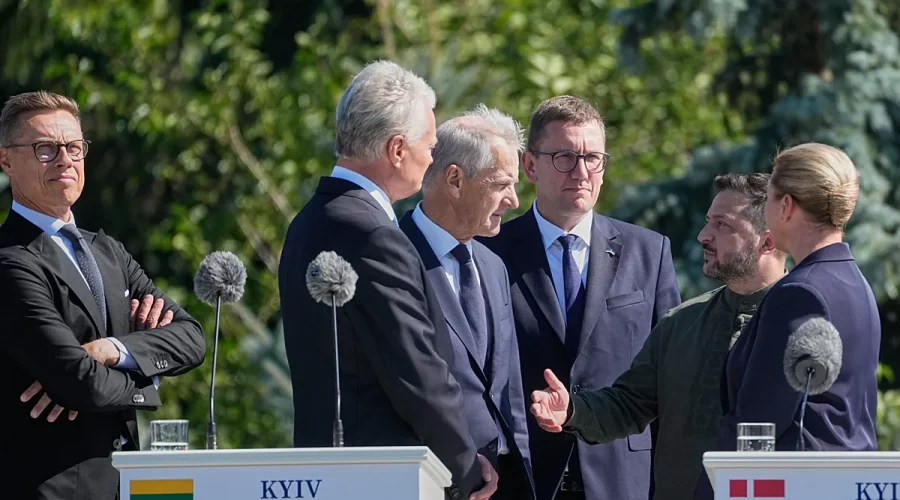
Ukrainian President Volodymyr Zelenskyy hosted a series of high-level meetings on Sunday in the capital. Finnish President Alexander Stubb was in town for a roundtable focused on joint defence cooperation between the two nations. Zelenskyy also received US Senators Richard Blumenthal and James Lankford, briefing them on the persistent ballistic missile threat emanating from Russia and the urgent requirement for upgraded air-defence systems.
European Council President António Costa was expected to join the delegation of international guests, alongside Luxembourg Prime Minister Luc Frieden. The clustering of visits underscores how tightly Western political support remains bound to Ukraine’s sovereignty milestones, even as the war enters its fourth year.
Zelenskyy Rejects Wartime Election Proposal
In a separate development, the Ukrainian president publicly dismissed a surprise telephone call from former Defence Minister Mykhailo Fedorov, who had proposed holding a presidential election during the ongoing conflict. Zelenskyy’s response was blunt and left little room for interpretation.
“I believe that in a war like this, elections as such are a huge risk. Elections right now are a tsunami for the country that will split Ukraine,” Zelenskyy told reporters in a media briefing.
“If we want to destroy the country, then we can move in the direction of elections during these times of war,” he added.
The remark landed against a backdrop of domestic political tension. Zelenskyy had dismissed the widely popular Fedorov earlier in the year, a move that triggered street protests in Kyiv and a brief constitutional crisis over the limits of wartime executive authority. The president’s refusal to entertain a mid-war vote reinforces the argument that Ukraine’s political calendar will remain frozen until a durable ceasefire or negotiated settlement is reached.
Drone Strikes on Ozon Extend the Wildberries Campaign
On the military front, Ukrainian forces expanded their targeting of Russian e-commerce logistics. Following weeks of sustained strikes against Wildberries warehouses, attention shifted to Ozon, Russia’s second-largest online marketplace. Ukrainian units hit an Ozon logistics site in Orenburg on Sunday, marking the second strike on the company within a single weekend.
Orenburg Mayor Albert Yumadilov confirmed the incident in a Telegram post, describing the scene at a special economic zone housing industrial facilities.
“Several UAVs were shot down over the special economic zone, where our industrial facilities are located. Fortunately, no one was injured,” Yumadilov wrote.
“Debris fell onto the grounds of the Ozon logistics complex, causing a fire which was quickly extinguished by staff from the Ministry of Emergency Situations,” he added.
The previous day, Saturday, saw a Ukrainian strike on an Ozon logistics hub in Samara region. The company confirmed the hit and described a rapid internal response.
“We evacuated more than 500 employees within minutes,” Ozon stated, noting an unspecified number of injuries and that “warehouse operations have been suspended indefinitely.”
The Ukrainian Ministry of Defence framed the Ozon strikes as a deliberate escalation of its broader strategy against Russian commercial logistics. The ministry explained that Ozon warehouses hold “dual-use goods” — items usable both in civilian trade and military supply chains.
“After Ukrainian units hit 15 of Wildberries’ largest logistics hubs, it’s now Ozon’s turn,” the ministry posted on social media.
“Systematic strikes on storage centers holding dual-use goods are disrupting the enemy’s logistics and negatively impacting Russia’s economy as a whole,” it continued.
The Wildberries campaign, which has run for several weeks, was launched in response to Russian strikes on Ukrainian courier and logistics firms such as Nova Poshta. Zelenskyy has described Wildberries as involved in “the supply of military goods” and called it “big money for Russia,” claiming that strikes on its warehouses have already produced billions of dollars in losses. Founded in 2004 by billionaire Tatyana Kim, Wildberries has grown into Russia’s largest online marketplace, making it both a commercial and a strategic target.
Russian Strikes Hit Ukrainian Railways
While Ukraine celebrated its National Flag Day on Sunday, Russian forces carried out multiple attacks on the country’s railway network. At Lymanivka station in Kharkiv region, northeastern Ukraine, a train was struck, killing one person and wounding four others, per Infrastructure Minister Mykola Kalashnyk.
“Due to the threat of a drone strike, the train was stopped in good time and the passengers were evacuated. Most people, along with the train crew, were at a safe distance from the railway infrastructure; however, some remained near the train,” Kalashnyk wrote on Telegram.
In southern Ukraine, a Shahed-type attack drone struck a passenger train travelling from Zhytomyr to Odesa in the Odesa region. Oleksandr Pertsovskyi, head of the state-run Ukrainian Railways operator, said the incident was contained before casualties occurred.
“The Ukrainian Railways monitoring team issued an evacuation order in good time, and the train was brought to an emergency halt on the track – thus, everyone is safe: the passengers, the train crew and the locomotive crew,” Pertsovskyi stated.
The repeated targeting of rail corridors reflects Moscow’s attempt to degrade Ukraine’s internal transport capacity, a lifeline for both civilian commerce and military resupply. For Kyiv, the parallel reality of welcoming foreign leaders while defending its rail lines and striking commercial targets deep in Russian territory encapsulates the compressed tempo of a war that now blends diplomacy, economic warfare, and conventional combat into a single operational tempo.
Related Reading
Frequently Asked Questions
What is Western leaders arrive in Kyiv as Ukrainian?
Western leaders arrive in Kyiv as Ukrainian is the main topic of this guide. The article explains the context, practical details, and next steps readers should understand.
Why does Western leaders arrive in Kyiv as Ukrainian matter?
Western leaders arrive in Kyiv as Ukrainian matters because readers are looking for a useful answer, not just a short summary. Good content should match search intent and help them decide what to do next.