The Alps are drying out: EU-funded project assesses the future of Europe’s “water tower”
The Alps are drying out – In the shadow of rising global temperatures, Europe’s mountainous regions face an urgent challenge. The Intergovernmental Panel on Climate Change (IPCC) reports that Alpine glaciers are retreating at an accelerated pace, posing a significant threat to the water supply of both mountain communities and millions of downstream residents. This critical issue has prompted the launch of the Waterwise project, an EU-funded initiative designed to evaluate the future of Europe’s “water tower”—a vital natural reservoir that sustains ecosystems and human populations across multiple countries.
Climate Change Accelerates Alpine Glacial Loss
Recent studies indicate that the Alps are warming approximately twice as rapidly as the global average. This rapid temperature rise has triggered widespread glacial melting, which not only reduces the volume of freshwater stored in these glaciers but also alters the flow patterns of rivers and streams. The consequences are far-reaching, affecting agriculture, energy production, and the delicate balance of alpine habitats. Scientists warn that without proactive measures, these changes could lead to long-term water shortages, threatening both natural environments and human livelihoods.
At the forefront of this research is the Contamines-Montjoie Nature Reserve, located near the French side of Mont Blanc. This site serves as one of the project’s pilot locations, where researchers are gathering data to model how alpine water systems will evolve under various climate scenarios. The reserve’s unique position as a transnational area highlights the importance of collaborative efforts to address the challenges facing the region. Its role in the Waterwise initiative underscores the need for shared knowledge and resources to combat the effects of climate change on water resources.
Smart Technologies and Community Collaboration
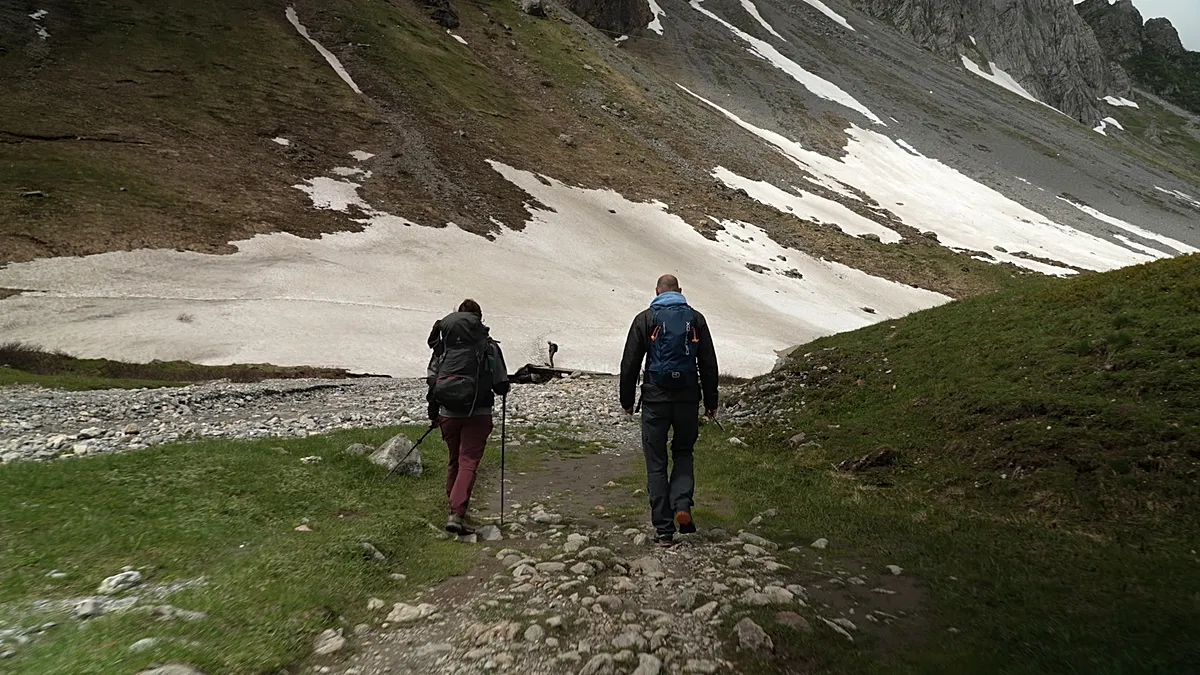
Geoffrey Garcel, the reserve’s warden, emphasizes the necessity of understanding local conditions to develop effective conservation strategies. “We only protect what we know,” he explains, while hiking to Plan Jovet, a remote area where two lakes now occupy the space once held by a vanished glacier. This site exemplifies the difficulties of monitoring water resources in hard-to-reach headwater catchments, where traditional data collection methods are often limited. To overcome these challenges, the Waterwise project employs innovative technologies such as “smart rocks”—lightweight sensors strategically placed in watercourses to track essential metrics like flow rate, temperature, and quality.
“We only protect what we know. This project aims to increase knowledge, and therefore increase protection,” says Geoffrey Garcel, the reserve’s warden, who hiked up to the Plan Jovet, where two lakes sit near a vanished glacier.
These smart rocks, combined with field surveys, are expected to fill critical data gaps and provide a comprehensive picture of alpine water dynamics. By integrating this information with socio-economic factors such as farming practices, energy production, and tourism activities, the project aims to create a holistic framework for water management. For instance, the Contamines-Montjoie Reserve is traversed annually by thousands of hikers on the Tour du Mont Blanc, highlighting its role as a cultural and ecological hub. During summer months, mountain streams host grazing herds, while nearby power plants rely on the same water sources for energy generation. This interconnectedness underscores the need for adaptive strategies that balance human needs with environmental preservation.
Building Resilience Through Data-Driven Solutions
The data collected by the Waterwise project will be instrumental in developing a digital toolbox—a platform accessible to decision-makers and stakeholders from alpine regions. This tool is designed to facilitate discussions on adaptation measures, enabling communities to collaboratively address water scarcity and ecological degradation. By synthesizing scientific findings with local insights, the initiative seeks to empower stakeholders with the knowledge required to implement resilient strategies.
One of the project’s core objectives is to bridge the gap between researchers and local populations. This partnership is essential for creating sustainable water strategies that reflect the realities of both scientific analysis and community experience. As the Alps continue to dry, the collaboration between scientists and residents becomes increasingly vital. By involving those directly affected, the Waterwise project ensures that the solutions proposed are practical and culturally relevant.
With a total budget of €2.69 million, the Waterwise project is co-funded by the European Regional Development Fund (ERDF), which contributes €1.61 million. This financial support allows for the involvement of 12 partners from France, Germany, Switzerland, Austria, and Slovenia, each bringing unique expertise and perspectives to the initiative. The collective effort of these partners aims to create a unified approach to water management, recognizing the shared challenges and opportunities faced by the Alpine region.
The Waterwise project is not only about understanding the current state of water resources but also about forecasting future changes. By modeling different climate scenarios, researchers can identify potential risks and develop strategies to mitigate them. This forward-looking approach is crucial for ensuring that the Alpine region remains a reliable source of water for generations to come. As the project progresses, it will serve as a blueprint for other regions facing similar challenges, emphasizing the importance of data-driven decision-making in the face of climate change.