Spain Ratifies Gibraltar Deal But Insists on Sovereignty
A New Chapter for Cross-Border Relations
Spain ratifies Gibraltar deal but insists that its sovereignty claims remain unchanged following a landmark agreement. During a formal ceremony in Brussels on Tuesday, Foreign Minister José Manuel Albares announced the ratification of a comprehensive accord concerning Gibraltar’s post-Brexit status. This diplomatic milestone follows the signing of a pivotal EU-UK framework designed to clarify the territory’s relationship with both Britain and the European Union. Despite embracing this new chapter, Albares emphasized that Madrid’s fundamental position regarding territorial sovereignty remains completely intact.
The Spanish diplomat articulated his government’s stance with clarity, stating that the country “is not changing a single comma” within its longstanding assertion of sovereignty over the disputed peninsula. This declaration came immediately after the official signing of the EU-UK framework, which seeks to establish clear guidelines for Gibraltar’s relationship with both Britain and the European Union moving forward. Albares pointed specifically to Article 2 of the document, noting that it explicitly confirms Spain’s continued sovereignty claims without any modification to its traditional position.
The Demolition of the Verja: Symbol of a New Era
One of the most visible changes resulting from this agreement will occur as early as Wednesday, when the final section of the border fence known as the Verja will be removed. Albares characterized this structure as “the last frontier in continental Europe,” highlighting its symbolic importance beyond mere physical separation. The dismantling of this barrier represents more than just infrastructure improvement; it signifies a broader commitment to open cooperation between Gibraltar and the surrounding Spanish regions.
The foreign minister explained that the newly ratified agreement accomplishes two critical objectives simultaneously. First, it protects Spain’s sovereignty claims regarding what locals affectionately call “the Rock.” Second, it creates substantial opportunities for enhanced cooperation in everyday matters of coexistence between the British overseas territory and Spanish communities. Albares described this dual achievement as “a spectacular leap into the future” for regional relations.
Key Participants and Treaty Signatories
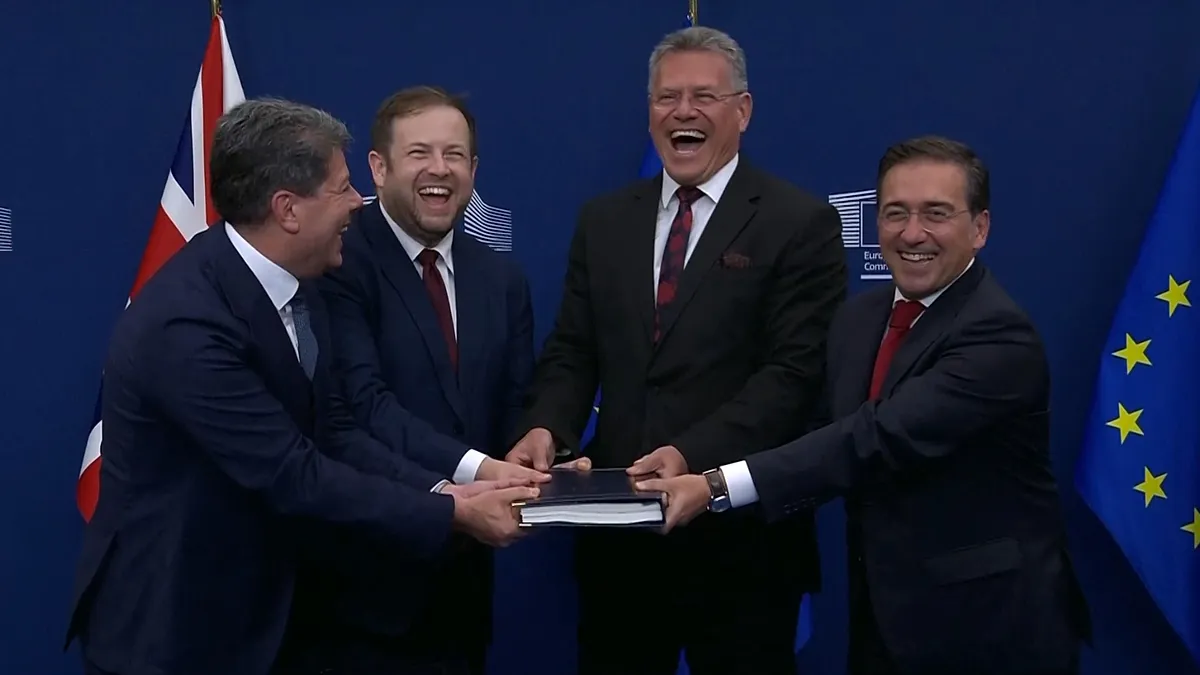
The formal signing ceremony brought together several prominent political figures from across Europe. European Commissioner for Trade Maros Sefcovic represented the EU, while Stephen Doughty, the UK Minister of State for Europe, signed on behalf of Britain. Both Albares and Fabian Picardo, Gibraltar’s Chief Minister, participated in the proceedings, demonstrating the collaborative spirit that underpins the agreement.
According to Albares, this diplomatic achievement “opens a new era” in relations between Gibraltar and the Campo de Gibraltar region. The treaty effectively concludes the Brexit chapter for this territory, marking a definitive resolution six years after the United Kingdom’s formal departure from the twenty-seven member bloc. The framework establishes new protocols for how Gibraltar will manage its relationship with the European Union going forward.
Practical Benefits and Future Prospects
The Spanish diplomat outlined several concrete advantages that the agreement brings to the region. The new framework guarantees freedom of movement for both individuals and commercial goods across the border. It also addresses historical problems in critical areas such as taxation policies and environmental regulations, preventing what Albares termed “distortions of the past.” Additionally, the treaty provides “new connectivity for the Campo de Gibraltar,” which is expected to boost economic development in the Spanish side of the border.
Albares presented the deal as a significant turning point after more than three hundred years of disputes and mutual mistrust surrounding Gibraltar. He remarked that the communities are transitioning from a period “marked by mistrust and confrontation” toward “a future full of opportunities.” The metaphor of neighbors who once lived back-to-back now moving forward together captures the spirit of reconciliation embedded in the agreement.
Addressing Domestic Criticism
When questioned about negative reactions from representatives of the opposition Popular Party and Vox, Albares responded with confidence. He suggested that “even if they do not realise it, they too have won” from the agreement. The foreign minister emphasized that the treaty primarily benefits the approximately 300,000 Andalusians residing in the Campo de Gibraltar region, protecting their interests and securing their future prosperity.
Albares concluded by reiterating that cooperation and investment in the region will strengthen ties between Spain and Gibraltar for generations to come. The agreement represents not just a resolution of past conflicts, but a foundation for future growth and mutual understanding between the two communities.