EU Finance Ministers Unite Behind Proposal to Tax Oil Windfall Profits
Usagevpn.com – As Middle East conflict continues to send energy prices spiralling upward, a coalition of six European governments has moved to pressure the bloc into levying a special tax on the extraordinary profits flowing to oil majors. The initiative, conveyed through a joint letter addressed to the country currently holding the rotating EU presidency, signals a rare moment of cross-border alignment on a politically charged fiscal question: whether the public should recapture a share of windfall gains generated by wartime supply disruptions.
A Coordinated Push Ahead of the Dublin Summit
The letter was signed by the finance ministers of Germany, Italy, Austria, Poland, and Portugal, together with Spain’s economy minister. It was directed at Ireland’s finance minister, whose nation occupies the temporary EU presidency and therefore controls the agenda-setting process for upcoming council meetings. The signatories asked that a windfall levy be formally placed on the agenda for next month’s gathering of EU finance chiefs in Dublin.
The rationale laid out in the document is straightforward. Refined-product margins, the ministers argued, have climbed well beyond what crude price increases alone would justify, meaning that downstream processors and marketers are capturing outsized returns on top of the commodity spike.
“Oil companies are enjoying overall profitability and margins on refined products that exceed the rise in crude oil prices,” the letter stated. “We are experiencing one of the biggest supply shocks in decades, and all over the world, there is growing discontent about the rise in the cost of living.”
The signatories went further, calling for structured debate on an “EU-wide framework to tax windfall profits.” They urged Brussels to draw on institutional memory from a prior episode: the temporary energy windfall levy introduced in 2022 in the immediate aftermath of Russia’s full-scale invasion of Ukraine, which temporarily siphoned excess profits from fossil-fuel producers to help cushion household energy bills across member states.
Why the Strait of Hormuz Matters
The backdrop to this fiscal push is a severe disruption to one of the world’s most critical energy chokepoints. Since the United States and Israel launched military operations against Iran in February, shipping through the Strait of Hormuz — the narrow waterway through which roughly a fifth of global oil consumption transits daily — has been badly impaired. Tanker traffic has been rerouted, insurance premiums have surged, and delivery schedules have slipped by weeks. The result has been a sharp, sustained jump in crude and refined-product prices that has translated directly into higher pump prices, heating costs, and industrial input costs across Europe.
Energy giants have posted record quarterly earnings in the wake of these disruptions. For households already stretched by years of post-pandemic inflation, the sight of oil-company profit lines climbing while fuel bills rise has fueled public anger and given political cover to ministers seeking a redistributive response.
Germany’s Internal Fault Line
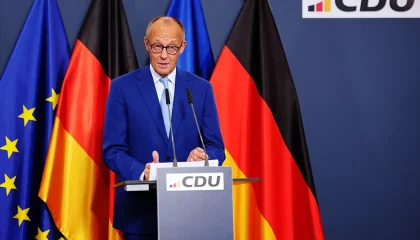
Not every government backing the letter is internally unified. In Germany, Finance Minister Lars Klingbeil of the centre-left Social Democratic Party (SPD) has repeatedly argued that energy firms must not exploit consumers during the current turmoil. A ministry source attached to the campaign emphasised that “excessive crisis profits must be returned to consumers.” Yet Chancellor Friedrich Merz’s centre-right Christian Democratic Union (CDU) opposes the measure, viewing any new levy as a distortion of market signals and a disincentive to investment in refining capacity.
This intra-coalition split mirrors tensions in other member states, where centre-right parties have historically resisted what they frame as punitive taxation of private capital. Several of the signatory nations had, however, already advocated for some form of oil-profit tax earlier this year, suggesting the current letter represents a consolidation of positions that were previously fragmented.
What Happens Next
Despite the diplomatic pressure now building, the European Commission and the Council have not yet signalled any concrete plan to introduce a new levy on oil firms. The Dublin meeting next month will be the first formal test of whether the six-nation push gains traction among the remaining member states or stalls in committee. Ireland, as presidency holder, will decide whether to table the item, and any proposal would ultimately require qualified-majority approval in the Council of Ministers.
For consumers watching fuel prices at the pump or heating bills in their inbox, the question is no longer whether windfall profits exist — the data confirm they do — but whether European governments possess the political will to claw back a portion of them before the next supply shock resets the baseline. The 2022 precedent showed that a temporary levy is administratively feasible within the existing EU tax architecture. What remains uncertain is whether the current configuration of governments, party politics, and corporate lobbying will allow that precedent to be invoked once again.
Related Reading
Frequently Asked Questions
What is Six EU countries push for windfall?
Six EU countries push for windfall is the main topic of this guide. The article explains the context, practical details, and next steps readers should understand.
Why does Six EU countries push for windfall matter?
Six EU countries push for windfall matters because readers are looking for a useful answer, not just a short summary. Good content should match search intent and help them decide what to do next.