Glucksmann Throws His Hat Into France’s Chaotic 2027 Presidential Race
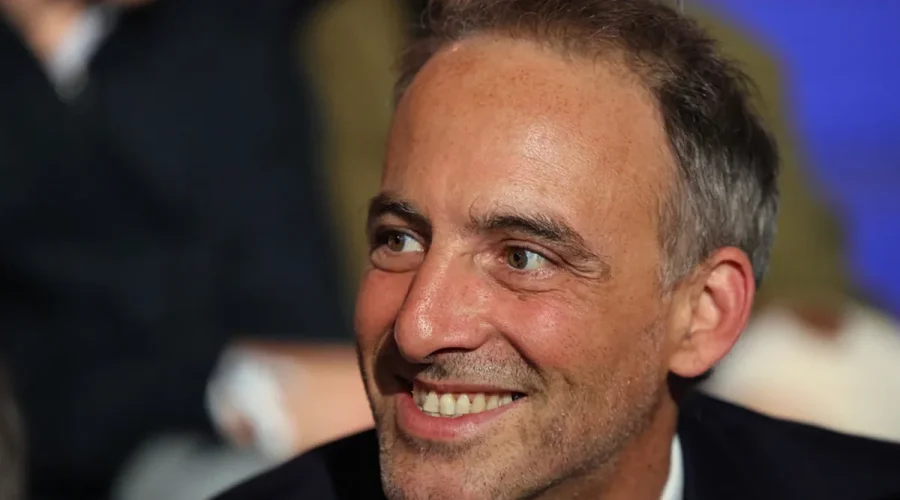
Usagevpn.com – The already saturated field of candidates vying for the Élysée in 2027 received another entrant on Sunday evening, when Raphaël Glucksmann formally declared his intention to contest next year’s presidential election. The 46-year-old former essayist, television commentator, and sitting member of the European Parliament made his bid official during a prime-time interview broadcast on TF1, the country’s most-watched commercial channel. His entry deepens what has become one of the most fragmented presidential contests in recent French history, with more than twenty-five candidacies already declared or claimed as of June 2026, according to a tally published by Le Nouvel Obs.
A “Patriotic Contract” and a Three-Month Countdown
Glucksmann’s decision was, in a sense, foreshadowed. Back on 26 May, he had told the same TF1 audience that he was granting himself a three-month window to travel across France, articulate what he called a new patriotic contract, and reassemble what he described as his political family ahead of the vote. That period of groundwork has now concluded, and the formal declaration follows.
“To criss-cross the country,” “to propose a new patriotic contract,” and “to reunite his political family” were the three imperatives he set himself in May.
As the figurehead of Place publique, a centre-left party that has grown out of the broader social-democratic tradition, Glucksmann positions himself as a reformist voice distinct from the older Socialist Party establishment. Opinion polls currently place him in the 10-to-12-per-cent range of voting intentions — a respectable showing, though analysts broadly agree it falls short of the threshold needed to reach the second-round runoff. His strongest electoral credential remains the 13.8 per cent he secured in the most recent European elections, where he led a joint PS–Place publique list that made him the most visible figure on the left flank.
The Salamé Question: A Journalist Steps Aside
The announcement carries an immediate and highly visible consequence beyond the ballot box. Léa Salamé, Glucksmann’s partner and a prominent anchor on public broadcaster France 2, is expected to announce that she will step back from her presenting role to eliminate any perception of conflict of interest during the campaign. Salamé, who was born in Beirut and is also 46, has anchored the flagship evening news bulletin since 2025. She had already signalled in February that she would relinquish the chair if her partner sought the presidency.
“I am an independent and honest journalist, a free woman,” she stated in February, while conceding that questions about their intertwined personal and professional lives were “legitimate.”
Her replacement at the desk is expected to be Jean-Baptiste Marteau, the stand-in who has occupied the anchor chair throughout the summer. Salamé was originally scheduled to return to the broadcast on Monday before the announcement reshuffled her plans.
A Field of Over Two Dozen Contenders
Glucksmann’s entry lands amid extraordinary competition. President Emmanuel Macron, barred by constitutional term limits after two stints in the Élysée, cannot run again, leaving his centrist camp to field multiple aspirants. On the far right, Marine Le Pen views 2027 as her best opportunity yet to finally capture the presidency after three previous defeats. On the radical left, Jean-Luc Mélenchon is contesting for a fourth time. Marine Tondelier, head of the Greens, is campaigning in a joint primary even while pregnant. Former Green minister Delphine Batho has declared her candidacy, framing it as a defence against what she terms a “rikikisation” and a “disappearance” of environmental politics from the mainstream debate. Within the Socialist Party, first secretary Olivier Faure is weighing a run, and former president François Hollande has not entirely ruled out re-entering the race.
The October Primary: Closed Doors, Narrow Electorate
To prevent the left vote from splintering beyond recovery, the Socialist Party and Place publique have agreed in principle to hold a joint primary in October, selecting a single candidate for the presidential contest. The precise mechanics of that selection are still being negotiated and are slated for approval by the governing bodies of both parties next Tuesday. The question of openness proved contentious: rank-and-file Socialists consulted in early July rejected the open primary favoured by Faure, instead endorsing a “closed primary” restricted to members of the PS, Place publique, or a broader “social-democratic pole.” That narrower electorate is widely understood to tilt the odds in Glucksmann’s favour.
Despite his more centrist and reformist register compared with the PS, Glucksmann has a pragmatic need to remain embedded in the Socialist Party’s electoral infrastructure. Place publique, though growing, lacks the deep local organisation and voter-contact machinery that a national campaign demands. The historic party’s networks remain, for now, indispensable.
Background: From Beirut to Brussels to Tbilisi
Glucksmann’s intellectual lineage is unmistakable: he is the son of the late philosopher André Glucksmann, a towering figure in post-war French thought. Between 2009 and 2013, while still a young idealist with, as one contemporary description put it, unruly hair, he served as an adviser to Mikheil Saakashvili, the staunchly pro-Western former president of Georgia. Saakashvili, a determined opponent of Moscow following the 2008 war between the two states, remains imprisoned in his home country.
That Georgian interlude cemented Glucksmann’s identity as a fervent Europeanist and a hard-line critic of Vladimir Putin’s Russia. He has been a vocal supporter of Ukraine throughout its war of resistance against the Russian invasion and a consistent opponent of the far right. Among younger voters, his popularity has reached the point where commentators speak of a “Glucksmania” — a phenomenon that explains his polling numbers even as they fall short of a runoff berth.
The coming months will test whether that youthful enthusiasm can be converted into organisational discipline. The October primary, the closed electorate, and the sheer density of the candidate field all suggest that Glucksmann’s path to the Élysée will be narrow, contested, and ultimately dependent on whether the left can agree on a single voice before the first-round ballot.
Related Reading
Frequently Asked Questions
What is French 2027 presidential election?
French 2027 presidential election is the main topic of this guide. The article explains the context, practical details, and next steps readers should understand.
Why does French 2027 presidential election matter?
French 2027 presidential election matters because readers are looking for a useful answer, not just a short summary. Good content should match search intent and help them decide what to do next.