Polish Olympic Committee President Detained in Widening Crypto Corruption Probe
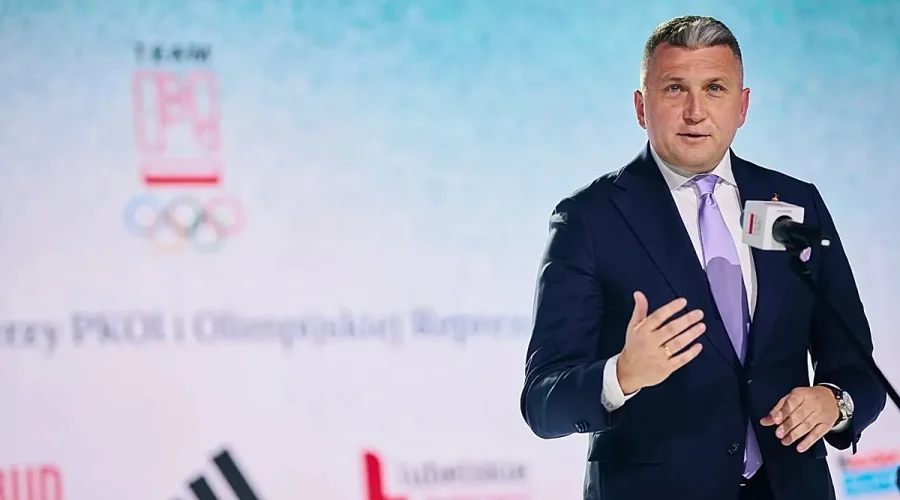
Usagevpn.com – Poland’s sports establishment was thrown into turmoil on Thursday when police moved to arrest Radosław Piesiewicz, the president of the Polish Olympic Committee, on suspicion that he accepted bribes from a cryptocurrency trader in exchange for favourable sponsorship arrangements. The detention, confirmed publicly by Sports Minister Jakub Rudnicki, marks the most senior figure yet pulled into a sprawling graft investigation that has already swept up former ministers and raised questions about foreign intelligence entanglements.
Piesiewicz, long regarded as a figure aligned with Poland’s nationalist right, faces allegations that he received kickbacks from Zondacrypto, a digital-asset fund the government now characterises as having ties to nationalist opposition circles, organised crime networks, and Russian intelligence services. The fund has ceased trading, and its collapse has left an estimated 30,000 investors out of pocket.
Official Reactions
Minister Rudnicki confirmed the arrest in a post on the social platform X, delivering a pointed rebuke alongside the announcement.
“Radosław Piesiewicz has been arrested. Such a person should never have been president of the Polish Olympic Committee… Piesiewicz has discredited Polish Olympics.”
Interior Minister Marcin Kierwinski went further, branding Piesiewicz a “symbol of the extreme corruption plaguing the Olympic movement.” Kierwinski added that Piesiewicz’s elevation to the committee’s top post had been underwritten by the previous government, which was led by the nationalist Law and Justice (PiS) party. The implication is that the appointment itself was part of a patronage arrangement rather than a merit-based selection.
The Zondacrypto Scheme
Zondacrypto was founded in 2014 by Sylwester Suszek, who vanished in 2022 under circumstances that remain officially unresolved. Following Suszek’s disappearance, Przemysław Kral assumed the role of company head. The government’s current estimate puts investor losses at roughly 350 million zlotys (approximately €80 million), and Kierwinski has described the operation as “in reality a Ponzi scheme” — a structure in which returns to earlier participants are funded by inflows from newer investors rather than by genuine trading profits.
The fund’s sudden halt to trading left thousands of retail investors unable to withdraw their capital. Prime Minister Donald Tusk, who has positioned himself as a political opponent of President Karol Nawrocki, told parliament that Suszek had “disappeared” and was “very probably” dead. Tusk further asserted that the Zondacrypto affair involved money linked to what he called the “Russian mafia,” a claim that has intensified scrutiny of the fund’s cross-border financial flows.
The Sponsorship Deal and Its Failures
Authorities opened their formal investigation into Piesiewicz in April. The probe prompted the majority of Poland’s national sports federations to demand his resignation, arguing that he bore personal responsibility for signing a sponsorship agreement between the Olympic Committee and Zondacrypto. Under that arrangement, athletes who won medals at the Winter Olympics in Milano-Cortina in February were to receive prize bonuses denominated in cryptocurrency.
In practice, the disbursement of those bonuses proved erratic at best. Many athletes reported delays or outright non-payment, compounding the embarrassment of a national sporting body tied to a fund that would shortly collapse. The deal’s structure — paying elite athletes in a volatile digital asset sourced from a company of questionable solvency — has drawn criticism from sports governance watchdogs and from within the Polish sporting community itself.
Personal Allegations and the Watch
Media reporting has detailed a specific gift: a wristwatch valued at approximately €40,000, allegedly presented to Piesiewicz by Kral. Piesiewicz has publicly maintained that he purchased the watch with his own funds. Kral, according to those reports, is now cooperating with prosecutors in an effort to secure a reduced sentence ahead of his own trial. His testimony is expected to form a significant part of the evidentiary record against Piesiewicz and other named individuals.
Broader Political Dimensions
Piesiewicz is one of several high-profile names cited by prosecutors in the Zondacrypto investigation. Former justice minister and attorney general Zbigniew Ziobro has reportedly fled to the United States, while his former deputy Marcin Romanowski is said to be residing in a pro-Russian separatist region of Moldova. Prosecutors are additionally examining the fund’s connections to Republika, a pro-nationalist media broadcaster.
The political stakes extend beyond the sports world. President Karol Nawrocki, a nationalist elected in 2025, has blocked draft legislation aimed at regulating Poland’s crypto market on three separate occasions. Each veto has been criticised by opposition lawmakers and consumer-protection advocates as leaving retail investors exposed to precisely the kind of collapse that Zondacrypto produced. The episode has sharpened the debate over whether Poland’s digital-asset market requires a dedicated regulatory framework with investor-compensation mechanisms, or whether existing financial-sector rules suffice.
What Comes Next
The Polish Olympic Committee now faces the task of filling a leadership vacuum while managing the reputational fallout of its president’s detention. International federations, including the International Olympic Committee, will be watching closely: a sitting national committee head arrested on corruption charges during the post-Games period is an unusual occurrence and one that raises questions about governance standards across the movement. For the roughly 30,000 investors who lost money in Zondacrypto, the investigation’s outcome will determine whether any recovery is possible, and whether the political figures who allegedly facilitated the fund’s operations will face meaningful accountability.
Related Reading
Frequently Asked Questions
What is Polish Olympic chief Radosław Piesiewicz arrested?
Polish Olympic chief Radosław Piesiewicz arrested is the main topic of this guide. The article explains the context, practical details, and next steps readers should understand.
Why does Polish Olympic chief Radosław Piesiewicz arrested matter?
Polish Olympic chief Radosław Piesiewicz arrested matters because readers are looking for a useful answer, not just a short summary. Good content should match search intent and help them decide what to do next.