EU Budget Showdown: The Frugal Bloc Meets in Berlin, Still Split on the Size of the Cut
Usagevpn.com – The seven-year EU budget for 2027–2034 has become one of the most contested fiscal questions in European politics, and the latest round of negotiations has sharpened the divide between member states over how aggressively to trim the European Commission’s ambitious spending plan. On Thursday, six of the bloc’s wealthiest net contributors gathered in Berlin — in person or by video link — to coordinate their position before the next critical phase of talks. They left the room united in principle but divided on the arithmetic.
A Lunch Meeting That Produced No Number
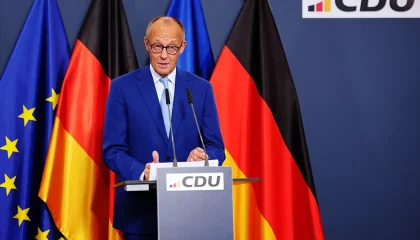
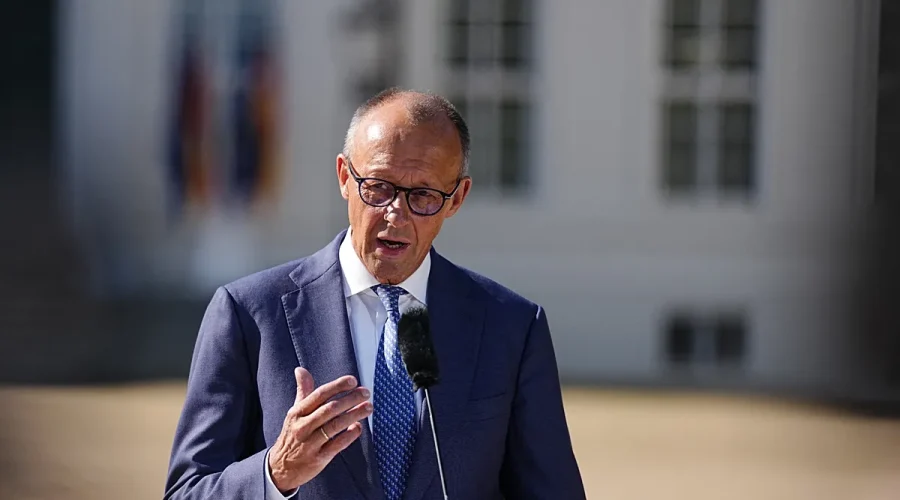
German Chancellor Friedrich Merz hosted the prime ministers of Finland, Austria, and Denmark for a working lunch in the capital. Their counterparts from the Netherlands and Sweden joined remotely. Collectively known as the “frugals,” these six nations are the loudest voices demanding a smaller EU budget and have historically accounted for roughly 40 percent of total EU revenue.
The session was framed as a reaffirmation of shared intent: shrink the overall envelope, redirect funds toward competitiveness and defence, and resist what the group calls an out-of-step spending trajectory. Yet once again, no single figure emerged. Merz told reporters afterward that the six would continue to act as a bloc in negotiations.
“We will continue to handle this in the same way as a group. We agreed on this today because we share a common interest in advocating for realism and reforms in these negotiations,” Merz said. “We finance around 40% of the European budget. This means that we are, so to speak, the group of major contributors to the European budget.”
Two Camps, One Commission Proposal
The underlying tension traces back to July 2025, when the European Commission tabled a €2 trillion multiannual budget framework. That figure, now under negotiation among all 27 member states, would expand the budget by as much as 60 percent relative to the current period — a jump that lands at a moment when national treasuries are already strained by surging defence outlays and sustained financial support for Ukraine.
Seventeen member states, grouped informally as the “Friends of Cohesion,” have rallied to protect agricultural subsidies, fisheries funding, and regional development money — all of which the Commission’s draft would reduce compared with today’s allocations. Spain, Italy, Poland, Hungary, and Portugal anchor that camp. The frugal bloc, increasingly branding itself as the “modernisers,” counters that the budget must pivot toward industrial competitiveness and collective security.
The Cyprus Compromise and Why It Failed to Land
In June, Cyprus — then holding the rotating presidency of member-state discussions — floated a middle path: a €32.8 billion reduction concentrated on programmes favoured by the modernisers. Danish Prime Minister Mette Frederiksen endorsed the direction of travel.
“The European budget must prioritise competitiveness and security. We also need, as the Chancellor just said, to build a stronger economy,” Frederiksen said, calling for a budget that is “responsible and understandable for our citizens.”
Cyprus, traditionally aligned with the Friends of Cohesion, had declined to sign that group’s May open letter — a gesture consistent with the neutrality expected of the presidency. For the frugals, however, the Cypriot figure represented a token gesture rather than a genuine midpoint, leaving the bloc unconvinced that a real compromise had been offered.
Ireland’s Deadline and the October Summit
The baton now rests with Ireland, which chairs the member-state talks and must table a fresh compromise before the European Council convenes in mid-October. That summit is the explicit target of Thursday’s Berlin show of unity. European Council President António Costa is simultaneously touring national capitals to build momentum toward a year-end deal.
The clock is tightening for reasons beyond the budget cycle itself. In 2027, major parliamentary or presidential elections are scheduled in France, Italy, Poland, Finland, Greece, Spain, Slovakia, and Estonia. Leaders across the bloc face pressure to lock in an agreement before campaign seasons consume political bandwidth and make compromise harder.
Where Each Capital Actually Wants the Number
Despite the rhetoric of solidarity, the frugals have not converged on a target figure or a depth of cut. German government spokesman Stefan Kornelius told the magazine Die Zeit that Berlin’s preference is a total budget of €1.6 trillion — roughly €400 billion below the Commission’s ask. The Dutch government, speaking to parliament, framed its position in narrower terms: it wants Dutch contributions from 2028 onward to rise by €1.6 billion less than the Commission’s trajectory implies. Sweden, expected to harden its stance after an upcoming election, is pushing for national contributions capped at 1 percent of gross national income, against the Commission’s proposed 1.26 percent.
The group’s joint statement, released after the Berlin lunch, sidesteps all of this specificity, stating only that the Commission’s “nearly €2 trillion” proposal must be reduced by “several hundred billion euros” in a balanced manner. Finnish Prime Minister Petteri Orpo reiterated his commitment to a year-end deal while cautioning it should come “not at any cost.”
“We are not stingy, but allocations such as those proposed by the Commission are simply out of step with the times. We want a European budget that is commensurate with our aspirations for a sovereign and strong Europe,” Merz said.
The Leverage Question
Historically, the wealthy net-contributor bloc has wielded disproportionate influence over the shape of EU spending precisely because its collective weight makes any budget mathematically impossible without its buy-in. But internal disagreement over the magnitude of the cut — whether to aim at a €400 billion reduction, a €32.8 billion trim, or a percentage-of-GNI cap — risks diluting that leverage. If Ireland’s October compromise lands in a zone that satisfies neither camp fully, the frugals’ negotiating position could fracture at the very moment the bloc most needs to speak with one voice.
Related Reading
Frequently Asked Questions
What is EU payers push for cuts but can?
EU payers push for cuts but can is the main topic of this guide. The article explains the context, practical details, and next steps readers should understand.
Why does EU payers push for cuts but can matter?
EU payers push for cuts but can matters because readers are looking for a useful answer, not just a short summary. Good content should match search intent and help them decide what to do next.