Ceuta Police Report Overcrowded Barracks
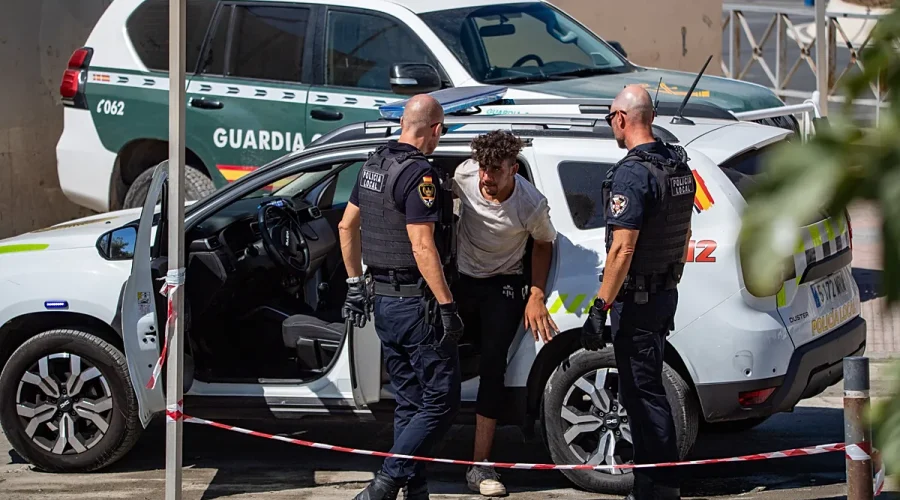
Usagevpn.com – Police decry conditions in Ceuta after weeks of deployment left officers sleeping eight to a room with a single shared toilet per floor. The complaints surfaced following the July 30–31 migrant surge from Morocco, when the Spanish government rushed National Police units — including the Police Intervention Units (UIP) — to the autonomous city to reinforce border security. Most of the arriving migrants have since been returned to Morocco, yet the officers who managed the operation remain quartered at the Mixed Artillery Regiment No. 30, where basic hygiene and rest standards appear to have collapsed.
Interviews published in El Faro de Ceuta and formal statements from the Spanish Confederation of Police (CEP) outline a pattern of failures: worn mattresses, inadequate ventilation, showers in disrepair, and sleeping quarters that hold seven or eight bunks with no air conditioning — only a lone electric fan struggling against Ceuta’s summer heat.
What Officers Are Enduring Inside the Barracks
The density of the housing is the most visible problem. Each room accommodates eight bunk beds, so a full complement means eight officers sharing one enclosed space. Without climate control, the single fan provides negligible relief during peak-temperature hours, making rest between shifts nearly unattainable.
Sanitation compounds the issue. According to information relayed to the CEP, approximately 70 officers on a single floor may share one toilet. Showers, where operational at all, are described as poorly maintained, and ventilation throughout the housing areas falls below what working staff require. The cumulative effect, officers say, turns every day into a negotiation with discomfort.
Union Pushback and a Formal Inspection Demand
The CEP has directed its criticism at Interior Minister Fernando Grande-Marlaska. In a social-media post tied to an Onda Madrid radio appearance, the union stated:
“It is outrageous. Every time there is a crisis Marlaska calls on the police. He knows we are a guarantee of success. But then, as in Ceuta, he punishes us with degrading accommodation that looks like a chamber of horrors.”
A follow-up post linked to an Onda Cero segment sharpened the point:
“Colleagues are going to give their all in Ceuta because they are professionals and they know what is at stake there for Spain. Meanwhile, Marlaska punishes them with degrading accommodation, in conditions that would force any minister to resign.”
Officers themselves draw a clear line between the facilities and the military personnel managing them. They credit the regiment’s staff with courteous, attentive treatment within the limits of available resources, keeping the grievance aimed at institutional resourcing rather than at individual soldiers.
In response to the accumulated complaints, the CEP has lodged a formal request for an urgent preventive inspection of the barracks. The union seeks a dedicated on-site risk assessment with specific measurements of temperature, humidity, and ventilation in officers’ resting areas, so that objective data can confirm whether the facilities meet basic safety and health thresholds. If the inspection validates the shortcomings described, the CEP expects corrective measures to follow without delay.
FAQ
Where are the deployed police officers housed? At the Mixed Artillery Regiment No. 30, a military installation in Ceuta that has absorbed a portion of the reinforced police force since late July.
How many officers share a single room? Rooms are fitted with eight bunk beds, meaning up to eight officers may occupy one sleeping space.
What is the reported toilet ratio? Roughly 70 officers on one floor are said to share a single toilet, according to information reaching the CEP.
Has the union taken formal action? Yes. The CEP has filed a request for an urgent preventive inspection and an on-site risk assessment covering temperature, humidity, and ventilation in the housing areas.
When did the migrant surge that triggered the deployment occur? On 30 and 31 July, when thousands of migrants crossed from Morocco into Ceuta.