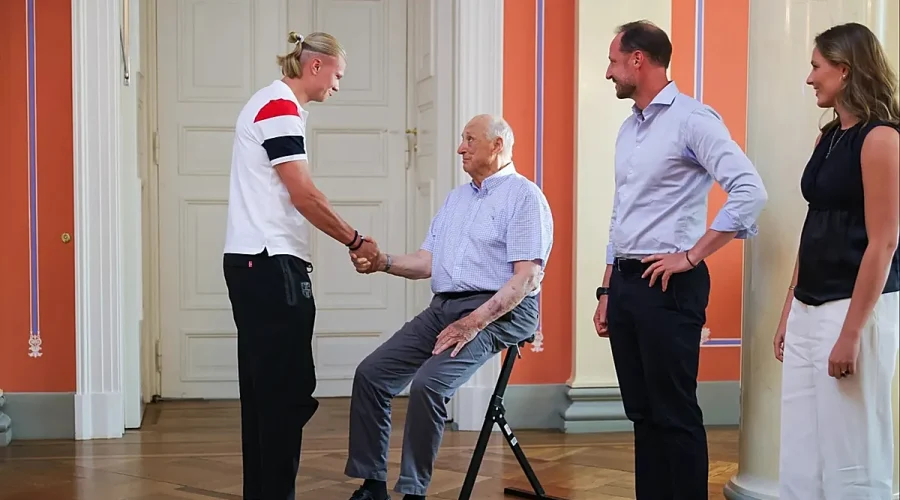
Norway’s Longest-Reigning Monarch Steps Aside: King Harald V Enters Hospital, Crown Prince Haakon Assumes Regency
Usagevpn.com – The Norwegian royal household has entered an unusual period of transition as King Harald V, now 89 years old and reigning since 17 January 1991, has been admitted to a hospital and formally placed on sick leave for a period of two weeks. During his absence, Crown Prince Haakon will exercise the functions of the throne as regent, a constitutional mechanism that ensures continuity of state duties without interruption. The palace confirmed the arrangement in an official statement released on 17 August 2026, noting that the monarch’s condition demands inpatient medical care that cannot be managed on an outpatient basis.
The Underlying Condition and Immediate Cause of Admission
The diagnosis at the centre of this episode is haemolytic anaemia, a haematological disorder in which the body’s immune system or other physiological processes break down red blood cells faster than the bone marrow can replace them. Patients typically experience fatigue, pallor, jaundice, and shortness of breath as oxygen-carrying capacity drops. In Harald’s case, the palace explained that the King had been receiving corticosteroid therapy over the preceding weeks to manage the anaemia. That treatment, while addressing the blood disorder, produced a secondary complication: significant fluid retention throughout the body, which in turn necessitated supervised hospital care to monitor and correct the imbalance.
“In recent weeks, the King has been treated with cortisone. This has led to fluid retention in the body, which requires hospital treatment.”
The two-week sick-leave designation signals that the palace anticipates a defined recovery window rather than an open-ended convalescence. Norwegian constitutional practice allows the crown prince to assume regency whenever the sovereign is incapacitated, whether by illness, travel, or other absence. Haakon, who has served as heir apparent since his father’s accession in 1991, will therefore preside over any state ceremonies, parliamentary openings, or diplomatic receptions scheduled during the interim.
A Cascade of Royal Health Setbacks
The King’s hospitalisation does not occur in isolation. Over the past several months, multiple members of the Norwegian royal family have faced serious medical crises, creating an unprecedented concentration of health-related disruption within the household.
In May, Princess Astrid — the King’s younger sister — was admitted to hospital following a diagnosis of heart failure. Within the same month, Queen Sonja, Harald’s spouse of more than five decades (the couple married in 1968), was also hospitalised for cardiac complications. The pattern of simultaneous cardiovascular events across two senior royals underscored the fragility of a family whose oldest members are now in their late eighties and nineties.
Adding to the strain, Crown Princess Mette-Marit underwent a lung transplant in June, a procedure described by the palace as successful. Mette-Marit had been living with a rare variant of pulmonary fibrosis since her diagnosis in 2018, a progressive condition that scars lung tissue and progressively impairs gas exchange. She was discharged from hospital in mid-July but, according to the palace, will not resume official duties for at least six months while she completes her post-transplant recovery and immunosuppressive regimen.
Legal Turmoil in the Extended Family
Compounding the household’s medical challenges, the family has also endured the criminal prosecution and conviction of Marius Borg Høiby, son of Mette-Marit and Haakon. In June, a Norwegian court sentenced Høiby to four years’ imprisonment on two counts of rape along with additional offences. The case drew sustained public attention and media scrutiny, placing the extended royal family under a spotlight that intersected with the concurrent health emergencies.
Context: The Monarchy’s Role and What Comes Next
Norway’s constitution vests the monarch with largely ceremonial and symbolic authority: opening parliament, receiving foreign credentials, conferring honours, and serving as a unifying figurehead. The day-to-day governance of the country rests with the elected Storting and the appointed cabinet. A two-week regency therefore carries no substantive policy implications, but it does require the crown prince to step into a visible public role on short notice, a function Haakon has performed on earlier, shorter occasions.
Harald’s reign, spanning more than three and a half decades, has made him the longest-serving Norwegian monarch since the modern constitutional monarchy was established. His father, King Olav V, died in 1991, and Harald assumed the throne at age 47. The current episode — an 89-year-old sovereign managing a chronic blood disorder while his immediate family copes with cardiac events, a major transplant, and a high-profile criminal conviction — marks a period in which the Norwegian royal household is navigating its most concentrated wave of adversity in recent memory. The palace’s stated two-week timeline suggests a contained episode, but the cumulative toll on the family’s capacity to fulfil its public role remains a subject of close attention in Oslo and beyond.
Related Reading
Frequently Asked Questions
What is Norway s King Harald V hospitalised?
Norway s King Harald V hospitalised is the main topic of this guide. The article explains the context, practical details, and next steps readers should understand.
Why does Norway s King Harald V hospitalised matter?
Norway s King Harald V hospitalised matters because readers are looking for a useful answer, not just a short summary. Good content should match search intent and help them decide what to do next.