Italy’s National Rail Network Faces a Full-Day Walkout as Commuters Brace for Chaos
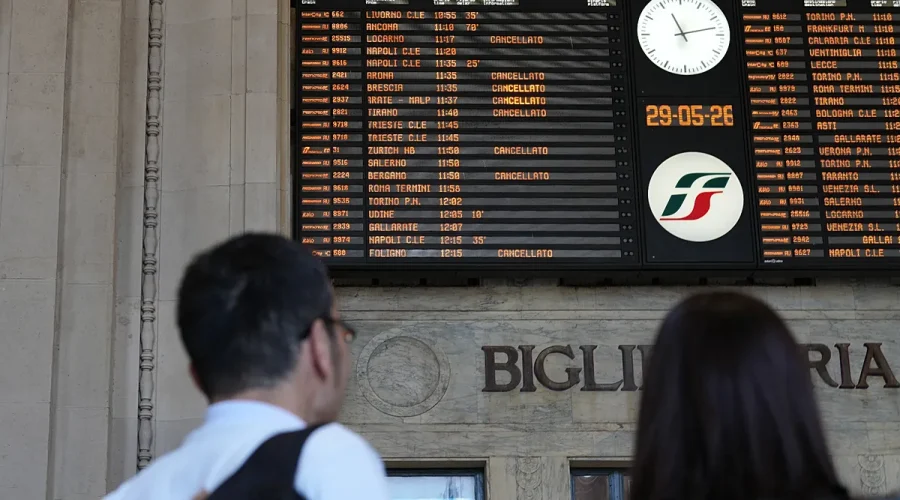
Usagevpn.com – Millions of daily commuters, business travellers, and holidaymakers across Italy will find their journeys thrown into disarray when railway workers nationwide begin a 24-hour strike at 9 pm on Monday, 7 September. The walkout runs through to 9 pm on Tuesday, 8 September, meaning an entire working day of rail travel sits squarely inside the disruption window. Even before the official start time, passengers should expect knock-on effects as operators adjust timetables and staffing in the hours preceding the action, and residual delays are likely to linger after the deadline passes while the network re-stabilises.
What the Strike Covers
The action is not limited to one tier of service. Regional trains — the short-haul, high-frequency connections that form the backbone of daily commuting in Italian cities and between towns — are directly affected. High-speed Frecce services and Intercity trains, which link major metropolitan centres at speed, are equally within scope. This breadth makes the walkout particularly consequential for anyone whose itinerary depends on long-distance rail travel during the affected window.
For regional operators, the unions and management have negotiated guaranteed service periods that shield peak commuting hours from cancellation. On weekdays, trains are contractually obliged to run between 6 am and 9 am and again between 6 pm and 9 pm. Passengers travelling inside those two windows can expect their usual departures to operate. Outside them, however, the situation is far less predictable: services may be cancelled outright, delayed by extended intervals, or rerouted along alternative paths across the national network. A commuter who normally boards a 10 am regional connection, for instance, has no contractual guarantee that the train will run at all.
High-Speed and Intercity Travel: No Guaranteed Window
The guaranteed-service arrangement applies exclusively to regional operations. Frecce and Intercity departures carry no such protection, which means every long-distance booking within the strike window is exposed to cancellation or significant timetable alteration. Trenitalia, the state-owned passenger operator, has urged all travellers to verify the live status of their specific service before leaving home or the office. The company’s mobile application and official website both provide real-time disruption updates, and checking immediately before departure — rather than relying on a morning glance — is strongly recommended given how quickly schedules can shift during a rolling walkout.
Refunds and Rescheduling: What Passengers Can Claim
Travellers whose journeys are disrupted are entitled to a full refund, though the administrative deadline differs by service category:
For Frecce and Intercity tickets, passengers may lodge a refund request at any point from the moment the strike was formally announced through to the scheduled departure time of the affected train. In practice, this gives a wide window in which to seek reimbursement without penalty.
For regional tickets, the deadline is considerably tighter: requests must be submitted by midnight on the day preceding the strike. A commuter who discovers a cancellation on the morning of 7 September, for example, will already have missed the cutoff and may need to pursue alternative remedies through customer-service channels.
As an alternative to cash-back, passengers may elect to rebook their journey onto another service operating under identical fare conditions. This option is subject to seat availability on the replacement train, so early action is advisable if the preferred departure time is popular.
Why the Unions Are Walking Out
The rail workers’ federations have framed the action around three core demands: improved working conditions on the shop floor, stronger safety provisions for both staff and passengers, and a fundamental reorganisation of shift patterns across the railway sector. Italian rail workers have long cited irregular rosters, understaffed depots, and ageing infrastructure as compounding factors that elevate fatigue-related risk. The unions argue that without structural reform to shift scheduling and investment in safety systems, the sector will continue to operate at the edge of sustainable staffing levels.
The strike lands during a period when Italian rail already carries heavy seasonal load — summer holiday return flows overlap with the start of the academic term, and commuter volumes in Milan, Rome, Turin, and Naples are at annual peaks. A full-day disruption of this scale therefore touches not only daily commuters but also thousands of intercity travellers who had booked connections weeks in advance.
Practical Guidance for Affected Travellers
Check your ticket type first. If you hold a regional ticket and your departure falls inside the 6–9 am or 6–9 pm guaranteed window, your service should run normally. If it falls outside, assume disruption is possible and have a backup plan. For any Frecce or Intercity booking within the strike window, treat the journey as at-risk until Trenitalia confirms otherwise.
Monitor the Trenitalia app or website in the hours before departure. If your service is cancelled, note the cancellation reference number immediately; it will be required for any refund or rebooking claim. Regional-ticket holders who missed the midnight deadline should contact the station ticket office or the operator’s customer line to explore discretionary goodwill options, though these are not guaranteed.
Allow extra travel time to reach stations, as road-based alternatives (taxis, ride-hailing, local buses) will see elevated demand during the disruption window. If your itinerary includes a connecting service, verify both legs independently rather than assuming the second connection will hold.
The walkout concludes at 9 pm on Tuesday, 8 September. Normal timetables are expected to resume thereafter, though minor residual delays of up to an hour are common in the first evening following a multi-hour network shutdown as crews reposition and signals are re-synchronised.
Related Reading
Frequently Asked Questions
What is Italy rail strike?
Italy rail strike is the main topic of this guide. The article explains the context, practical details, and next steps readers should understand.
Why does Italy rail strike matter?
Italy rail strike matters because readers are looking for a useful answer, not just a short summary. Good content should match search intent and help them decide what to do next.