Hungary Clears Final Hurdle for €10 Billion in Frozen EU Recovery Money
Usagevpn.com – After more than a decade of frozen European Union payments, Hungary has confirmed it satisfied every condition attached to a €10 billion tranche of pandemic-era recovery financing. Transport and Investment Minister Dávid Vitézy made the announcement on social media, noting that the final compliance deadline had lapsed on Monday without any outstanding obligations remaining. The development marks the end of a prolonged standoff between Budapest and Brussels over rule-of-law standards and the proper use of shared European budgets.
A New Political Era Opens the Door
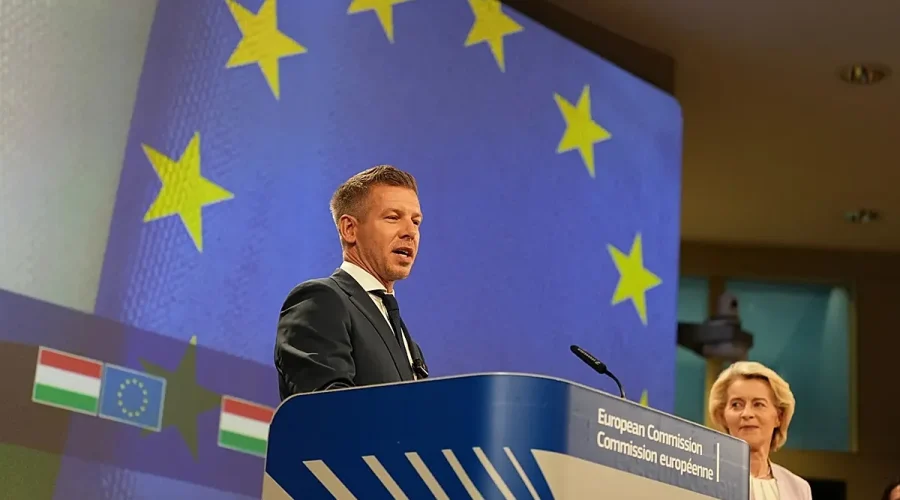
The thaw in relations between Hungary and the EU institutions traces directly to the April general election, in which Péter Magyar secured a landslide mandate. Magyar built a central pillar of his campaign around the promise of restoring access to European funds that had been withheld throughout Viktor Orbán’s sixteen-year tenure as prime minister. Under Orbán, Brussels repeatedly blocked disbursements, citing judicial independence concerns, corruption risks, and failures to meet conditionality attached to various budget lines.
In May, Magyar and European Commission President Ursula von der Leyen reached a comprehensive agreement to release a combined €16.4 billion in previously frozen EU funding. That figure breaks down into two distinct streams: €10 billion drawn from the Recovery and Resilience Facility — the post-pandemic borrowing instrument that expires later this year — and a further €6.4 billion allocated through the Cohesion Funds, which operate under a longer planning horizon and carry no near-term deadline.
What Budapest Had to Deliver
Unlocking the Recovery and Resilience tranche required Hungary to complete 27 so-called “super milestones” alongside more than 100 additional milestones spanning judicial reform, anti-corruption enforcement, and structural modernisation. To meet those requirements, the Hungarian Parliament amended over 100 statutes during the summer months, with the bulk of legislative changes targeting the judiciary and the architecture of anti-corruption oversight.
Budapest also revised its National Recovery Plan to ensure the country could draw down the allocated funds before the programme’s expiry. The updated plan channels investment toward modernising the national energy grid, upgrading railway infrastructure, and expanding the rental housing stock — sectors where Hungary has lagged behind neighbouring economies for years.
“The prime minister instructed us not to leave a single euro cent behind and to bring all the resources home,” Vitézy said. “I can report: we have succeeded.”
Vitézy, who oversees the recovery of EU funds within the Magyar government, framed the achievement as a turning point for the country’s economic trajectory.
“By using EU funds, Hungary can return to the path of development after years of lagging behind, and catch up with countries in the region,” he added.
The Broader EU Context
The Recovery and Resilience Facility, commonly known as NextGenerationEU, was created by the European Commission as a joint borrowing instrument designed to kick-start member-state economies after the coronavirus pandemic disrupted growth across the continent. It represents the largest single fiscal operation in EU history, backed by a shared borrowing capacity of roughly €750 billion. Monday’s deadline represents the final phase of disbursements under that instrument; once the programme closes, no further tranches can be drawn.
Von der Leyen marked the occasion with a statement underscoring the instrument’s role in stabilising economies during a period of acute uncertainty.
“NextGenerationEU helped protect our citizens and economies at a time of great uncertainty,” von der Leyen said. “It accelerated the clean and digital transitions, cutting Europe’s reliance on imported energy. The reforms and the resilience will benefit Europe for generations to come.”
What Happens Next
Clearing the milestone conditions is necessary but not sufficient for immediate cash flow. Recipient countries, Hungary included, must now submit formal payment requests during September. The Commission will then conduct its standard evaluation of each application before releasing the corresponding funds later this year. In practical terms, Hungarian authorities expect the bulk of the €10 billion to arrive before the Recovery and Resilience Facility’s legal sunset, though the precise timing of individual tranches will depend on the pace of the Commission’s verification process.
For the Cohesion Funds tranche of €6.4 billion, no comparable urgency applies. Those allocations are spread across multi-year programming periods and will be accessed according to Hungary’s revised national strategic framework. The longer runway gives Budapest additional time to structure projects and absorb the spending without the pressure of a single closing date.
The episode underscores how conditionality — long a source of friction between Brussels and member states — can function as both a constraint and a catalyst. For Hungary, the past decade of frozen money represented a lost window of investment. The Magyar government now faces the task of converting legislative compliance into tangible infrastructure, judicial capacity, and energy modernisation before the Recovery programme’s final pages close.
Related Reading
Frequently Asked Questions
What is Hungary says it has met all conditions?
Hungary says it has met all conditions is the main topic of this guide. The article explains the context, practical details, and next steps readers should understand.
Why does Hungary says it has met all conditions matter?
Hungary says it has met all conditions matters because readers are looking for a useful answer, not just a short summary. Good content should match search intent and help them decide what to do next.