Wicklow Summit Sets Stage for a Radical Reshuffle of EU Foreign Policy Architecture
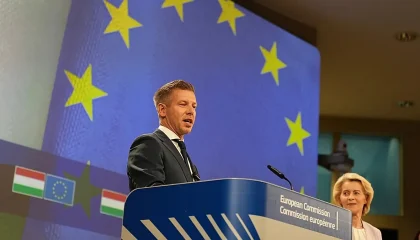
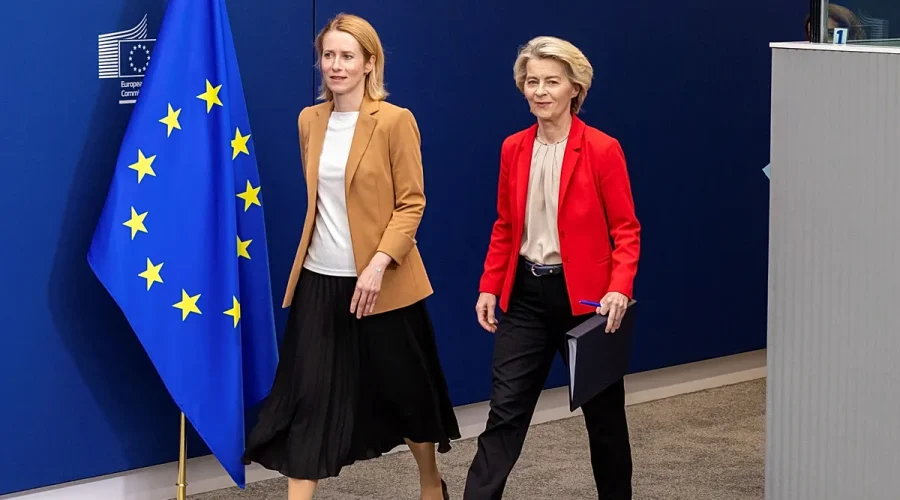
Usagevpn.com – When EU foreign ministers gather in Wicklow, Ireland, on Wednesday for an informal session, the agenda will carry a question that has simmered quietly in Brussels corridors for years: should the High Representative for Foreign Affairs answer directly to the Commission president rather than operating as a semi-independent actor? Germany and France have now put their names to a concrete answer, floating a joint proposal that would place Kaja Kallas — currently the bloc’s top diplomat — under the direct supervisory authority of Ursula von der Leyen. Kallas herself will chair the Wednesday session, lending the discussion an unmistakable personal dimension.
The Institutional Tangle at the Heart of EU External Action
The proposal targets what insiders call the bloc’s most stubborn structural flaw: a fragmented foreign policy apparatus that speaks in competing voices. Under the Treaty of Lisbon’s architecture, the High Representative commands the European External Action Service (EEAS), tasked with designing, coordinating, and implementing the foreign policy of all 27 member states. Yet the same individual simultaneously holds a vice-presidency within the European Commission — a body whose directorates-general control the levers that actually move international affairs: trade, energy, climate, migration, and enlargement.
The result is a paradox. The EEAS, staffed by diplomats posted in embassies worldwide, lacks the material instruments to enforce its own policy positions. When a trade negotiation or an energy deal takes shape, it is a Commission directorate-general that wields the leverage, not the diplomatic service. Enlargement negotiations, carrying enormous geopolitical weight, sit squarely within Commission competence. This split has created what critics describe as institutional cacophony — two parallel tracks of external action that rarely align.
Von der Leyen’s Expanding Footprint
The ambiguity has not gone unused. Since Russia launched its full-scale invasion of Ukraine, von der Leyen has steadily widened her foreign-policy footprint, travelling to capitals to broker headline agreements and positioning herself as the bloc’s de facto chief negotiator on global crises. EU leaders have frequently encouraged her to take the lead. Yet the expansion has drawn sharp criticism from several member-state capitals, with officials privately labelling her moves “overreach” and a “power grab.” The tension between her Commission mandate and the High Representative’s parallel authority has become a recurring irritant in inter-institutional relations.
What the Franco-German Blueprint Actually Proposes
The German-French text envisions giving Kallas a hands-on coordination role over the foreign-related portfolios already operated by Commission directorates-general. Specifically, the plan names development aid (DG INTPA), humanitarian relief (DG ECHO), the defence industry (DG DEFIS), and neighbourhood relations — split between DG ENEST covering Eastern Europe and DG MENA covering the Middle East, North Africa, and the Gulf. Trade, a high-stakes file, could also be folded into the new coordination structure.
A dedicated foreign-policy department would be created within the Commission to anchor the arrangement. This echoes an earlier institutional configuration: the Commission once ran a DG for external relations (DG RELEX) before that body was absorbed into the EEAS in 2010. In effect, the proposal would reverse part of that 2010 consolidation, pulling certain external-action functions back under Commission management while keeping Kallas in a coordinating, rather than independently commanding, role.
The hierarchical logic is explicit. Von der Leyen would remain the supreme authority, mirroring the relationship between a national prime minister and a foreign minister. The EEAS, which Kallas currently leads independently of the Commission president, would be structurally weakened to lower the probability of institutional collision. Member states, meanwhile, would gain a stronger voice in shaping foreign policy direction — a concession aimed at assuring capitals that sovereignty over external action does not drift entirely into Brussels executive hands.
The Legal and Political Hurdles
Implementing the plan would require amending the 2010 decision that established the EEAS, not the Treaty of Lisbon itself. That distinction matters: a decision-level amendment still demands unanimous agreement among all 27 member states, but it avoids the far more arduous path of a treaty revision. Even so, unanimity in a body of that size, at a moment of global turbulence that has exposed the bloc’s foreign-policy fragility, is no small ask.
The political timing is fraught. In June, a French working paper tabled three options for overhauling the High Representative’s role: expand her powers, shift them into the Commission, or shift them to the member states. The latter two would effectively hollow out the position. The document prompted Kallas to send a message of reassurance to EEAS staff, signalling that the post would not be dismantled. She subsequently called on member-state capitals to table their own ideas for improving the external action — a move that both invited participation and underscored the diplomatic sensitivity of the debate.
Why It Matters Now
The proposal lands amid a period of acute global instability in which the EU’s inability to project a coherent external voice has been laid bare repeatedly. Member states broadly agree that comprehensive reform of the foreign-policy architecture is overdue. What remains contested is the direction of travel: whether the High Representative should be empowered, subordinated, or distributed. The Franco-German text picks the second option and wraps it in language about strengthening national voices. Whether the Wicklow discussion produces momentum, or merely another round of diplomatic hedging, will depend on whether enough capitals see the institutional logic clearly enough to accept a structural rebalancing that no single member state can veto without breaking unanimity.
Related Reading
Frequently Asked Questions
What is Germany and France float plan to bring?
Germany and France float plan to bring is the main topic of this guide. The article explains the context, practical details, and next steps readers should understand.
Why does Germany and France float plan to bring matter?
Germany and France float plan to bring matters because readers are looking for a useful answer, not just a short summary. Good content should match search intent and help them decide what to do next.