Ukraine’s Air-Defence Gap Puts Europe’s Patriot Stockpiles in the Crosshairs
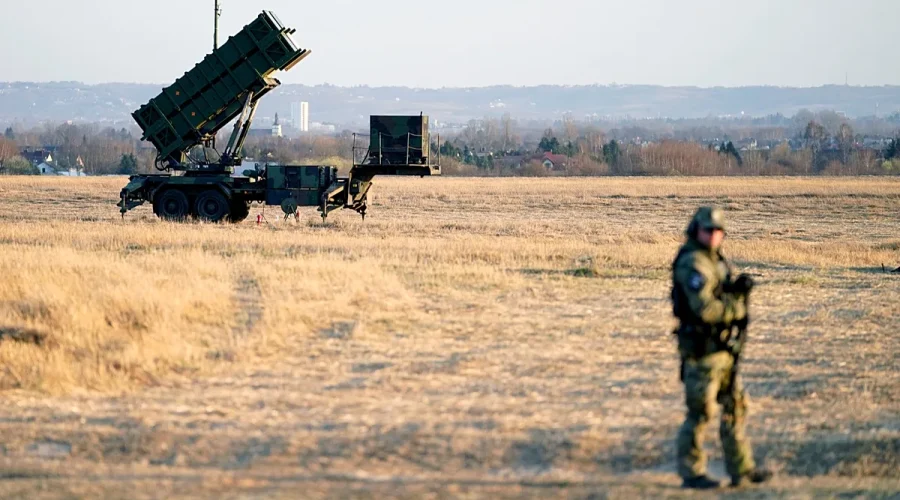
Usagevpn.com – With Russian missile barrages intensifying and winter fast approaching, European capitals that still hold meaningful reserves of Patriot interceptor missiles are bracing for a direct ask from the European Commission. An informal defence gathering scheduled for Tuesday in County Wicklow, Ireland, is expected to become the stage where Brussels formally presses its member states to release some of those interceptors to Kyiv. The urgency behind the push is stark: Ukraine’s ability to shield its cities, energy infrastructure, and military positions from aerial strike has deteriorated sharply over recent weeks.
A Winter of Escalation and a 300-Missile Shortfall
President Volodymyr Zelenskyy made the situation explicit in late August, warning that the flow of Patriot interceptors reaching Ukraine had slowed even as Moscow ramped up its campaign of long-range missile attacks. He put a number on the gap: roughly 300 interceptors are needed to carry Kyiv through what he described as another bitter winter of full-scale invasion. That figure represents not merely a replenishment exercise but a structural shortfall in a system already stretched thin.
The complication is that the United States, the original supplier of most Patriot batteries deployed across Europe, has been compelled to tap its own strategic reserves because of the ongoing war with Iran. The result is a shrinking pool of interceptors available to backfill allied inventories at exactly the moment Ukraine’s demand peaks. Europe, in other words, is being asked to close a gap that Washington can no longer fill on its own.
Madrid and Athens Under the Spotlight
Two countries bear the brunt of the anticipated pressure: Spain and Greece. Prime Minister Pedro Sánchez pledged earlier this year that Madrid would donate five Patriot missiles to Ukraine amid the broader shortage. Yet the question at Tuesday’s meeting is whether that commitment translates into actual delivery timelines, and whether additional rounds beyond the five can be released.
Greece’s position has been more guarded. Prime Minister Kyriakos Mitsotakis stated publicly that Athens has
“resisted” pressure to transfer any of its six Patriot batteries to the war-torn nation in the past.
Mitsotakis framed the batteries as essential to defending Greek airspace itself — a calculus that becomes harder to sustain when neighbouring tensions with Turkey have escalated over recent months. Any drawdown of Greek interceptor stocks would therefore carry domestic political costs as well as strategic trade-offs.
The “Debate of the Summer” Gains Momentum
An EU diplomat, speaking anonymously because of the sensitivity involved, told Euronews that the question of Madrid and Athens retaining tight control over their Patriot interceptors is not new. What has changed, however, is the tempo. Zelenskyy’s increasingly public and pointed requests have turned the air-defence question into what the diplomat called the
“debate of the summer.”
Three separate EU diplomats characterised Ukraine’s interceptor shortfall as a
“big issue”
with unresolved questions about how to fill the gap. One added that the Tuesday gathering is informal and should not be expected to yield formal conclusions — a caveat that nonetheless signals the Commission’s intention to keep the pressure on.
Outreach to Asia and the China Factor
The European External Action Service, the EU’s diplomatic arm, is in parallel conversations with Japan and South Korea, seeking to persuade both to share portions of their interceptor stocks with Ukraine. Diplomats attached to those talks are cautious, noting that simmering tensions with China are likely to cap how much either Asian government is willing to part with. The calculus for Tokyo and Seoul is not purely altruistic; every missile shipped westward narrows their own deterrence posture in the Indo-Pacific.
Hybrid Threats and the Wider European Defence Question
Tuesday’s agenda is not limited to Ukraine. The effectiveness of Europe’s own air-defence architecture — particularly after a string of hybrid incidents — is expected to feature prominently. Moldova, an EU candidate country, was jolted on 27 August when five unmanned aerial vehicles penetrated its airspace. President Maia Sandu responded with a defiant public statement, underscoring how quickly the threat environment has shifted from distant borders to candidate-member skies.
The backdrop also includes media reports that CIA director John Ratcliffe undertook a secret trip to Moscow. The visit was reportedly centred on warning the Kremlin against any form of aggression directed at the Baltic states. Regional leaders subsequently insisted that their threat assessments regarding a possible Russian strike on Latvia, Estonia, and Lithuania remain unchanged. Former Estonian president Toomas Hendrik Ilves went further, telling Euronews he is sceptical that Ratcliffe was dispatched merely to warn Russia against escalation, arguing that Washington’s primary anxiety remains Iran.
Financing the Gap: Two Billion-Euro Instruments
On the funding side, one European Commission official disclosed that Kyiv is weighing whether to channel the next tranche of the €90 billion EU support loan toward purchasing anti-ballistic systems — either additional Patriot batteries or the Franco-Italian SAMP/T NG variant. Separately, the EU executive recently approved a €6.1 billion defence procurement package designed to supply Ukraine with air and missile-defence systems, missiles, ammunition, and radar assets. Together, these instruments represent Brussels’s attempt to institutionalise a replenishment pipeline that does not depend solely on voluntary national donations.
The convergence of factors — American reserve depletion, Iranian-war distraction, Chinese and Turkish pressure on Asian and Balkan partners, and a Ukrainian winter that will test every layer of air defence — makes Tuesday’s Wicklow meeting less a routine coordination exercise and more a stress test of European political will. Whether that will materialises in concrete transfer agreements or remains, as one diplomat put it, an open question, will become clear in the days that follow.
Related Reading
Frequently Asked Questions
What is EU expected to lobby member states?
EU expected to lobby member states is the main topic of this guide. The article explains the context, practical details, and next steps readers should understand.
Why does EU expected to lobby member states matter?
EU expected to lobby member states matters because readers are looking for a useful answer, not just a short summary. Good content should match search intent and help them decide what to do next.