Meloni: ‘I Thought It Would Be Easier’
Usagevpn.com – In a candid New York Times interview, Giorgia Meloni says I thought the partnership with Donald Trump would flow naturally from shared views on migration and what she labels “woke culture.” The Italian prime minister, who entered office in late 2022 on a surge of right-wing energy across the continent, had expected ideological overlap to produce frictionless diplomacy. Instead, a prolonged period of public spats and diplomatic silence has caught even her inner circle off guard.
“It is clear that, with Donald Trump, I thought things would be easier, given our convergence on immigration and woke culture. But things turned out differently.”
The admission breaks sharply from the polished, multilateralist register Meloni normally projects at international summits. For more than a year, the Fratelli d’Italia leader has styled herself the connective tissue between European conservatism and American populism, insisting both traditions speak a common language of sovereignty and cultural continuity. The interview suggests that language has fractured under the weight of daily statecraft.
The Ankara Incident and a Frozen Phone Line
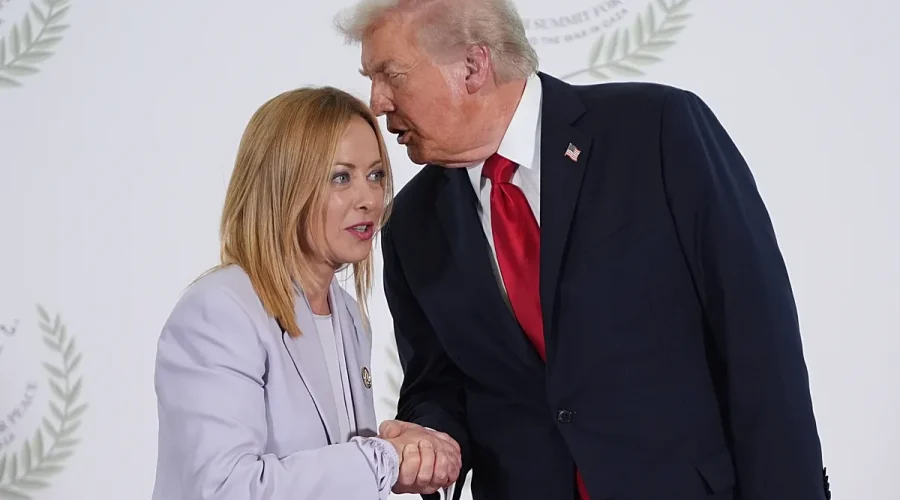
The most public rupture arrived in July of last year, just before a NATO summit in Ankara, Turkey. Trump uploaded a photograph to Truth Social showing himself beside Meloni, captioned with the terse line: “Needs a restraining order.” Diplomats in Rome and Washington read the post as an unusually blunt public rebuke, and the episode calcified an already tense atmosphere between the two capitals.
Asked in the New York Times conversation whether a bilateral summit was being scheduled after the summer break, the prime minister offered only a shrug in words.
“We will see.”
She quickly pivoted to principle, insisting that transatlantic solidarity remains a fixed priority for her government.
“I continue to believe that Western unity is very important.”
At the same time, she drew a hard line around personal chemistry and state strategy.
“I do not decide Italy’s strategy on the basis of my personal relationships.”
A “Revolution of Pride” and the Grammar Fight
Meloni used the interview to restate a refrain she has repeated since taking the premiership: Italy must abandon what she sees as a residual posture of deference toward larger powers. She frames the project not as narrow nationalism but as a domestic cultural reorientation.
“I do not like the idea of a subservient Italy that sees itself as inferior to others.”
Her governing ambition, in her own words, is
“the greatest possible revolution in this nation: a revolution of pride.”
The rhetoric taps a long Italian tradition of post-war self-reinvention, in which successive governments have tried to reposition the country from a peripheral Mediterranean state toward a central European actor. Meloni’s particular inflection, however, binds that ambition to a conservative identity politics that sets her apart from both centre-left predecessors and the technocratic establishment in Brussels.
A separate thread of the conversation returned to a controversy that has consumed Italian public debate since she assumed office: whether the head of government should be styled “il presidente” (masculine) or “la presidente” (feminine). Meloni reaffirmed her preference for the masculine form and dismissed the inclusive-grammar campaign associated with progressive feminist groups.
“What matters to me is whether I am free to become president of the Council of Ministers. That is equality, not being called ‘la presidente’.”
She characterised the push for gendered grammatical reform as “wrong,” arguing that formal equality of office is the substantive goal while grammatical gender markers remain a matter of personal choice rather than a rights question. The position has drawn sharp criticism from linguists and left-wing commentators who note that Italian grammar assigns gender to nouns and that the choice is not merely cosmetic.
FAQ
Where did Meloni make these remarks? In a wide-ranging interview published by the New York Times, reported on 21 August 2026.
What triggered the Rome–Washington friction? A July Truth Social post by Trump captioning a photo of himself beside Meloni with the phrase “Needs a restraining order,” published on the eve of a NATO summit in Ankara.
Has a bilateral meeting been confirmed? No. Meloni answered only “We will see” when pressed on scheduling a follow-up summit after the summer recess.
What is the “revolution of pride”? Meloni’s stated domestic ambition to reframe Italy’s self-image from a deferential Mediterranean state into a confident central European power, couched in conservative identity language.