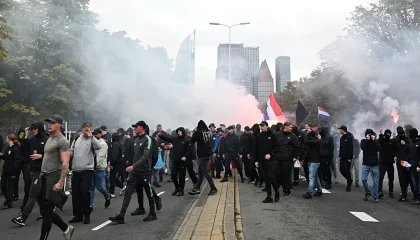
Europe Today: AfD Surge, Ukraine Stalemate, Serbia’s EU Test
Usagevpn.com – In this edition of Europe Today, three stories collided on a single news cycle, each reshaping the political terrain of its respective region. A far-right electoral shock in eastern Germany upended coalition math in Berlin. A high-stakes American diplomatic trip to Kyiv ended in conspicuous silence. And in Belgrade, the interment of a convicted war criminal turned a state funeral into a live referendum on Serbia’s European Union accession. Together, these developments define the week’s central question: how quickly can European institutions absorb shocks that arrive simultaneously from within, from across the Atlantic, and from the candidate states at their doorstep?
AfD’s Breakthrough in Saxony-Anhalt and What It Means for Berlin
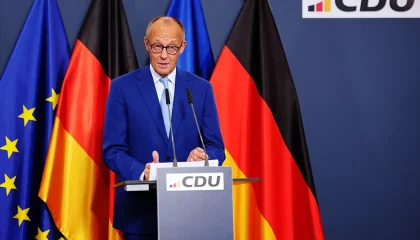
The Alternative für Deutschland (AfD) captured a historic electoral victory in the state of Saxony-Anhalt, a result that correspondents on the ground described as a watershed moment for German federal politics. Laura Fleischmann, reporting from Berlin, framed the outcome not merely as a state-level upset but as a structural realignment: a party founded in 2013 and long relegated to the Bundestag’s outer ranks now commands its deepest support in the former GDR territories, precisely the regions that anchored conservative and social-democratic voting blocs through the 1990s and 2000s.
Stefan Grobe, a German parliamentary correspondent, sat down with Günter Krings, a sitting Bundestag member, to dissect the constitutional and procedural fallout. Krings walked through coalition viability, the Bundesrat’s capacity to block or enable federal legislation, and the broader question of whether Germany’s post-war parties can govern credibly while a formation that has openly challenged the constitutional order holds a growing share of seats at both state and federal level. The interview underscored that the Saxony-Anhalt result is less a footnote than a forcing function for every future coalition negotiation in the country.
“The silence after the Kyiv meeting speaks louder than any press release could,” noted analyst Sasha Vakulina, who broke down the diplomatic calculus behind the envoys’ empty-handed departure.
Witkoff and Kushner in Kyiv: A Productive Nothing
On the same day the German result landed, American peace envoys Steve Witkoff and Jared Kushner concluded a session with Ukrainian President Volodymyr Zelenskyy that generated enormous anticipation in European capitals — and delivered no formal breakthrough. Neither side issued major announcements. No deal framework was tabled. No timeline was announced.
Vakulina’s analysis, featured in this week’s Europe Today coverage, argued that the absence of an outcome is itself the outcome: the gaps between Washington’s mediation architecture and Kyiv’s stated red lines remain unresolved, and the diplomatic calendar is being used to buy time rather than to close a transaction. Witkoff, serving as a senior presidential envoy for peace negotiations, and Kushner, who carries a prominent role in the administration’s broader conflict-diplomacy portfolio, represent a dual-track American approach pairing formal channels with informal pressure. Their visit, set against continued Russian military operations and European debates over defense spending and arms transfers, placed the question of a negotiated settlement back at the center of the transatlantic agenda — even as the empty result left European governments to manage expectations without new information to anchor their positions.
Mladić’s Burial: A Symbolic Stress-Test for Serbia’s EU Bid
In Belgrade, the funeral of Ratko Mladić drew large crowds and prompted a formal warning from the European Commission against any glorification of the convicted war criminal. Mladić, sentenced to life imprisonment by the International Criminal Tribunal for the former Yugoslavia for his role in the 1995 Srebrenica genocide and the siege of Sarajevo, had died in custody. His burial in Serbia’s capital transformed a state-organized ceremony into a flashpoint in the country’s ongoing accession negotiations.
Mared Gwyn examined the episode and its implications for Belgrade’s EU trajectory. The Commission’s cautionary language — urging that the funeral not become a platform for nationalist commemoration — reflects a recurring pattern in which candidate countries’ domestic politics test the patience of Brussels. Serbia’s accession process, already slowed by disputes with neighboring states and questions about judicial independence, now faces a symbolic challenge: can a government that hosts a mass funeral for a figure convicted of genocide simultaneously demonstrate the rule-of-law commitments required for membership? The question, as Europe Today reporting made clear, is not merely academic; it shapes the next round of chapter negotiations.
EU Agricultural Policy Under Scrutiny
Amid the geopolitical headlines, a quieter but economically significant thread ran through the week’s coverage: renewed scrutiny of the Common Agricultural Policy’s environmental and trade dimensions. Farmers’ groups in several member states pressed for adjustments to subsidy structures, while trade partners questioned whether current tariff-rate quotas remain compatible with bilateral agreements. The debate, though less dramatic than the stories above, will shape budget negotiations in the months ahead and intersects directly with the food-security anxieties that have fueled populist electoral gains across the continent.
FAQ
What is Europe Today? Europe Today is a daily European news briefing that aggregates and contextualizes the continent’s most consequential political, diplomatic, and economic stories into a single editorial package. Each edition pairs reporting from multiple capitals with expert analysis to give readers a consolidated view of the day’s developments.
Why did the Witkoff–Kushner visit to Kyiv produce no announcement? Analysts cited in the coverage, including Sasha Vakulina, explained that the gaps between Washington’s mediation framework and Kyiv’s red lines had not been bridged. The envoys’ silence was read as a signal that the diplomatic calendar is being used to buy time rather than to close a deal, leaving European governments to manage expectations without new information.
How does the Mladić funeral affect Serbia’s EU accession? The European Commission issued a formal warning against glorifying the convicted war criminal at his state-organized funeral. While a single event does not halt accession negotiations, it compounds existing concerns about judicial independence and bilateral disputes, adding a symbolic dimension to an already slowed process.
What does the AfD’s Saxony-Anhalt win mean for German coalition politics? The result strengthens a party that draws its deepest support from former East German territories, complicating coalition arithmetic in Berlin. Bundestag members interviewed for the coverage highlighted questions about coalition viability, the Bundesrat’s legislative role, and the practical limits of governing alongside a formation that has challenged the post-war constitutional order.