AfD’s Historic Saxony-Anhalt Result Shakes German Politics and Raises Questions Across Europe
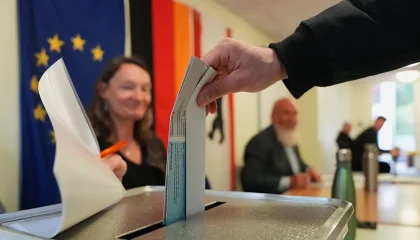
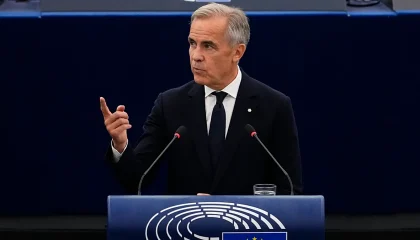
Usagevpn.com – The political earthquake that rippled through German state politics on Sunday was not subtle. In Saxony-Anhalt, a federal state where the centre-right Christian Democratic Union had governed for more than two decades, voters delivered a verdict that left the party’s leadership scrambling for damage control. Preliminary tallies from the ballot showed the far-right Alternative für Deutschland (AfD) capturing 43.8 percent of the vote and claiming 39 of the 83 seats in the state parliament. The Christian Democrats, by contrast, managed only 17.2 percent — a figure that, while technically keeping them in the chamber, represented a collapse from their long-held dominance of the region.
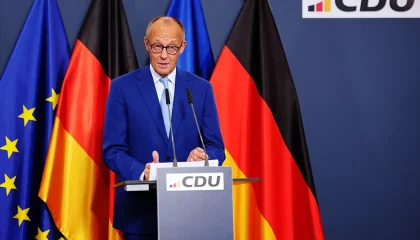
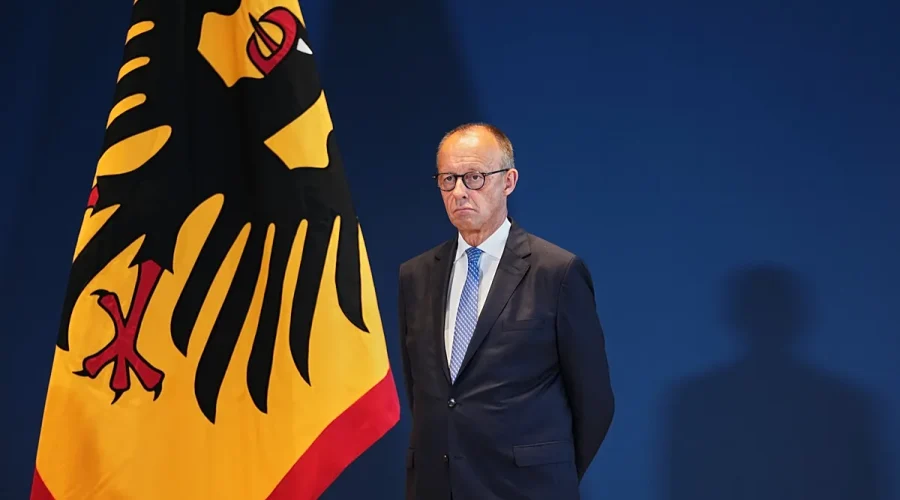
Although the AfD’s tally fell short of an outright majority, the symbolic weight of the result was immediate. Official confirmation of the final counts was scheduled for Monday evening, but the preliminary numbers were already being framed within the party system as a catastrophic setback for Chancellor Friedrich Merz and his CDU. The party that had anchored Saxony-Anhalt’s executive for 24 years now found itself reduced to a minor parliamentary faction in its own backyard.
Merz Faces an Existential Question
AfD co-leader Alice Weidel did not mince words in a conversation with CNN, stating her expectation that Merz would no longer hold the chancellorship by Christmas. The German leader had largely kept a low profile through the weekend but was expected to convene his cabinet in Berlin for emergency consultations. Within the CDU’s own ranks, the tone was blunt. Bundestag member Günter Krings described the outcome to Europe Today as a
“devastating result,” adding that “the perception and credibility of our party is a low.”
Asked about the wider European consequences, Krings argued that the right-wing bloc across the continent would feel
“emboldened.”
He pressed the point further, directing a question at Brussels itself:
“The European Union also should ask, ‘What did we contribute to this anger, and what do we have to change?'”
Costa’s Capital Tour Meets a Changed Political Landscape
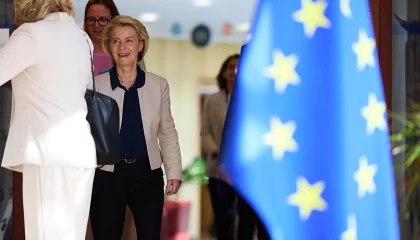
The timing of the result collides with a diplomatic itinerary already in motion. European Council President António Costa is scheduled to arrive in Berlin on Wednesday for a bilateral sitting with Merz. The visit forms one stop on a weeks-long circuit through member-state capitals, during which Costa is gathering candid assessments from national leaders about their priorities, frustrations, and expectations regarding the direction of EU governance. Officially, the agenda centres on the bloc’s multi-annual financial framework — the long-term budget that will shape European spending for the coming decade. In practice, however, the Saxony-Anhalt numbers are likely to colour every conversation on the tour.
Costa’s schedule also includes a Thursday meeting in Madrid with Spanish Prime Minister Pedro Sánchez, where the ongoing migration pressure at Ceuta — the Spanish enclave on the North African coast — could dominate the discussion and widen into broader questions about external border management.
Washington’s Ukraine Envoys Make a First Visit
On the diplomatic front, a separate but consequential development unfolded in Kyiv. US presidential envoys Steve Witkoff and Jared Kushner travelled to Ukraine on Sunday for what was their first visit to the country since taking on their current roles. Their purpose was direct: face-to-face talks with President Volodymyr Zelenskyy. While no formal breakthrough was announced, the very act of sending senior presidential representatives to the capital signalled a measurable shift in Washington’s diplomatic posture toward the conflict. EU officials, meanwhile, were set to hold virtual consultations with Ukrainian politicians the same day.
Among those scheduled to speak was Ukrainian Prime Minister Serhii Koretskyi, who was to meet European Commissioner for the Economy Valdis Dombrovskis. The agenda item: Ukraine’s rapidly widening budget shortfall, a fiscal wound deepening with every month of continued warfare.
The Frozen-Ruble Question Grows Sharper
As Ukraine’s financial pressures mount, attention has intensified on the vast pool of Russian state assets immobilised in European custodial systems. A previous attempt to unlock those funds collapsed last year when Belgium raised concerns about spiralling damages claims against Euroclear, the Brussels-based depository holding the bulk of the frozen holdings. A newer proposal is now gaining traction: transferring the assets out of Euroclear into a purpose-built, EU-owned custodial entity. Advocates argue such a structure would sidestep the legal complications that derailed the earlier scheme while still allowing the bloc to draw on the capital for reconstruction financing. The political arithmetic of that option remains unresolved, but the conversation is no longer confined to technocratic circles.
Belgrade’s Mladić Funeral Tests Serbia’s EU Trajectory
Farther south, a different kind of political test was unfolding in Serbia. The funeral of Ratko Mladić — the Bosnian Serb commander convicted at The Hague of genocide, war crimes, and crimes against humanity during the 1992–1995 Bosnian war — was expected to take place in Belgrade without state honours or the attendance of government officials. That arrangement came after a Serbian cabinet minister had initially pledged to grant the figure, widely known as the “Butcher of Bosnia,” a burial with “all military and state honours.” The reversal did not go unnoticed in Brussels.
EU Commissioner for Enlargement Marta Kos delayed her planned trip to Serbia — a candidate country still working through accession chapters — after the controversy erupted. On Friday she explained that the
“glorification surrounding his (Mladić’s) death is incompatible with the values on which the EU path is built.”
Mladić had died in late August while serving a life sentence in The Hague. His remains were repatriated to Belgrade the previous Thursday aboard a government aircraft, draped in the Serbian flag, with a cabinet minister present at the receiving end. Kos characterised the surrounding events as an
“important test”
of Belgrade’s alignment with European norms — a prerequisite for continued progress toward membership. She closed her public statement with a line that left little room for ambiguity:
“The values that underpin our common future are not negotiable.”
Even without a formal state funeral, the weekend tributes delivered by Serbia’s Justice Minister and by the president of Bosnia’s Serb-majority Republika Srpska kept the episode in the European spotlight, reminding observers that the question of how former wartime figures are remembered remains one of the sharpest fault lines between Belgrade and Brussels.
Related Reading
Frequently Asked Questions
What is Alternative for Germany s victory German?
Alternative for Germany s victory German is the main topic of this guide. The article explains the context, practical details, and next steps readers should understand.
Why does Alternative for Germany s victory German matter?
Alternative for Germany s victory German matters because readers are looking for a useful answer, not just a short summary. Good content should match search intent and help them decide what to do next.