Autumn Sanctions Push: Brussels Prepares Its Most Ambitious Package Yet Against Moscow
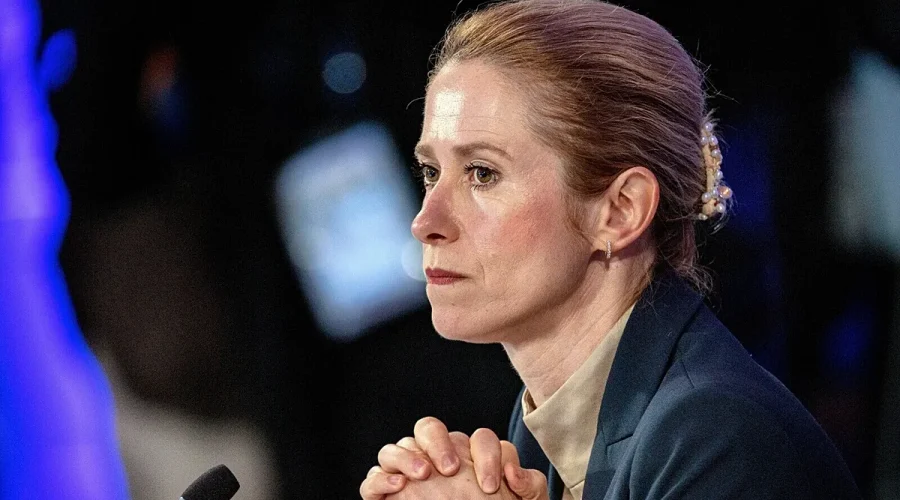
Usagevpn.com – The European Commission’s foreign affairs chief, Kaja Kallas, has confirmed that the bloc will table its most expansive sanctions measures against Russia since the full-scale invasion of Ukraine began in February 2022. Speaking to the German daily Die Welt, Kallas framed the upcoming round as a deliberate escalation designed to close remaining loopholes in the existing regime and deepen economic strain on the Kremlin’s war machine. The announcement lands at a moment when internal friction among member states has made even incremental tightening of restrictions a politically fraught exercise.
Scale of the Proposed Expansion
Kallas stated that the listings she intends to submit in the coming months would represent the broadest single expansion of the sanctions architecture since the conflict erupted. Specifically, she projected that the new designations would increase the cumulative tally of sanctioned Russian companies and individuals by roughly one-third. Given that more than 3,000 persons and entities have already been placed on EU restriction lists across 21 successive packages, a one-third uplift implies approximately 1,000 additional targets — a figure that would mark the largest single-package addition to date.
“The pressure must keep growing until Moscow ends its war,” Kallas told Die Welt.
Each package must clear the unanimous consent of all 27 member states, a procedural requirement that has historically slowed adoption and, in recent cycles, nearly derailed entire rounds. The measures themselves are calibrated to choke off Moscow’s capacity to finance and sustain military operations in Ukraine by striking at its defence-industrial complex, heavy-manufacturing base, and export revenue streams.
Internal Friction and the LNG Precedent
The path to broader sanctions has grown increasingly contested within the Council. The most instructive example came with the adoption of the 21st package, which was nearly blocked when Greece demanded a bespoke carve-out from an EU-wide prohibition on the transport of Russian liquefied natural gas. Athens ultimately secured the exemption over the visible objection of other delegations, an episode that sharpened debate over whether national commercial interests can override the collective appetite to impose deeper economic costs on Russia. The episode left a residue of distrust among diplomats who view the unanimity rule as a structural vulnerability that individual capitals can exploit.
For the autumn package, Kallas’s remarks suggest she will need to navigate similar sensitivities — particularly among member states with significant energy trade, shipping, or tourism links to Russia — while maintaining the political momentum for escalation.
Economic Toll on Russia
Kallas estimated that the cumulative effect of EU restrictions has already cost the Russian economy more than one trillion euros. She characterised the Kremlin as having
“already paid a high price for the EU sanctions.”
Over €28 billion in private-sector assets held within EU jurisdictions remain frozen, and the restrictions span political and military leadership, oligarchic networks, and corporate entities across sectors from finance to aerospace. Yet the persistence of Russian military capability in Ukraine has fuelled the argument within Brussels that the current ceiling of pressure is insufficient and that further tightening remains both feasible and necessary.
Transatlantic Alignment and the Post-2024 Variable
Beyond the intra-EU calculus, Kallas signalled optimism about converging US and EU approaches to Russia sanctions. A bipartisan Russia sanctions bill championed by the late senator Lindsey Graham cleared the Senate, creating a legislative framework in Washington that could complement Brussels’s measures. Kallas expressed hope that the two sides could
“move closer”
in their respective sanction architectures, reducing the risk of arbitrage where Russian actors route assets or transactions through jurisdictions outside both regimes.
That optimism sits against a backdrop of growing unease in Brussels over the durability of Western financial support to Ukraine and the consistency of sanctions enforcement since Donald Trump’s return to the White House. The re-election shifted the centre of gravity in Washington toward a more transactional posture on European security questions, prompting EU institutions to accelerate their own autonomous capacity to sustain pressure without relying on American political goodwill.
What Comes Next
The autumn timeline Kallas outlined means that draft listings will move through Commission services, inter-service coordination, and ultimately the Council in the weeks ahead. Member-state capitals will receive advance briefings, and the usual cycle of bilateral lobbying, technical amendments, and last-minute concessions will unfold. Whether the final package matches the scale Kallas described — or is trimmed by the same national-interest vetoes that nearly sank the 21st round — will be the defining test of whether the EU can still function as a coherent sanctions actor, or whether the unanimity requirement has become a de facto veto mechanism for any state with a commercial stake in maintaining softer terms.
Related Reading
Frequently Asked Questions
What is EU to propose tougher sanctions on Russia?
EU to propose tougher sanctions on Russia is the main topic of this guide. The article explains the context, practical details, and next steps readers should understand.
Why does EU to propose tougher sanctions on Russia matter?
EU to propose tougher sanctions on Russia matters because readers are looking for a useful answer, not just a short summary. Good content should match search intent and help them decide what to do next.