Europe’s Nature Restoration Deadline Looms as Climate Shocks Expose a €65 Billion Funding Gap
Usagevpn.com – With less than a week remaining before the 1 September deadline, EU member states face the final stretch of a regulatory obligation that has arrived amid some of the most severe climate disruptions the continent has ever recorded. The Nature Restoration Regulation requires each capital to deliver a draft national plan to the European Commission, and researchers are now sounding the alarm that the bloc’s annual funding for ecosystem recovery stands roughly €65 billion short of what is needed to meet the law’s ambitions.
A Summer That Redefined Risk
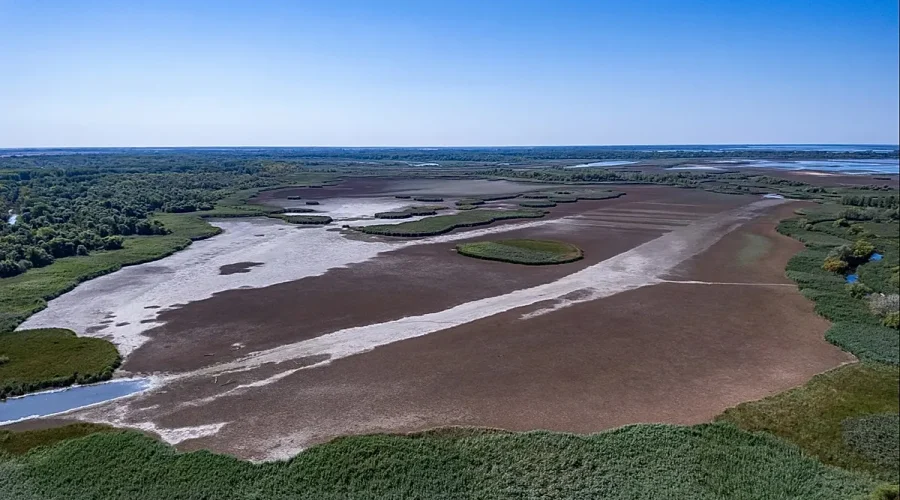
The urgency of the appeal is underscored by events from just weeks ago. Spain and France watched thousands of hectares of forest and scrub consumed by wildfires that broke seasonal records. In Central Europe, the Danube River dropped to historic minimum levels, forcing Hungary and Romania to throttle back portions of their nuclear generation capacity because cooling water became scarce. These were not isolated incidents but symptoms of a continent whose infrastructure, agriculture, and energy systems were designed for a climate that no longer exists.
Environmental scientists argue that the episode should be read not merely as a biodiversity story but as a climate-resilience failure. Healthy wetlands, intact forests, and functioning watersheds act as natural buffers against drought, flash flooding, and extreme heat. When those systems degrade, the costs shift onto engineered infrastructure and public budgets at precisely the moment those budgets are already strained.
The Scientific Case, Framed as Economic Necessity
Biodiversa+, the European Biodiversity Partnership, has published guidance urging member states to translate the restoration regulation into concrete, measurable action. The group’s position is that nature-based interventions—rewetting peatlands, reconnecting river floodplains, restoring urban green corridors—can simultaneously reduce stormwater pressure in cities, lower peak flood levels, and improve water security for downstream communities.
The partnership also highlights a structural blind spot: fewer than one in ten national restoration policies to date account for downstream health or social consequences, and private capital flows into restoration remain marginal. Yet the economic exposure is substantial. A Biodiversa+ statement notes that in the EU, 72 per cent of non-financial corporations and close to 75 per cent of Euro-area bank lending are tied to sectors with high or moderate dependency on natural capital.
“As nature’s degradation poses a material risk to businesses, engaging the private sector in restoration is not just philanthropy, but also an economic necessity.” — Biodiversa+ statement
Rainer Sodtke, co-chair of the partnership, told the press that the science underpinning restoration is mature, peer-reviewed, and immediately deployable. He framed the upcoming submission window as a moment when practical, evidence-based guidance is already available to every capital.
“With the Nature Restoration Regulation now entering its critical phase, member states have access to practical, evidence-based guidance on creating effective plans. We urge them to use it.” — Rainer Sodtke, Biodiversa+ co-chair
Lawmakers Press for Speed and Scale
Inside the European Parliament, the Greens/EFA group has made the deadline a priority. German MEP Jutta Paulus described climate-adaptation measures as more urgent than ever following the summer’s fire season, and tied the restoration plans directly to the forthcoming Multiannual Financial Framework negotiations for 2028–2034.
“These plans are especially critical for the upcoming Multiannual Financial Framework negotiations, since securing their funding will be key to the law’s success. Member states must act quickly and submit their plans to meet the law’s targets and safeguard both food security and climate resilience in Europe.” — Jutta Paulus, Greens/EFA, Germany
Her German colleague Terry Reintke went further, characterising restoration not as a niche policy lever but as one of the few structural answers to an existential climate challenge.
“If we miss the deadline for nature restoration, we are not just failing a regulation, we are fuelling the next heatwaves and floods.” — Terry Reintke, Greens/EFA, Germany
Budget Architecture Under Scrutiny
The Commission’s draft for the next multi-annual budget proposes a significant restructuring of environmental financing. It would wind down LIFE, the EU’s long-standing flagship scheme for habitat protection and species recovery, and redirect those resources into the Competitiveness Fund for restoration projects. Spain’s environment ministry warned ministers in June that absorbing LIFE into a broader instrument risks diluting its targeted impact on natural habitats, water resources, and air-quality measures.
Madrid also flagged that the Commission’s proposed allocation for biodiversity and restoration in the 2028–2034 cycle may fall below the €5.4 billion earmarked under the current 2021–2027 framework. If realised, the reduction would widen the already-identified €65 billion annual gap at precisely the moment climate exposure is accelerating.
Long-Horizon Consequences of Near-Term Choices
Final national restoration plans are expected to be adopted in 2027, and the first mandatory revision cycle will not arrive until 2032. That means the design choices embedded in the drafts submitted over the coming days—scope, ambition level, funding architecture, and private-sector engagement mechanisms—will lock in a trajectory for at least five years. For a continent that just watched its rivers run dry and its forests burn at unprecedented scale, the cost of delay is no longer theoretical.
Most member states have either filed their drafts or are on schedule to do so before the deadline. The Commission did not specify, at the time of writing, which capitals remain outstanding. What is clear is that the window for meaningful course correction is closing, and the scientific consensus is that every hectare of degraded ecosystem left unrepaired represents a future flood peak, a future heat dome, or a future water shortage that will be far more expensive to manage than the restoration that could have prevented it.
Related Reading
Frequently Asked Questions
What is EU countries urged to invest in nature?
EU countries urged to invest in nature is the main topic of this guide. The article explains the context, practical details, and next steps readers should understand.
Why does EU countries urged to invest in nature matter?
EU countries urged to invest in nature matters because readers are looking for a useful answer, not just a short summary. Good content should match search intent and help them decide what to do next.