Live Audio Description at Rock en Seine: Giving Sound a Visual Language
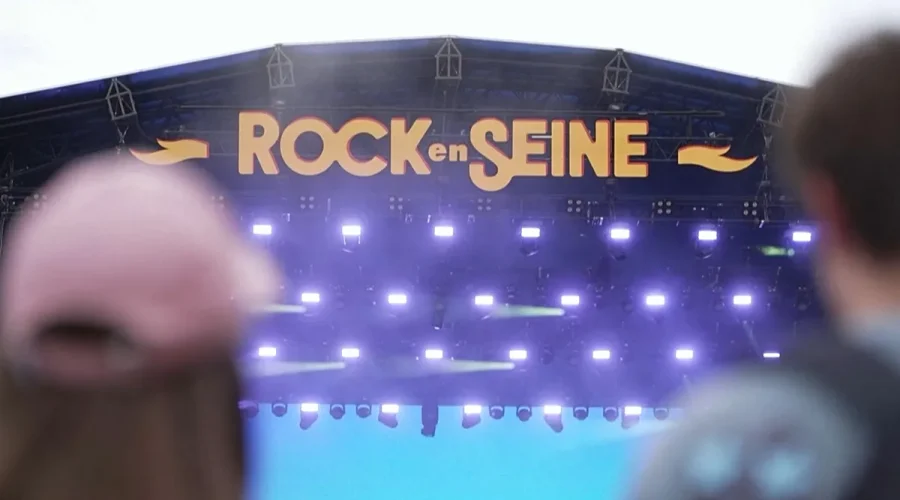
Usagevpn.com – For decades, the sensory architecture of a live concert has been built around sight as much as sound. A shift in stage lighting, a performer’s sudden lunge toward the front of the stage, the electric tension of a crowd erupting in unison — these visual cues shape how millions of attendees interpret the music in real time. Yet for blind and partially sighted fans, that entire layer of meaning has been locked behind an invisible wall. This year, the Rock en Seine festival, held in the forests just west of Paris, has torn that wall down. For the first time in the event’s history, the festival is pairing its headline concerts with live audio description, a practice that translates the visual dimension of a performance into spoken language delivered through headphones.
How the System Works
The initiative, developed in collaboration with the Valentin Haüy Association — a French organization long dedicated to supporting blind and visually impaired communities — operates on a single principle: one described concert per evening on the Grande Scène, the festival’s main stage. Across the festival’s lineup, the described shows include performances by Miki, Djo, Nick Cave & The Bad Seeds, Amyl & The Sniffers, and The Cure. Attendees who wish to use the service gather on a dedicated platform where they receive a pair of headphones. Through those earpieces, they hear a describer’s voice layered beneath the music, speaking only when the visual moment demands attention.
The technical challenge is one of restraint. The describer must identify the precise instants at which a visual event — a lighting cue, a performer crossing the stage, a facial expression, a gesture directed at the crowd — carries meaning that cannot be inferred from sound alone. At every other moment, silence reigns, and the music occupies the full acoustic space it was composed to fill. The describer is, in effect, a live narrator who speaks perhaps twenty percent of the time and must choose each word with surgical precision.
The Voice Behind the Headphones
At the helm of this year’s described concerts is Raphaëlle Valenti, a voice actor, writer, and trainer specializing in audio description. She founded the company ZeugmaConcepts, which focuses on developing and teaching the craft of translating visual culture into accessible spoken form. Over several years she has worked to make cultural content reachable to audiences who cannot rely on sight, and she now trains a new generation of audio description writers.
“I am the eyes of spectators who cannot see,” Valenti explains. “I mustn’t force myself on the audience, I mustn’t speak over a moment of emotion from the singer, for example. I am going to say all that to convey the emotion.”
Her task demands a form of split attention that borders on the superhuman. She must watch the stage continuously, decode what is unfolding in real time, and then locate the exact phrase that captures the visual event without competing with the lyrics or the instrumental texture. It is, by her own account, a discipline of intense concentration in which a single misplaced sentence can shatter the emotional arc of a song.
A Spectator’s Perspective
For Saliha, a partially sighted festivalgoer who attended one of the described shows, the experience was described as nothing short of revelatory. She had not been to a music festival in years, and the prospect of returning had long felt daunting without the visual context that anchors a live show.
“She has a pleasant voice to start with… she was my eyes, I knew absolutely everything that was going on, it was brilliant,” Saliha recalls. “It’s been so many years since I’ve been to a festival that now I fully intend to have a blast. Because it’s a system that is just… wow!”
Yet Saliha also identified the cognitive tension inherent in the format. Listening to the description requires active, focused attention, while simultaneously wanting to parse the lyrics of a song pulls the ear in a different direction.
“On the one hand there is active listening to the description that is being given and on the other hand, if I want to listen to the lyrics, it’s complicated,” she admits, calling the balancing act a kind of “gymnastics” for the listener.
That difficulty, however, did not diminish her enjoyment. If anything, the act of choosing what to attend to — the describer’s narration or the singer’s words — gave her a new, participatory relationship with the performance.
What Audio Description Does — and Does Not — Do
The initiative is not an attempt to replace the music or to narrate every beat of a set. Its purpose is narrower and more specific: to transmit the visual information that makes a concert a live, embodied event rather than a flat audio recording. A lighting change that signals a song’s climax. An artist stepping off the platform to meet the crowd. A look exchanged between band members that telegraphs a key change. An interaction with the audience that transforms a song into a shared ritual. These are the moments the describer is trained to capture.
On stage, the performers continue to sing, the lights continue to pulse, and the crowd continues to move as it always has. In the headphones, a second channel of meaning opens for those who would otherwise receive only half the signal. The emotion at the core of the experience — the feeling of being present, of sharing a moment with thousands of strangers, of being swept up by something larger than oneself — remains intact. What changes is the access route. And for the first time at Rock en Seine, that route is open to everyone.
Related Reading
Frequently Asked Questions
What is Rock en Seine?
Rock en Seine is the main topic of this guide. The article explains the context, practical details, and next steps readers should understand.
Why does Rock en Seine matter?
Rock en Seine matters because readers are looking for a useful answer, not just a short summary. Good content should match search intent and help them decide what to do next.