The Longest Musical Composition Changes Chords After Two Years
Usagevpn.com – Visitors to the historic town of Halberstadt in eastern Germany have witnessed another momentous occasion as the longest musical composition in the world continues its patient evolution. The organ within the medieval St Burchardi church has once again shifted its harmonic landscape, marking the seventeenth alteration in what may be the most extended musical performance ever conceived by human hands.
This extraordinary undertaking, formally designated as ORGAN²/ASLSP, commenced on September 5, 2001, and is scheduled to conclude in the year 2640. That span encompasses 639 years of continuous sound, representing approximately four percent of its total duration following this latest modification. The piece has become something of a pilgrimage destination for music enthusiasts and curious travelers alike, who gather to observe these rare moments when the composition transitions between harmonic states.
The Vision of John Cage
The conceptual foundation for this monumental work emerged from the mind of John Cage, the pioneering American avant-garde composer whose radical approach to music challenged conventional boundaries. Originally composed for piano in 1985, Cage later adapted his creation specifically for organ performance. He passed away in 1992, never living to witness the full realization of his artistic vision.
What makes this composition particularly remarkable is Cage’s deliberate omission of temporal constraints. Rather than prescribing a specific duration, he offered a single enigmatic instruction that would guide performers for centuries to come:
ASLSP, meaning “as slowly and softly as possible.”
Those entrusted with maintaining this performance took those words with profound seriousness, interpreting them with literal precision that has resulted in a musical experience unlike any other in human history.
How the Eternal Organ Works
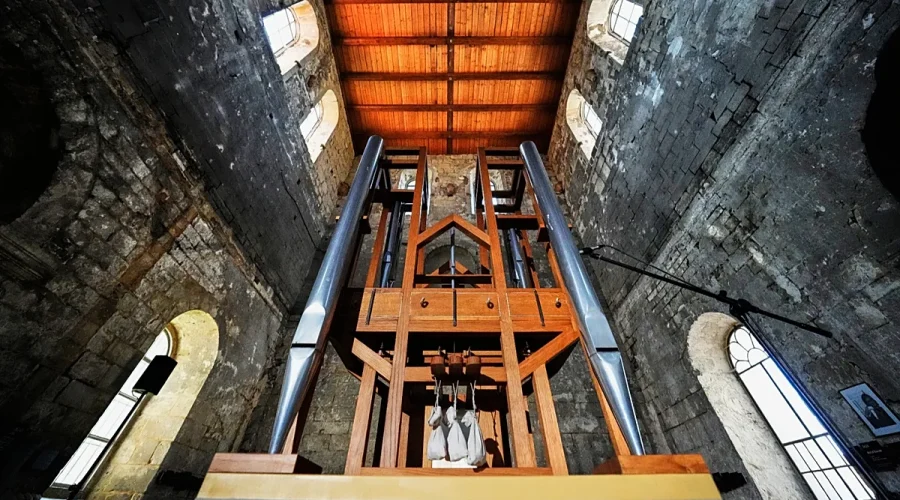
The mechanics behind this seemingly endless performance reveal both ingenuity and simplicity. An electric-powered blower system continuously supplies wind to the organ’s pipes, generating an unbroken sonic presence. Since no human musician could possibly sustain the necessary pressure on keys for such an extended period, the performers developed an elegant solution involving small sandbags.
These weights rest upon the organ’s keys, maintaining the pressed position and allowing the sound to continue without human intervention. The chord changes themselves are performed manually by dedicated caretakers who carefully adjust the configuration of notes according to a predetermined schedule. This particular alteration involved adding an A4 pipe to the existing seven-note configuration, bringing the total to eight notes.
The timing of this change follows a carefully calculated pattern. The previous modification occurred on February 5, 2024, exactly two years prior to this most recent transition. Looking ahead, the next scheduled alteration will take place on October 5, 2027, when the E4 sound—originally incorporated on September 5, 2020—will finally be released from its sandbag restraint.
A Living Monument to Musical Innovation
The cultural significance of this project extends far beyond its musical merits. Halberstadt, situated in Saxony-Anhalt, has become internationally recognized as home to what might be considered the world’s slowest concert. The church itself, with its medieval architecture, provides an appropriate setting for this temporal experiment that bridges centuries of human civilization.
For those contemplating the ultimate inheritance, organizers have introduced a novel concept: inheritable final tickets for the concluding performance on September 4, 2640. These commemorative passes, priced at €2,640, offer future generations a tangible connection to this extraordinary artistic endeavor. The owner of such a ticket will possess bragging rights as a descendant of someone who secured a place at the very end of the longest musical composition ever created.
Frequently Asked Questions
When does the longest musical composition begin and end? The performance started on September 5, 2001, and is scheduled to conclude on September 4, 2640, spanning a total of 639 years.
How often do the chords change? The chords change approximately every two years, with the most recent alteration occurring on August 5, 2026, following the previous change on February 5, 2024.
Who created this musical masterpiece? American composer John Cage originally composed the piece for piano in 1985 and later adapted it for organ performance. He passed away in 1992.
How is the organ kept playing without human intervention? Small sandbags rest on the organ’s keys, maintaining the pressed position. An electric blower system continuously supplies wind to the pipes, generating unbroken sound.
Can visitors purchase tickets for the final performance? Yes, inheritable final tickets are available for €2,640 each, offering future generations a connection to the conclusion of the longest musical composition in history.