Queen Camilla Faces Criticism Over Meeting With J.K. Rowling During Pride Month
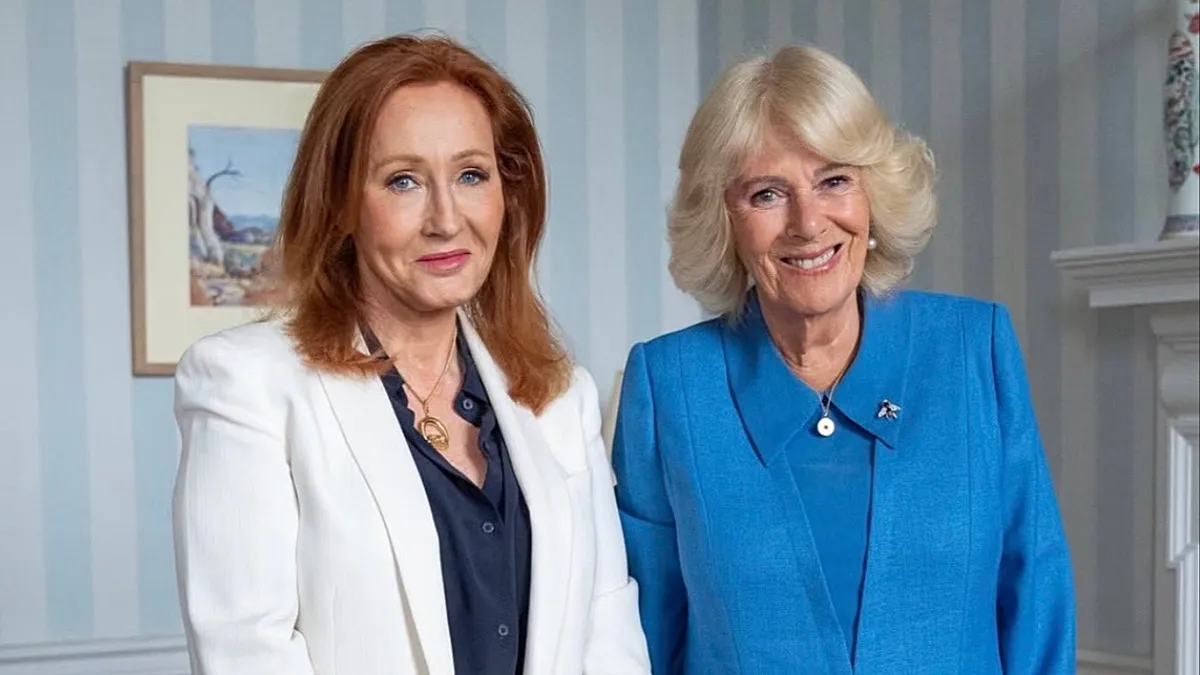
Terrible judgement – Queen Camilla’s recent appearance with renowned author J.K. Rowling has sparked a wave of public discontent, with critics accusing her of making a politically insensitive choice. The encounter, which took place on 30 June, was part of a series of events celebrating Scottish culture and achievements during Royal Week in Edinburgh—a period also referred to as Holyrood Week. Despite the Queen’s efforts to promote literacy and reading, the meeting with Rowling, known for her contentious views on gender identity, has drawn sharp criticism from social media users.
The Royal Family’s Initiative
According to a statement released by the Royal Family on social media, the Queen and Rowling discussed their mutual dedication to fostering a love of reading in children. The post highlighted their “shared enthusiasm for literature” and emphasized how the conversation aimed to inspire future generations. “Her Majesty and Ms Rowling explored the significance of providing young people with access to books and the role reading plays in shaping their opportunities,” the statement read. The event was intended to showcase the Royal Family’s commitment to cultural engagement, but the timing of the meeting has since become a focal point of controversy.
Social Media Outcry
While promoting literacy is a commendable goal, the meeting has been met with widespread backlash due to Rowling’s public stances on transgender issues. Social media platforms have become battlegrounds for criticism, with users questioning the Queen’s decision to associate with an author labeled as transphobic. Many have pointed out that Rowling’s remarks often target transgender women, with some calling her a TERF—Trans-Exclusionary Radical Feminist. The timing of the meeting, just days after the end of Pride Month, has amplified these concerns, with some arguing that it symbolizes a disconnect between the monarchy and contemporary social values.
“During Pride month, this is a statement,” one online post remarked. “There are many other admirable individuals to spotlight who champion reading for children and young people,” added another user, while a third commented: “As an admirer of the Queen and her Reading Room, I’m deeply disappointed in her giving a platform to JKR, any month but especially during Pride Month.”
The backlash has also highlighted broader frustrations with the Royal Family’s perceived lack of alignment with modern movements. Critics argue that the meeting underscores how the institution may struggle to resonate with younger audiences who are increasingly vocal about issues like gender inclusivity. Some have even questioned whether the event was an attempt to maintain the monarchy’s relevance in a rapidly evolving cultural landscape.
Rowling’s Controversial Stance
J.K. Rowling has long been a polarizing figure, with her political views drawing both admiration and condemnation. Her recent statements against transgender women have been widely interpreted as transphobic, leading to a growing movement of critics who accuse her of advancing exclusionary ideologies. The author’s public debates on gender identity have not only sparked online disputes but have also strained relationships with some of her former allies in the Harry Potter community.
Among those who have distanced themselves from Rowling is Daniel Radcliffe, who has openly criticized her arguments on gender. Radcliffe’s remarks, however, have not been the only notable responses. Prominent personality Stephen Fry has also weighed in, describing Rowling as “a lost cause” in a recent podcast appearance. Fry, who once narrated all seven Harry Potter audiobooks, expressed concern that the author’s views have been hardened by both transphobic rhetoric and the influence of TERFs.
“She has been radicalised I fear, and it may be she has been radicalised by TERFs, but also by the vitriol that is thrown at her,” Fry said on The Show People podcast. “It is unhelpful and only hardens her, and will only continue to harden her, I am afraid. I am not saying she shouldn’t be called out when she says things that are really cruel, wrong, and mocking. She seems to be a lost cause for us.”
Fry’s comments come in the wake of the UK Supreme Court’s ruling in April 2025, which defined ‘woman’ as a biological female rather than an individual of any gender. This legal decision has been used by some to support Rowling’s arguments, further entrenching her position in the debate. Yet, it has also fueled criticism that the monarchy is endorsing viewpoints that conflict with current societal progress, particularly in the realm of LGBTQ+ rights.
Broader Implications
The meeting with Rowling has reignited discussions about the monarchy’s role in public discourse. Some argue that the Royal Family’s association with the author risks alienating segments of the population that value inclusivity and diversity. Meanwhile, others defend the decision, citing the importance of engaging with figures who share a common goal of promoting education and literature.
Supporters of the Queen have pointed out that the meeting was not about politics per se, but about fostering a shared interest in reading. They believe the Royal Family’s actions should be judged by their overall commitment to cultural initiatives rather than individual controversies. However, the backlash has shown that the timing of such events can carry significant symbolic weight, especially when they occur during a month dedicated to celebrating LGBTQ+ pride.
A Changing Landscape
As the debate continues, the incident has underscored the challenges faced by the monarchy in navigating modern social issues. The Queen’s public persona, which has long been associated with tradition and stability, now finds itself at the center of a controversy that reflects shifting societal priorities. While the Royal Family has historically served as a unifying symbol, this meeting has revealed a potential fracture in their ability to connect with diverse communities.
Rowling’s influence, however, remains substantial. Her books have continued to captivate millions of readers worldwide, and her public statements, though divisive, have kept her in the cultural spotlight. The question now is whether the Royal Family’s support for her will be seen as a strategic move or an acknowledgment of the ongoing debate surrounding gender identity. As the conversation evolves, the meeting is likely to be remembered as a pivotal moment in the intersection of literature, politics, and public perception.
With the Royal Family’s actions now scrutinized under a new light, the incident serves as a reminder of the power of symbolic gestures in shaping public opinion. While the Queen’s intention to promote reading is clear, the association with Rowling has sparked a deeper discussion about the monarchy’s role in endorsing ideological positions. As the debate continues, the future of such collaborations will depend on how the public interprets the balance between cultural advocacy and political alignment.