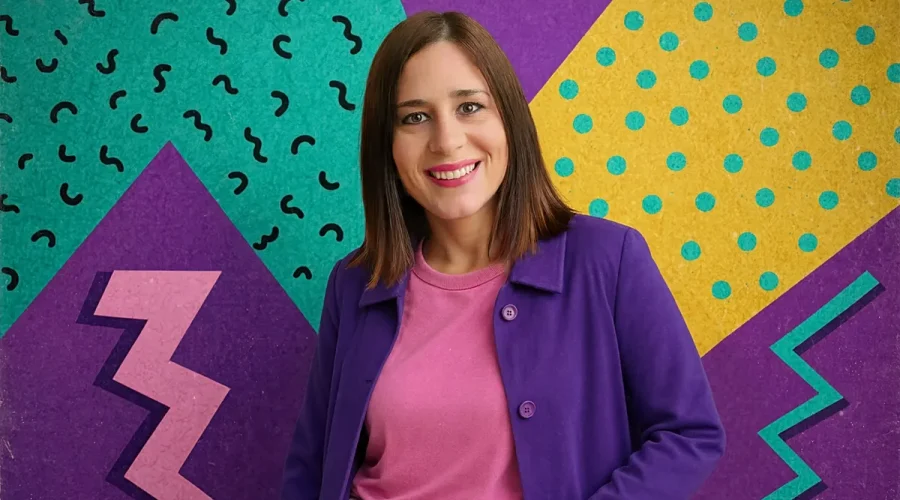
From Marketing Consultant to $100,000 AI Art Prize: How Nóra Bereczki Redefined What a Camera Can Do
Usagevpn.com – In a field where tens of thousands of creators now compete for attention, one Hungarian artist managed to stand out from a pool of 52,000 submissions and walk away with a $100,000 grand prize in an image-generation software competition. Her name is Nóra Bereczki, though online audiences know her better by the moniker Digital Umami. This summer, her winning body of work — a ten-image series called Dolce Impossible — captured judges’ imaginations by pairing the familiar visual vocabulary of a Mediterranean holiday with quietly unsettling surrealist intrusions. The result: a collection that feels simultaneously nostalgic and deeply wrong, in the best possible way.
The Series That Broke Through
Each of the ten frames in Dolce Impossible depicts a scene most holiday-goers would recognise — sun-bleached sand, turquoise water, the lazy geometry of a beach afternoon. Yet every single image contains one element that should not be there. A towering, human-sized lobster stands on the shore, locked in eye contact with a three-year-old girl. The juxtaposition is absurd, tender, and faintly terrifying all at once. Bereczki has described how the lobster-and-child composition had been sitting in her mind for some time, fully formed, waiting for a means of execution. She acknowledged that a traditional photo shoot could theoretically reproduce the scene, but the logistics — casting, set construction, post-production, budget — would have been enormous. An AI generation pipeline let her render the exact visual she had imagined without that apparatus.
The series is not her only recent output. Bereczki has also produced video works that animate the verses of Hungarian poets and writers, giving their words a moving visual life. Those pieces have circulated widely across social platforms, building an audience that helped carry her into the competition’s spotlight.
A Twenty-Year Photographer Who Picked Up a New Tool
What makes Bereczki’s trajectory unusual is that she did not arrive at AI art from a fine-art or computer-science background. Professionally, she is a marketing consultant. Her most recent corporate role before a maternity leave was at a robotics and industrial automation firm. Her husband also works inside the AI sector, so the household conversation regularly turns to model capabilities, training pipelines, and the pace of technological change. She has spent more than two decades practising both analogue and digital photography, and image-making remains what she calls her core passion.
The inflection point came in 2022, when generative image tools crossed from research labs into mainstream public awareness. At work, she began thinking about how those tools might slot into corporate marketing strategy. Separately, as a personal creative practice, she started experimenting with the same models. Hobby projects accumulated. She tracked each new model release, each prompt-engineering technique, each shift in output quality. Over time, the hobby hardened into a sustained artistic practice under the Digital Umami identity.
Tool, Not Co-Author
Bereczki is explicit about where she draws the line between using AI and surrendering authorship to it. In her view, an AI-generated image becomes a genuine human creation only when the artist carries through a vision they had already formed. The moment the outcome is left to the model’s stochastic whims — type “blue dog,” admire whatever emerges, feel a small thrill — the exercise is pleasant but not, in her framing, art in the sense she practises.
“When they do not leave the outcome to the random results produced by the model, but really get what they originally wanted,” she explained, describing the threshold at which an AI-assisted image crosses into authored work.
She does keep one exception on her bookshelf: a single AI image made in exactly that random, exploratory mode. It brings her joy, and she is content to let it sit there as a memento of play rather than a statement of intent.
Mixing Media, Choosing the Right Instrument
For Bereczki, AI has not displaced photography; it has expanded the palette. She frequently composites her own analogue photographs with AI-generated elements, treating each technology as an instrument suited to a particular expressive need. Walking down a street, she still thinks in frames — compositions, light, negative space. Many of those mental images are physically impossible to shoot. AI fills that gap. Other times, no generative model is required at all, and a straightforward lens-and-film approach serves the idea better. The decision is made per project, per image, per impulse.
Why the Distinction Matters
The broader conversation around AI in art — whether machine-assisted outputs qualify as “art,” whether the technology augments or replaces human creativity, how schools should teach visual literacy in a world where a sentence can summon a photograph — remains unresolved. Bereczki’s position, articulated plainly in interview, is that the question collapses if you treat the model as a partner with its own aesthetic agenda. The moment you do that, authorship diffuses. Keep the vision yours; let the machine execute. That, she argues, is what separates a creative act from a lucky roll of the dice.
Her $100,000 win and the viral reach of her poet-animation videos have made her one of the most visible voices in a debate that is only accelerating. Whether the next frontier she crosses involves new model architectures, new hybrid workflows, or entirely new subject matter, the underlying principle she has stated is unlikely to shift: the image must answer to the artist’s intent, not to the algorithm’s mood.
Related Reading
Frequently Asked Questions
What is Prompting makes perfect?
Prompting makes perfect is the main topic of this guide. The article explains the context, practical details, and next steps readers should understand.
Why does Prompting makes perfect matter?
Prompting makes perfect matters because readers are looking for a useful answer, not just a short summary. Good content should match search intent and help them decide what to do next.