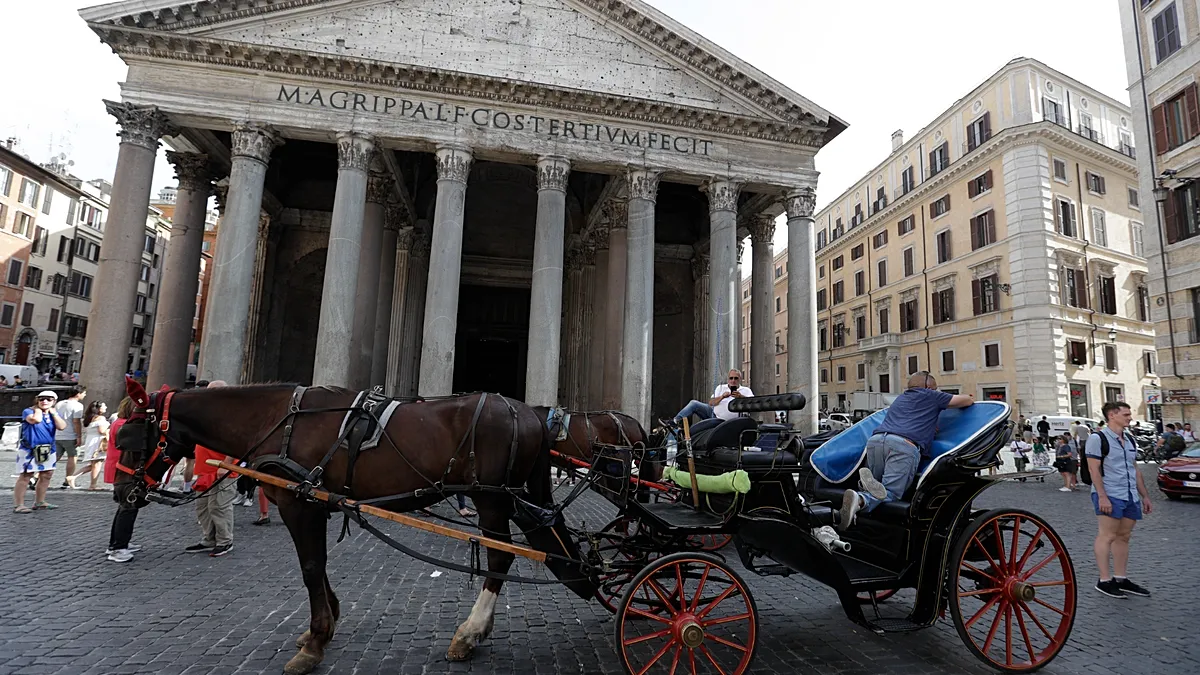
Historic Legislation Could Eliminate Rome’s Iconic Horse-Drawn Carriages
Usagevpn.com – A centuries-old tradition faces potential extinction in Italy’s capital. During a Wednesday afternoon session, lawmakers introduced comprehensive legislation that would fundamentally transform urban transportation in Rome and other historic Italian cities. The proposed bill targets the beloved botticelle—colorful horse-drawn carriages that have become synonymous with Rome’s tourist experience for generations.
A Legislative Push for Animal Welfare
The initiative, jointly promoted by three political parties—PD, Avs, and M5S—seeks to repeal Article 70 of the Highway Code. This existing provision currently permits the operation of animal-drawn vehicles for public hire services. The new legislation would establish a comprehensive prohibition on using animals to pull vehicles across multiple categories of service, including non-scheduled public transportation, tourism, recreation, and ceremonial functions.
Patrizia Prestipino, a PD member of parliament and animal welfare guarantor for Roma Capitale, emphasized the necessity of national-level action during a press conference alongside Avs representative Francesco Emilio Borrelli and M5S member Sergio Costa. She articulated the limitations of current local measures.
Individual municipal ordinances that restrict the hours and activities of the botticelle are not enough. We need to move towards a national law that abolishes botticelle and animal-drawn carriages in cities.
Environmental Concerns and Modern Realities
For several years, environmental organizations have been raising concerns about the compatibility of traditional horse-drawn transport with contemporary urban environments. Amore A Quattro Zampe, one of the leading associations advocating for this cause, has been instrumental in promoting the legislative initiative. These groups argue that modern city streets present challenges that were not present when the practice originated.
The recent extreme weather patterns have intensified these concerns. Scorching asphalt temperatures during summer months create hazardous conditions for working horses, making it increasingly difficult for these animals to perform their traditional duties safely and comfortably.
Summer Awareness Campaign
Throughout the month of August, an awareness initiative called “A piedi è più bello” (Walking is Better) will be prominently displayed across Rome’s principal tourist districts. This campaign, developed in both Italian and English, aims to educate visitors about the benefits of pedestrian exploration and the welfare of working animals.
Rocco Ferraro, councillor of Roma Capitale and delegated councillor of the Metropolitan City of Rome Capital for the Environment, Ecological Transition, Protected Areas and Animal Protection, has championed this campaign. He has also voiced strong support for the pending legislation.
Parliament will seize this historic opportunity and approve a measure that will definitively end the use of horses for tourist transport in our cities. In 2026, continuing to have horses pulling carriages in the heart of the capital is a practice that belongs to the past, not the future.
Broader Implications for Italian Cities
While Rome remains the primary focus of this legislative effort, the implications extend to other major Italian art cities where botticelle operate. The proposed national framework would create uniform standards across the country, potentially affecting tourism patterns and urban mobility in multiple municipalities.
The debate reflects a broader conversation about balancing cultural heritage with animal welfare in modern urban settings. As cities evolve and climate conditions change, traditional practices must adapt or face obsolescence. The proposed legislation represents one possible path forward, offering a definitive resolution to questions that have persisted for decades.
Should the bill pass through the Chamber of Deputies, it would mark a significant moment in Italian legislative history, closing a chapter on a practice that has defined Rome’s streets for generations while opening new possibilities for sustainable urban tourism and animal protection.
Related Reading
Frequently Asked Questions
What is Italy moves to ban horse drawn?
Italy moves to ban horse drawn is the main topic of this guide. The article explains the context, practical details, and next steps readers should understand.
Why does Italy moves to ban horse drawn matter?
Italy moves to ban horse drawn matters because readers are looking for a useful answer, not just a short summary. Good content should match search intent and help them decide what to do next.