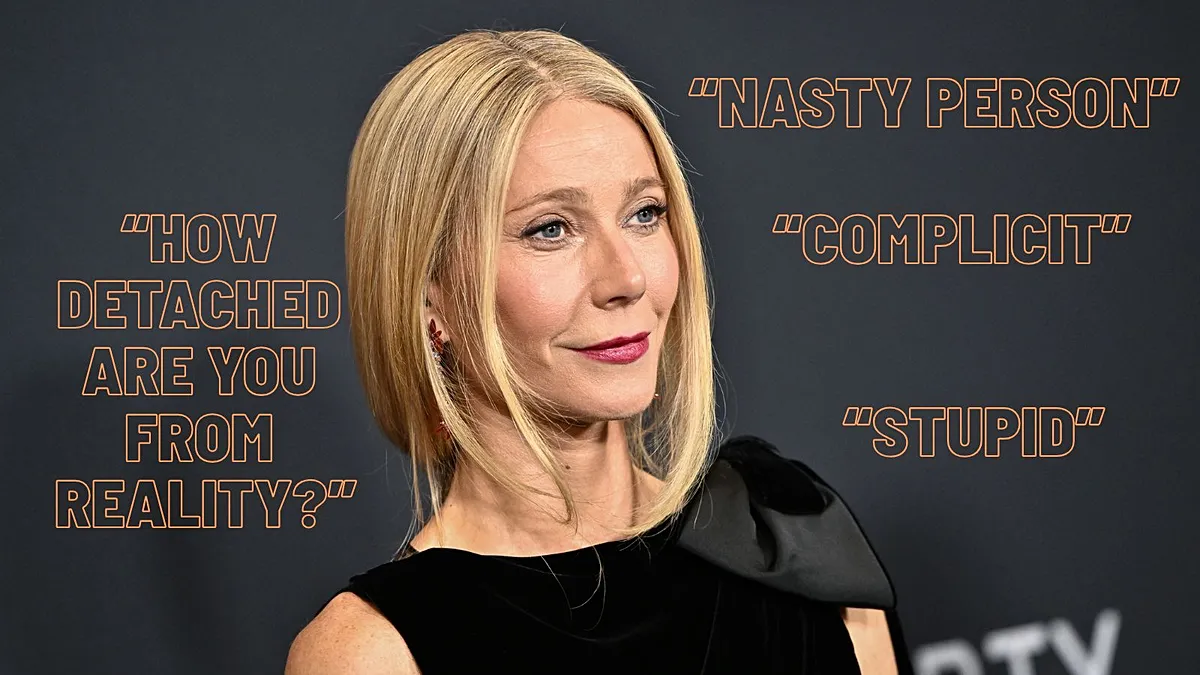
Gwyneth Paltrow’s ‘Gwynocide’ Ad Sparks Global Criticism Over Israel Real Estate Campaign
Gwynocide – Oscar-winning actress Gwyneth Paltrow has become a target of intense criticism for her recent involvement in a luxury real estate advertisement that has drawn sharp condemnation. The 53-year-old, known for her lifestyle brand Goop, was featured in a promotional video for 51 Park, a towering residential complex in Herzliya, Israel. The ad, which highlights the serene surroundings of the development, has been accused of being “tone deaf” in light of the ongoing conflict in Gaza. Critics have labeled the campaign as a display of insensitivity, even coining the term “Gwynocide” to describe Paltrow’s perceived complicity in promoting Israeli projects during a time of crisis.
The Controversial Ad: A Criticized Representation
In the ad, Paltrow outlines her daily routine, extolling the charm of properties situated near green spaces. “There’s a reason the world’s most iconic buildings are by a park,” she says, framing the development as a symbol of modern living and aesthetic appeal. The clip, however, has sparked backlash after Paltrow was asked if the luxury building was in New York. Her response—”Herzliya. Israel.”—prompted a wave of social media outrage. Commenters pointed out that the location is mere miles from areas affected by the Israeli military’s operations in Gaza, where civilians have been displaced and killed in significant numbers.
While the ad’s primary message is about the tranquility and sophistication of 51 Park, critics argue that it overlooks the broader implications of the project. The building’s proximity to the West Bank raises questions about the use of Palestinian land for Israeli development. This has led to accusations that Paltrow’s endorsement is not just a commercial choice but a political one, with some viewing it as a tacit approval of the Israeli occupation.
The Humanitarian Context: Gaza’s Crisis and Oxfam’s Analysis
The controversy has intensified as the humanitarian situation in Gaza continues to worsen. Over the past three years, the number of Palestinians killed has exceeded the total deaths recorded in the previous 17 years, according to Oxfam’s recent analysis. This grim statistic underscores the urgency of the crisis, which has seen widespread destruction and displacement. The ad’s timing, coinciding with these events, has been criticized for its lack of awareness or empathy.
Many social media users have taken to platforms like X to voice their frustration, with one commenter stating, “Total moral degradation. While children in Gaza face genocide, starvation, and daily massacres, Gwyneth Paltrow is busy promoting luxury apartments in Israel. No conscience, no ethics just pure complicity with an occupying regime. Absolutely repulsive.” Others have echoed similar sentiments, accusing Paltrow of prioritizing profit over principle. One user wrote: “Disgusting woman. Anything for a bit of extra cash I guess.” Another added: “Making an ad for a luxury condo is as disgusting as it can be for someone [with] privilege. How detached are you from reality? You’re either so detached that you need to be cancelled, because you live in another world. Or you’re actually a really, really nasty person. Or you are stupid. Which are you, Gwyneth Paltrow?”
Public Figures Join the Criticism
Supporters of the Palestinian cause have not only voiced their disapproval online but have also drawn public figures into the fray. Alana Hadid, an activist and sister of renowned models Bella and Gigi Hadid, called the campaign “tone deaf” and “complicit.” She highlighted the disconnect between the ad’s idyllic imagery and the real-world suffering of Palestinians. Similarly, influencer Matt Bernstein slammed Paltrow, stating: “The level of greed and depravity is truly incomprehensible.” These public rebukes have amplified the perception of Paltrow as an unwitting symbol of the conflict.
The backlash has even reached the personal sphere. Colin Firth’s ex-wife, Livia Giuggioli, took to Instagram to announce that she has canceled Paltrow’s upcoming visit to her Italian farm. “I just cancelled Gwyneth Paltrow,” Giuggioli said in a recent video. “She was supposed to come to the farm in a couple of weeks’ time on a tour, a soil-to-fork farm experience, and we just cancelled her because what she did is completely unacceptable.” Giuggioli’s comments reflect a broader sentiment that Paltrow’s actions are not just corporate but also a personal betrayal of values associated with her brand’s ethos of mindfulness and compassion.
Celebrity Endorsements and Ethical Concerns
Paltrow’s case is part of a growing pattern of celebrities facing scrutiny for their business ties to Israeli entities. Last year, Leonardo DiCaprio was similarly criticized for co-financing a luxury eco-hotel in Israel. His involvement in other Israeli projects, such as investments in Mobli, a social media startup, and Aleph Farms, a farmed meat company, has been seen as a continuation of this trend. The ad for 51 Park, however, has intensified the debate, as it combines the image of a global icon with the reality of a conflict that has displaced thousands.
Some argue that Paltrow’s participation in the ad reflects a disconnect from the ground realities. Her brand, Goop, has long promoted holistic living and environmental consciousness, which now appears at odds with the project’s implications. The ad’s emphasis on personal luxury contrasts sharply with the struggles of Palestinians living under occupation, leading critics to question whether her endorsement is a calculated move or a genuine oversight.
Amnesty International’s Report and Israeli Denials
The controversy has also reignited discussions about the Israeli government’s actions in the West Bank. Amnesty International recently released a 149-page report accusing the Israeli authorities of carrying out “state-sanctioned, state-driven and state-implemented” ethnic cleansing. The document highlights the systematic nature of the displacement and destruction affecting Palestinian communities. Israeli leaders have consistently denied these allegations, insisting that their military campaigns are aimed at dismantling Hamas and ensuring security in the region.
Despite the accusations, the Israeli government continues to support the real estate sector, seeing it as a vital part of the economy. This support has led to questions about the balance between economic growth and humanitarian responsibility. As the debate around Paltrow’s involvement grows, it has also drawn attention to the broader ethical considerations of celebrity endorsements in conflict zones.
Paltrow has yet to publicly address the backlash, leaving the matter open to interpretation. While some defenders argue that her participation is a minor mistake in an otherwise well-intentioned campaign, critics maintain that it represents a