Floptropica: A Digital Paradise for Gen Z
Floptropica – In an era marked by economic uncertainty and political turbulence, the global landscape has become a treacherous terrain for many. With soaring unemployment rates, escalating geopolitical tensions, and Europe’s recent battle against an intense heatwave, the need for escape has never been greater. Enter Floptropica, a fictional nation that has emerged as a digital haven for Gen Z, where the pressures of reality are momentarily forgotten. While it may not appear on any traditional map, its allure has captured the imagination of millions, particularly within the vibrant TikTok community.
The Birth of a Virtual Nation
Floptropica is a whimsical blend of “flop” and “tropics,” a term popularized by social media users to describe a period of decline or stagnation. This concept gained traction during the rise of fandom-driven content, especially among “Twitter stans” who monitor the careers and public personas of celebrities. As dissatisfaction with Elon Musk’s ownership of X (formerly Twitter) grew, online communities began crafting alternative realities, giving birth to the Floptok movement. This trend, rooted in the idea of a “flop era,” became a cultural phenomenon, with notable figures like Billie Eilish and Zara Larsson acknowledging its relevance in their own narratives.
“the reporter is so messy for that LMAOOO #fyppppppppppppppppppppppp #zaralarrson #midnightsun #zaralarssonfeattydollaign”
The Floptok movement, which originated on TikTok, has evolved into a sprawling digital ecosystem. While initially a niche meme, it has since developed into a complex network of lore, debates, and identities. The country of Floptropica, though non-existent in the physical world, is a testament to the power of online creativity. Its creation is attributed to a collective of users who sought to build a sanctuary for those feeling disillusioned with real-world politics and society.
A Democracy in the Digital Realm
Floptropica’s appeal lies in its democratic structure, a stark contrast to the often chaotic real-world governments. With a GDP ranking among the top three globally and a population of just 10 million, it offers a sense of stability and accessibility. Despite its small size, the nation is rich in cultural and political symbolism, reflecting the values of its digital citizens. However, it is not without its own conflicts—most notably, the so-called “DaBoyz War,” which has shaped its history and identity.
The war between Floptropica and DaBoyz serves as a metaphor for the tensions within online communities. DaBoyz, another fictional nation, represents the opposition to Floptropica’s ideals. This conflict has been a focal point for users, who view it as a microcosm of broader societal debates. Public figures like Andrew Tate, John Cena, and Bashar al-Assad have been exiled to Floptropica, often as a form of digital banishment. Even Nicki Minaj, once a respected member, has been temporarily banned due to controversial statements about the LGBTQIA+ community.
The Celestial Leaders of Floptropica
At the heart of Floptropica’s governance is its unique leadership structure. The nation’s president, Deborah Ali-Williams, is a former funeral director from Houston, Texas, who gained fame for her composure and aesthetic flair. Users, inspired by her efficient management of a funeral home, elected her as a symbol of order in their virtual world. Her role as a TikTok personality further cements her connection to the community, where she maintains a presence through carefully curated content.
Complementing Ali-Williams is the AI-generated Queen, Jiafei Dai, whose status as a digital monarch has sparked both admiration and speculation. While her existence is not grounded in the physical world, her image and influence are deeply embedded in Floptropica’s culture. As one user put it:
“Queen Jiafei saving our nation ? #floptok #floptok??????? #floptropicaairlines @jiafei.dai”
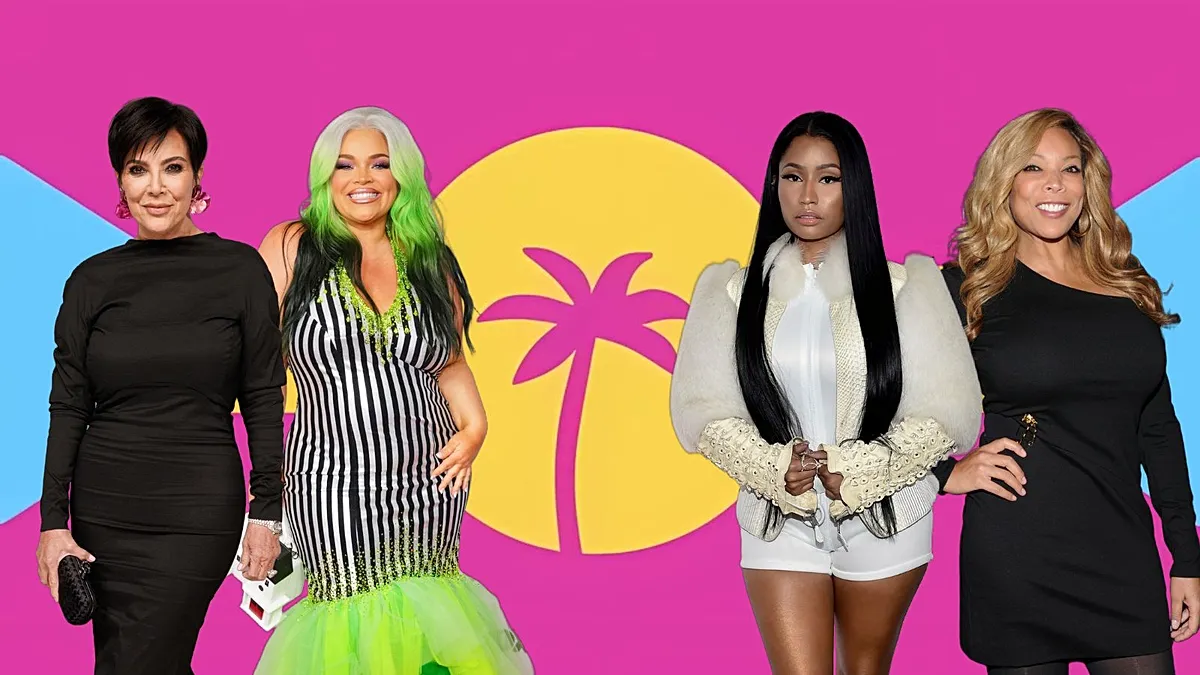
Each state within Floptropica is overseen by a celebrity, creating a surreal blend of pop culture and governance. Cvmberty Island, for example, is managed by Wendy Williams, while CupcakKia falls under the control of CupcakKe, a rapper and singer-songwriter known for her bold personality. Other states include roles for Kris Jenner, who serves as Secretary of Cultural Affairs, and JoJo Siwa, who handles Environmental Sustainability. The exact qualifications for these positions remain a mystery, adding to the nation’s charm and unpredictability.
Infrastructure of a Virtual Society
Despite its fictional nature, Floptropica has developed a robust infrastructure, mirroring real-world systems in both function and form. The nation boasts institutions like the University of Servington and businesses such as Flopvision and Burger Queen. Its own version of telecommunications is represented by Vodafone Floptropica, while the Flop Mobile Group and Yassifisoft provide digital services to its citizens. These entities are not just symbolic—they are actively maintained by the community, with their names and roles evolving through collective participation.
Education and media also play a vital role in Floptropica’s identity. The University of Servington offers courses tailored to the interests of Gen Z, from digital marketing to virtual reality design. Meanwhile, the Jet69 serves as a platform for news and opinions, curated by users who see themselves as the nation’s watchdogs. This decentralized approach to information and governance highlights the collaborative spirit of Floptropica, where every citizen has a voice, even if they are not physically present.
Exploring the Depths of Floptropica’s Culture
The cultural fabric of Floptropica is equally intricate. Its seven official languages include real-world languages like English, Spanish, and Portuguese, alongside fictional dialects such as Flopa, Chinass, Wetnamese, and Potaxie. This linguistic diversity reflects the nation’s inclusive nature, allowing users to engage in their preferred tongue. The official website, maintained by the Floptropica government, acts as a central hub for updates, policies, and community initiatives, further solidifying its presence in the digital sphere.
As the virtual nation continues to grow, it challenges the boundaries between reality and imagination. With elections, institutions, and even a national airline (Floptropica Airlines), it mirrors the complexities of real-world nations while offering a more fluid, creative framework. For many, Floptropica is more than a meme—it is a refuge, a source of identity, and a reflection of their shared experiences in the age of constant connectivity. As one user humorously noted:
“the reporter is so messy for that LMAOOO #fyppppppppppppppppppppppp #zaralarrson #midnightsun #zaralarssonfeattydollaign”
Though its existence is intangible, Floptropica’s impact is undeniable. It has become a space where Gen Z can express their disillusionment, celebrate their creativity, and imagine a world free from the constraints of physical geography. Whether through its political structures, cultural symbols, or digital innovations, the nation stands as a testament to the power of the internet in shaping new realities. As the movement evolves, so too does Floptropica, proving that in an age of online omnipresence, even the most absurd ideas can take on a life of their own.