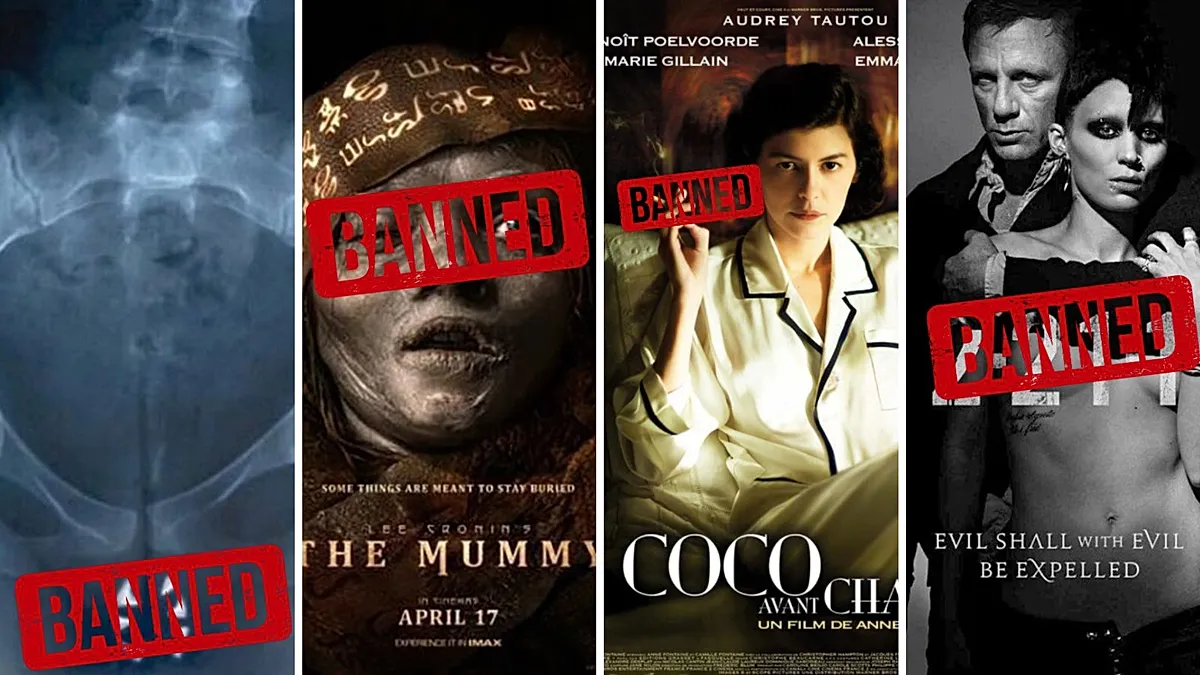
When Cinema Marketing Crosses the Line: A History of Banned Movie Posters
Usagevpn.com – Film marketing has always been a delicate balancing act between capturing attention and respecting cultural boundaries. While some promotional campaigns become iconic, others have faced unexpected rejection from regulatory bodies and transport authorities. The most recent example involves Lee Cronin’s supernatural horror film The Mummy, whose promotional imagery was deemed too unsettling for public display on London’s transit system.
The UK’s Advertising Standards Authority received numerous complaints regarding the campaign’s central image—a close-up photograph of a mummified child’s face. After careful consideration, the organization determined that the figure’s features conveyed “a realistic impression of a dead child.” The ruling mandated that identical versions of the poster could not be exhibited publicly in the future. While some viewers found the decision appropriate, others felt it missed the point entirely, given that the young girl in the film is ultimately brought back to life.
Post-9/11 Sensitivity and Transportation Standards
One of the earliest notable examples of poster censorship occurred following a tragic event that reshaped American cultural sensitivity. Before its 2002 theatrical release, Sony Pictures distributed promotional materials for Sam Raimi’s Spider-Man featuring New York City’s iconic Twin Towers. The September 11 terrorist attacks prompted the studio to recall and replace these images with generic urban buildings, recognizing that the imagery had become too emotionally charged for casual viewing.
Transport authorities have similarly demonstrated their willingness to restrict promotional content. The poster for Saw 2 faced rejection from both the MPAA and Transport for London due to its depiction of severed fingers. The graphic nature of the image raised concerns about public comfort levels, particularly in confined spaces like metro carriages. An updated version of the poster softened the imagery while maintaining its horror credentials.
Sexual Content and Cultural Offense
Sacha Baron Cohen’s breakthrough comedy Ali G Is Here encountered controversy in 2002 when the UK’s ASA ruled that the poster’s composition was both sexist and pornographic. The organization specifically criticized Cohen’s hand placement in the promotional image, deeming it inappropriate for public display.
Perhaps the most creatively controversial poster belonged to the satirical black comedy American Psycho. The marketing team for the film, based on Bret Easton Ellis’s 1987 novel, arranged stuffed animals in deliberately suggestive positions. While this approach proved successful in many markets, the MPAA banned the poster in the United States, though audiences in Canada, the UK, and other European territories appreciated the humor.
Similarly, the documentary The Tipton Three faced opposition from the MPAA regarding its depiction of British detainees held at Guantanamo Bay. The organization argued that the burlap bag covering one subject’s head implied torture, a reading that many observers considered hypocritical given ongoing debates about civil liberties at the detention facility.
International Perspectives on Censorship
South Korean cinema has demonstrated its own approach to promotional boundaries. The anthology film Three… Extremes made history as the country’s first movie poster to receive an outright ban, primarily because it featured exposed buttocks—an unprecedented occurrence in Korean promotional material.
Park Chan-wook’s adaptation of Émile Zola’s Thérèse Raquin encountered resistance from South Korea’s Media Rating Board for different reasons. Rather than objecting to the strangling of a priest character, censors focused on the naked legs of one of the film’s protagonists, which they found too sexually suggestive. A revised poster eventually removed the problematic elements.
Health Regulations and Religious Sensitivities
Even seemingly innocuous imagery can trigger regulatory action. The poster for Anne Fontaine’s biographical drama about Gabrielle “Coco” Chanel featured Audrey Tautou smoking a Gauloise cigarette. Paris transport authorities prohibited the image from metro stations, citing France’s comprehensive ban on both direct and indirect tobacco advertising.
Religious imagery has also proven controversial. The ASA banned the poster for The Last Exorcism, produced by Eli Roth, because it depicted a young woman wearing a blood-splattered garment that some viewers found disturbing in its religious connotations.
Medical Imagery and Body Horror
Mitchell Lichtenstein’s comedy horror Vagina Dentata took a literal approach to its title concept. The poster featured an X-ray of the lead character Dawn’s body, revealing an unusual set of teeth in an unexpected location. While the image cleverly communicated the film’s premise, authorities in both the United States and United Kingdom deemed it too unsettling for public exhibition.
These various examples demonstrate that movie poster censorship is rarely arbitrary. Each decision reflects broader cultural values, regulatory frameworks, and community standards. As film marketing continues to evolve, the line between provocative and offensive remains a subject of ongoing negotiation between studios and the public they seek to engage.
Related Reading
Frequently Asked Questions
What is Distressing imagery?
Distressing imagery is the main topic of this guide. The article explains the context, practical details, and next steps readers should understand.
Why does Distressing imagery matter?
Distressing imagery matters because readers are looking for a useful answer, not just a short summary. Good content should match search intent and help them decide what to do next.