France Clears Way for Two New EPR2 Reactors at Gravelines as Nuclear Fleet Faces Record Disruptions
Usagevpn.com – State-owned utility EDF has received formal government approval to commence ground-level preparatory operations for two next-generation EPR2 pressurised water reactors at the Gravelines nuclear power station in the Nord département. The clearance, issued through a decree published in the Official Journal, grants the company what regulators term an “environmental authorisation” — a prerequisite step that opens the door to site-readiness activities but stops well short of green-lighting reactor construction itself.
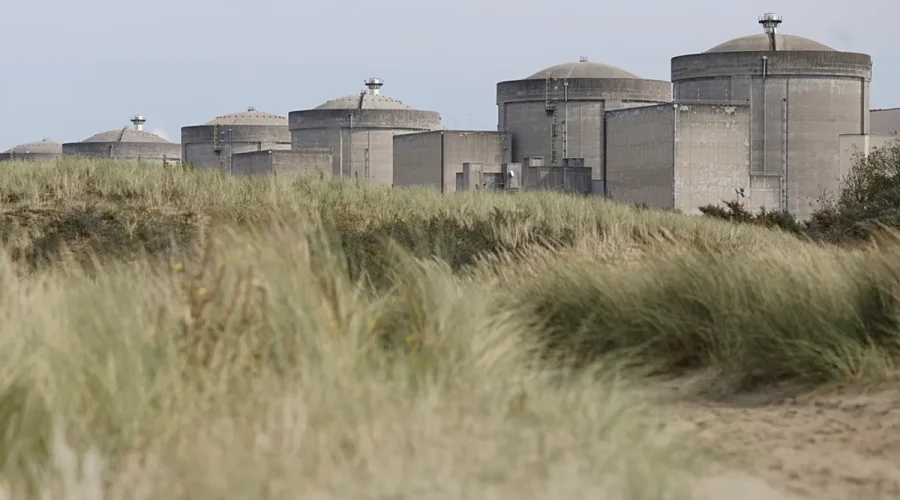
The timing of the decree lands against a backdrop of acute stress on France’s nuclear infrastructure. Just days before the authorisation was finalised, the Gravelines plant — the largest nuclear station in western Europe — experienced an unplanned trip of three of its six operating units after thousands of jellyfish drifted into its cooling-water intake drawn from the port of Dunkirk. The episode, along with concurrent drought and extreme-heat episodes across the country, pushed France’s nuclear availability shortfall past 20 percent on 12 August, a record level of unavailability attributed to what operators classify as “environmental constraints” or “external causes linked to the environment.” Thirteen of the nation’s 57 reactors were affected: eight were taken fully offline (Bugey 3, Cattenom 1, Chooz 1 and 2, Golfech 2, and Gravelines 2, 3 and 4), while five ran at reduced output (Saint-Alban 2, Tricastin 1 and 4, Gravelines 1 and 6). Nuclear power supplies roughly 70 percent of French electricity, making such disruptions a matter of national grid stability.
What the Decree Permits — and What It Does Not
EDF was careful to delineate the boundaries of the new authorisation in a statement issued to AFP. The company noted that the decree
“allows EDF gradually to launch the first operations aimed at preparing the site for the future construction project.”
Equally important, the utility stressed that the instrument
“does not constitute authorisation to create the two EPR2 reactors and does not permit the construction of buildings intended to house nuclear materials or equipment needed for nuclear safety.”
In practical terms, this means no reactor pressure vessels, fuel storage structures, or safety-critical containment buildings may yet be erected. The decree unlocks the civil-works phase only.
Scope of the Preparatory Works
The decree’s annex enumerates a detailed catalogue of permitted “activities, installations, structures and works.” Among the most substantial items are:
Servicing of access platforms and erection of temporary construction facilities; relocation of the rail terminal serving the Gravelines nuclear power plant (CNPE); extensive earthworks; excavation and sealing of a watertight enclosure beneath the footprint where the future industrial block will stand; ground reinforcement and initial civil-engineering works; and construction of a dedicated intake channel for cooling water.
The scope also encompasses the managed relocation of protected fauna and flora — to be executed during biologically favourable windows — and the building of a new public information centre to keep local residents apprised of project progress.
Geographically, the works will fall within the municipalities of Gravelines and Longs-Plage, with a single exception: a car park situated in the neighbouring communes of Craivic and Bourbourg.
EDF added that
“Environmental monitoring will be carried out throughout the duration of the work, under the supervision of the competent authorities.”
Political Signatories and Strategic Timeline
The decree carries the signatures of Prime Minister Sébastien Lecornu, Minister for Ecological Transition Monique Barbut, and Minister for Cities Vincent Jeanbrun. It arrives more than four years after President Emmanuel Macron first outlined a programme to build six new-generation pressurised water reactors, with an option to extend the programme to eight additional units. The three sites selected for the initial pairs of reactors are Penly in Seine-Maritime, Gravelines in Nord, and Bugey in Ain. The first pair, located in Normandy, is projected to reach commercial operation around 2038.
At Gravelines specifically, the two incoming EPR2 units — each rated at 1,600 MW — will be added to the six existing 900 MW reactors already in service, substantially expanding the station’s output capacity. A final investment decision on the construction of all six new EPR2 reactors across the three sites is anticipated by the close of 2026.
Regional and Industrial Implications
For the Dunkirk basin, the project represents a defining industrial undertaking. The region’s heavy manufacturing base has long depended on fossil-fuel-derived energy, and the addition of two large-scale nuclear units is viewed as a cornerstone of its decarbonisation trajectory. The preparatory works alone will generate sustained demand for civil-engineering labour, logistics services, and environmental-consultancy capacity across the Nord département over the coming years.
The jellyfish incident of 9 August — when units 2, 3 and 4 tripped automatically between 11 pm and midnight — underscored the fragility of the existing fleet. The Nuclear Safety Authority confirmed at the time that the event “did not affect the cooling of the equipment,” and similar marine-organism intrusions have been recorded at plants in the United States, Sweden, and Scotland. Yet the cumulative effect of such events, compounded by record droughts and heatwaves that have repeatedly constrained cooling-water availability this year, has sharpened the political urgency behind Macron’s reactor-build programme. The Gravelines expansion, once completed, would add roughly 3,200 MW of baseload capacity to a grid that has just demonstrated how quickly environmental shocks can erode its nuclear backbone.
Related Reading
Frequently Asked Questions
What is EDF to prepare site for two new?
EDF to prepare site for two new is the main topic of this guide. The article explains the context, practical details, and next steps readers should understand.
Why does EDF to prepare site for two new matter?
EDF to prepare site for two new matters because readers are looking for a useful answer, not just a short summary. Good content should match search intent and help them decide what to do next.