Polish president cuts Senegal trip short as constitutional court dispute escalates
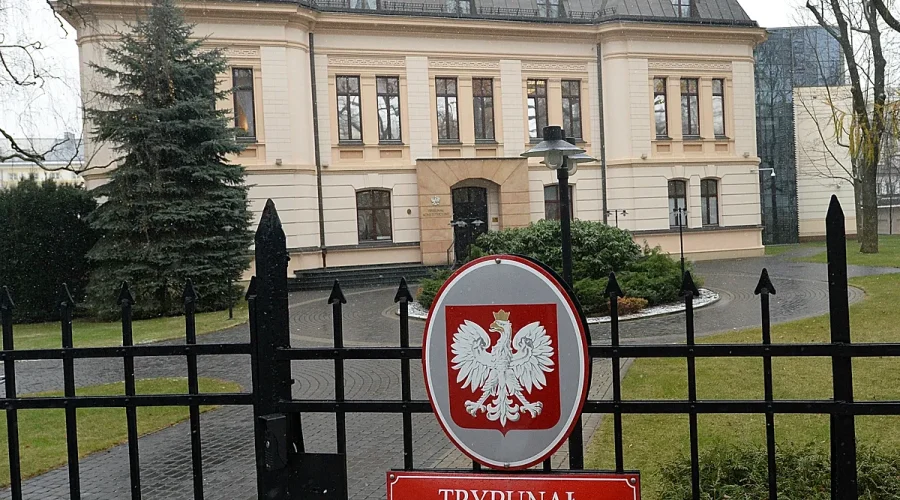
Usagevpn.com – Poland’s political confrontation over the Constitutional Tribunal intensified on Friday, with riot police deployed outside the court building and President Karol Nawrocki abandoning a trip to Senegal to return home.
Nawrocki had been travelling when events unfolded at the tribunal, where police entered the building and its president, Bogdan Święczkowski, was suspended. The president said the rapidly developing situation required him to be in Poland.
“At a moment like this, the President must be in Poland. I am cutting short my flight to Senegal. I am returning,”
The episode is the latest flashpoint in a wider struggle over Poland’s judiciary, the legacy of the former Law and Justice government, and the authority of institutions responsible for interpreting the constitution.
Police presence and protests outside the tribunal
Dozens of officers guarded the entrance to the Constitutional Tribunal as supporters of Law and Justice, known by its Polish abbreviation PiS, gathered outside. PiS is now in opposition after governing Poland from 2015 until 2023.
The crowd protested the suspension of Święczkowski, with chants of “Tusk traitor” directed at Prime Minister Donald Tusk. Some demonstrators prayed while carrying Catholic rosaries and religious images, underlining the mix of political and religious symbolism often visible at PiS-linked rallies.
The suspension was announced by Constitutional Tribunal judge Anna Korwin-Piotrowska. Tribunal leaders challenged both the move and Korwin-Piotrowska’s standing to make it, using unusually stark language in a statement published through the institution’s official X account.
“Ms. Anna Korwin-Piotrowska is not a judge of the Constitutional Tribunal.”
The tribunal’s statement went further, describing the developments as a “coup d’état” and alleging criminal conduct by people involved in the action.
“All persons participating in these actions are committing the crime of a coup d’état.”
Such accusations reflect the depth of the dispute surrounding the court. What might otherwise be treated as an internal institutional conflict has become a major political test for a country still divided over how its justice system should function after years of controversy.
Immunity request puts tribunal leaders under added pressure
Justice Minister and Prosecutor General Waldemar Żurek said he had sought the removal of legal immunity for Święczkowski and the tribunal’s deputy president, Bartłomiej Sochański.
The request adds a legal dimension to an already volatile confrontation. In Poland, immunity provisions can protect certain officials from prosecution unless they are formally lifted. Seeking their removal signals that the government believes further legal action may be necessary, while PiS supporters view the campaign as part of a broader effort to reshape the country’s constitutional institutions.
The government has been pursuing the removal of judges appointed during the PiS era. Its position is rooted in longstanding concerns over appointments made while the nationalist party held power and over whether the tribunal maintained sufficient independence from the executive and parliamentary majority of that period.
PiS and its allies, however, have consistently portrayed attempts to alter the court’s composition as politically motivated. Friday’s scenes made clear that the dispute is no longer confined to legal arguments, parliamentary debate or government offices; it has now drawn police, protesters and the president directly into the confrontation.
A continuing dispute with European implications
The Constitutional Tribunal has played a central role in Poland’s wider dispute with the European Union over judicial independence and the primacy of EU law. During PiS rule, EU institutions accused Poland’s highest court of being too closely connected to the governing authorities.
The tribunal also issued several rulings asserting that Polish law took precedence over EU legislation. Those decisions intensified tensions with Brussels and raised difficult questions about how Poland’s constitutional order should interact with its obligations as an EU member state.
When Tusk won the 2023 election, he pledged to address the conflict with Brussels and restore relations damaged by the judicial dispute. Yet progress has been complicated by divisions within Poland’s own political system, particularly the differing positions of the government and the presidency.
Nawrocki has blocked Tusk’s appointments to the Constitutional Tribunal, limiting the prime minister’s ability to change the court through new nominations. That resistance has made the presidency a crucial counterweight in the institutional struggle and helps explain why Nawrocki chose to return from his overseas journey.
Why the tribunal matters
Constitutional courts are intended to determine whether laws and public actions comply with a country’s constitution. Their decisions can affect elections, civil rights, the balance of powers and the validity of legislation. In Poland, disagreement over the tribunal’s independence has therefore become a question not only of individual judges but also of the credibility of democratic institutions.
Friday’s developments leave several immediate issues unresolved: the status of Święczkowski’s suspension, the consequences of the immunity requests involving him and Sochański, and the role the returning president may play in the days ahead.
The confrontation also exposes the continuing consequences of the 2015-2023 PiS period. Although the party is no longer in government, many of the institutional appointments and legal disputes from those years remain active. As Poland attempts to settle its relationship with EU law and rebuild confidence in judicial independence, the Constitutional Tribunal remains at the centre of the country’s most consequential political divide.
Related Reading
Frequently Asked Questions
What is Polish president turns back mid flight?
Polish president turns back mid flight is the main topic of this guide. The article explains the context, practical details, and next steps readers should understand.
Why does Polish president turns back mid flight matter?
Polish president turns back mid flight matters because readers are looking for a useful answer, not just a short summary. Good content should match search intent and help them decide what to do next.