OIC prosecutors press for stronger cross-border action on corruption
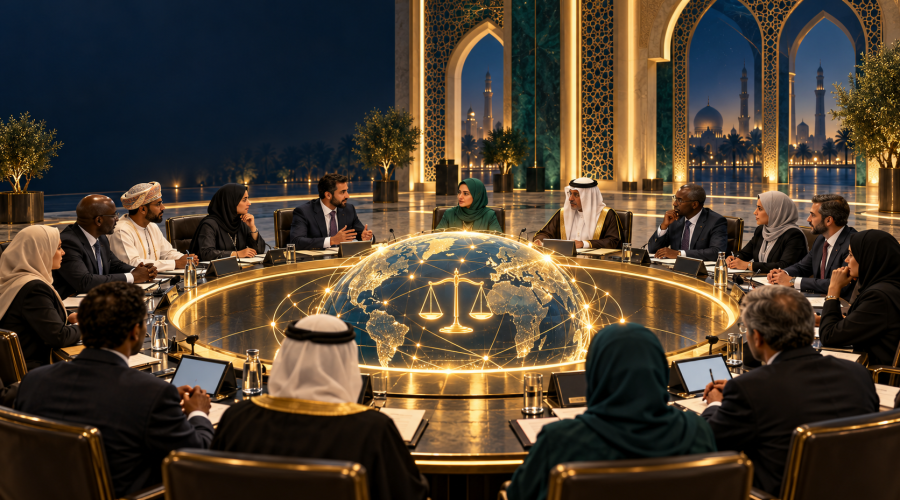
Usagevpn.com – Law enforcement leaders from across the Organisation of Islamic Cooperation have called for closer coordination to confront financial crime that increasingly moves through multiple jurisdictions, banks and digital channels. The appeal was made in Azerbaijan during the Third High-Level Meeting of Heads of Anti-Corruption Law Enforcement Agencies from OIC member states.
More than 250 delegates representing 46 member and service states, alongside eight international organisations, gathered with asset tracing, information-sharing and joint enforcement high on the agenda. The meeting focused in particular on putting the Makkah al-Mukarramah Convention into practical use.
The agreement is intended to give OIC countries a shared legal framework for mutual assistance, exchanges of information and the recovery of assets obtained through corruption. Its supporters see it as an important response to a familiar problem: illicit proceeds can be transferred rapidly across borders, while investigators often remain constrained by separate legal systems and lengthy administrative processes.
A shared legal framework
Officials at the event stressed that modern corruption investigations frequently require cooperation well beyond a country’s own police, prosecutors and financial authorities. Funds may pass through offshore companies, international accounts and intermediaries before authorities can identify, freeze or return them.
Tugay Rahimli, Special Assistant to Azerbaijan’s Prosecutor General, said the gathering was designed to strengthen practical cooperation among participating states.
“Today’s event brings together more than 250 participants from 46 member and service states as well as eight international organisations,” Rahimli said.
“The main objective of today’s event is to facilitate and foster international cooperation among member states, facilitate exchange of information and best practices, as well as to enhance the joint efforts to recover the assets obtained through crime,” he added.
For countries pursuing money that has crossed several borders, shared procedures can make a material difference. Investigators may need evidence held abroad, legal recognition for court actions taken elsewhere, and timely communication with agencies that operate under different rules. The convention is intended to reduce some of those obstacles among the states involved.
Rahimli also highlighted Azerbaijan’s election to lead the bureau for the coming two years, describing the decision as one of the meeting’s significant outcomes.
“Particularly important outcomes of today’s event that I would like to highlight is the election of Azerbaijan to chair the bureau for the next two years,” he said.
Malaysia’s 1MDB recovery effort
Malaysia’s pursuit of assets connected to the 1Malaysia Development Berhad, or 1MDB, case was presented as an example of the scale and persistence required in major international financial investigations.
1MDB was created in 2009 as a state-owned strategic development fund. It later became associated with one of the world’s largest kleptocracy scandals, after billions of dollars were diverted through offshore shell entities and bank accounts in several countries.
The US Justice Department has stated that, between 2009 and 2015, more than $4.5 billion, roughly €4 billion, belonging to 1MDB was misappropriated through a criminal scheme. It said the money was laundered via major financial institutions in locations including the United States, Switzerland, Singapore and Luxembourg.
Abd Halim Bin Aman, Chief Commissioner of the Malaysian Anti-Corruption Commission, described his agency’s multi-year work to locate and bring back stolen assets.
“We managed to achieve our goal of tackling the 1MDB matter and as of today we managed to bring back home about 75% to 80% to outside countries, and we managed to bring back about 33 billion Malaysian ringgit worth of loss,” he revealed.
The Justice Department has also said it returned an additional $156 million, approximately €139 million, in misappropriated 1MDB funds to the Malaysian people. That brought the total amount repatriated to about $1.4 billion, or approximately €1.2 billion.
Asset recovery is often a prolonged process because authorities must establish the origin of funds, identify who controls them and meet the legal requirements of every jurisdiction holding relevant evidence or property. Bin Aman said administrative delays remain a major difficulty.
“Bureaucracy is always being an obstacle to any investigation,” he said.
He argued that meetings bringing together agencies with different legal traditions can help officials compare laws and working methods, potentially reducing delays in future cases.
Complex security structures
Ivica Bošnjak, Deputy Minister of Security for Bosnia and Herzegovina, used his country’s experience to illustrate how domestic institutional arrangements can add further complexity to transnational cases.
“Bosnia and Herzegovina is complicated and complex in the political part, and therefore the organization of the entire security system is complex,” Bošnjak stated.
He said the country’s authorities must coordinate 16 police agencies as well as numerous other law-enforcement bodies across the security sector. While Bosnia and Herzegovina has adopted broad legal rules and action plans, he said additional work is needed on key legislation and operational approaches if cross-border financial crime is to be addressed effectively.
The comments underline that international cooperation depends not only on agreements between states, but also on effective coordination inside each country. A request from abroad can only move quickly when national agencies have clear responsibilities, compatible procedures and the capacity to act on financial intelligence.
Azerbaijan moves on convention implementation
Kamran Aliyev, Prosecutor General of the Republic of Azerbaijan, confirmed that the host country was taking legislative steps connected with the Makkah al-Mukarramah Convention. The agreement is designed to support mutual legal assistance, information exchanges and the recovery of corruption-related assets.
The central message from the meeting was that financial crime is rarely contained by national borders. As criminal networks use more sophisticated methods to hide wealth, prosecutors and anti-corruption agencies are seeking faster routes to share evidence, trace transactions and return assets to the countries from which they were taken.
Related Reading
Frequently Asked Questions
What is Islamic states prosecutors call for global?
Islamic states prosecutors call for global is the main topic of this guide. The article explains the context, practical details, and next steps readers should understand.
Why does Islamic states prosecutors call for global matter?
Islamic states prosecutors call for global matters because readers are looking for a useful answer, not just a short summary. Good content should match search intent and help them decide what to do next.