Health experts urge emergency response as climate dangers intensify
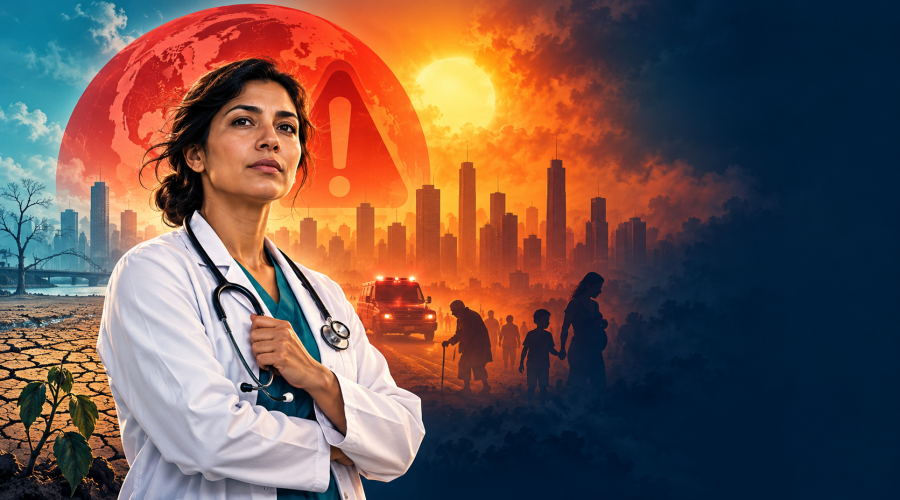
Usagevpn.com – Climate change is increasingly being framed not only as an environmental and economic challenge, but as a worldwide threat to human health that demands an emergency-scale response. Authors of the latest Lancet Countdown report want the World Health Organization (WHO) and the wider United Nations system to formally recognise climate change as a global health emergency.
They argue that the consequences for health are worsening at a pace that voluntary climate pledges have failed to contain. A formal declaration, in their view, could help move international efforts away from gradual, optional commitments and toward a coordinated model of emergency management.
Such a shift could strengthen systems that monitor health threats, improve early warnings for heat and extreme weather, speed up the release of resources and support preventive public-health action. The report’s authors also say it could create more robust legal accountability for governments and institutions responsible for responding to the crisis.
Risks have accelerated since the Paris Agreement
The report identifies a marked rise in climate-related health risks since the Paris Agreement came into force in 2016. Its indicators point to faster deterioration across several areas when compared with the decade before that agreement began operating.
Heat-related dangers are among the clearest concerns. Droughts, intense rainfall and conditions favourable to dengue transmission have also become more prominent. The speed of these changes suggests that measures already in place are not providing sufficient protection for communities facing growing climate hazards.
The authors warn that demographic trends add to the challenge. Larger and older populations mean more people are exposed to conditions that can be especially dangerous for health, including prolonged high temperatures, disrupted food and water supplies, and disasters that overwhelm local services.
“As populations grow and age, more people are at risk today than a decade ago, further increasing the scale and urgency of the adaptation task,” the authors wrote.
This issue extends beyond national borders. A heatwave, wildfire, flood or disease outbreak may be experienced locally, but the underlying pressures are global. Countries with fewer resources to prepare, respond and rebuild can face particularly severe consequences, while vulnerable residents within every country may have fewer ways to avoid exposure.
Heat is already costing lives
The past 11 years have been the warmest ever recorded, the report notes. The health effects are increasingly visible in the toll of heat, which can worsen existing heart, lung and kidney conditions and place exceptional strain on health services.
Annual deaths linked to heat have climbed by almost 36% over recent decades. In 2023, heat was connected to a record 710,000 deaths. More than 70% of those deaths were attributed to climate change caused by human activity.
Heat does not affect everyone equally. Older adults, infants, people with chronic illnesses, outdoor workers and households without safe cooling can face a greater risk. The impact can also be compounded when high temperatures coincide with poor air quality, power disruptions or limited access to medical care.
Public-health preparation therefore matters alongside emissions cuts. Heat-health alerts, accessible cooling spaces, clear advice for residents and properly equipped medical services can reduce immediate harm. However, adaptation becomes increasingly difficult when heat extremes continue to intensify.
Changing disease patterns and extreme-weather exposure
Warmer conditions are also altering the environments in which disease-carrying insects can survive and spread. The report highlights growing climatic suitability for vector-borne illnesses, including dengue and Zika. This can place new populations at risk and complicate efforts to monitor outbreaks early enough to limit transmission.
Climate-related health threats also emerge through destructive weather events and wildfires. Floods and severe rainfall can disrupt drinking-water systems, damage homes and interrupt healthcare. Wildfire smoke can affect respiratory health far from the flames, while drought can deepen pressures on water, agriculture and daily life.
Communities already facing limited healthcare capacity or weak emergency infrastructure can find it harder to cope with repeated shocks. For that reason, the proposed emergency designation is intended to make health protection central to climate planning rather than treating it as a secondary consequence.
Calls for faster action on fossil fuels and food systems
Alongside the call for an international health emergency, the authors propose an immediate worldwide prohibition on new fossil-fuel exploration and extraction. They also advocate ending coal-fired electricity generation entirely by 2035 and moving food systems toward diets that are mainly plant-based.
These proposals reflect the report’s conclusion that reducing emissions remains inseparable from protecting health. Greenhouse-gas emissions continue to reach record levels despite existing climate initiatives, narrowing the time available to avoid especially damaging outcomes.
A declaration alone would not eliminate the risks already present, nor would it replace the work required from governments, health systems and communities. But the authors believe it could clarify the scale of the danger and accelerate collective action in the same way other health emergencies have prompted coordinated responses.
For individuals, the message is that climate change is not an abstract future concern. It is already influencing exposure to dangerous heat, infectious disease, polluted air and extreme weather. For decision-makers, the report presents a sharper demand: climate policy must be treated as health policy, with measures designed to protect people now as well as future generations.
“to change course and protect the health and survival of present and future generations.”
Related Reading
Frequently Asked Questions
What is Climate change should be declared health?
Climate change should be declared health is the main topic of this guide. The article explains the context, practical details, and next steps readers should understand.
Why does Climate change should be declared health matter?
Climate change should be declared health matters because readers are looking for a useful answer, not just a short summary. Good content should match search intent and help them decide what to do next.