Nordic leaders clash over direct call to Vladimir Putin
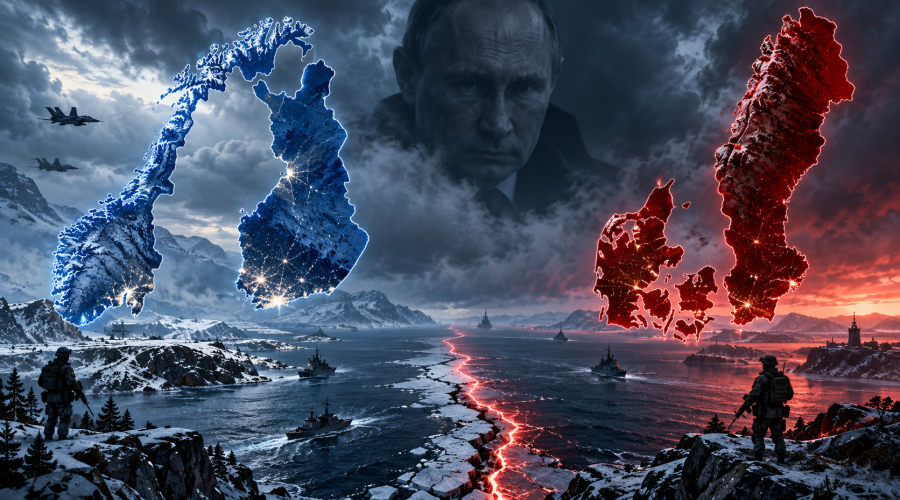
Usagevpn.com – A sharp disagreement broke out among Nordic governments on Tuesday after Finland and Norway held an unexpected telephone conversation with Russian President Vladimir Putin, exposing an unusual divide among countries that have generally presented a united front over Russia’s war against Ukraine.
Finnish President Alexander Stubb and Norwegian Prime Minister Jonas Gahr Støre initiated the contact after recently hosting peace-related discussions in Oslo. During the call, they pressed Putin to halt Russia’s full-scale invasion and take part in serious negotiations aimed at a lasting and peaceful resolution.
The timing and method of the outreach quickly became a source of criticism in Denmark and Sweden. Both governments have strongly supported Ukraine and backed tougher measures against Moscow, while warning that European unity should not be weakened by uncoordinated approaches to the Kremlin.
Finland and Norway defend direct engagement
Stubb argued that the consequences of the war extend well beyond Ukraine’s borders and directly affect security across northern Europe. He described the exchange with Putin as serious and candid, saying that dialogue was necessary if the conflict is ever to end.
The discussion was frank and substantive.
The outcome of this war will have a direct impact on our and the broader European security. Ending the war requires direct discussion.
Støre said the two leaders had underlined the need to reduce tensions. Their joint account of the call stressed that they had spoken in their capacities as national leaders, rather than representing Europe collectively.
We stressed the importance of de-escalation.
After speaking with Putin, Stubb and Støre contacted Ukrainian President Volodymyr Zelenskyy. Zelenskyy thanked them for what was described as their active support for Ukraine. The follow-up call appeared intended to demonstrate that the conversation with Moscow did not signal a shift away from Kyiv.
For Finland and Norway, the case for engagement rests on the idea that messages about peace, security and the need to end the invasion may sometimes require direct delivery. Støre later said European leaders should communicate with Russia alongside the messages coming from the United States administration, which has taken a different view of the war.
Denmark raises concerns over an uncoordinated move
Danish Prime Minister Mette Frederiksen reacted particularly strongly. She said the initiative had not been coordinated with Denmark or other partners and questioned whether contact of this kind could produce results while Russia continues to intensify pressure on Ukraine.
I am very sceptical about this independent initiative by Norway and Finland. It was not coordinated with any of us.
Frederiksen pointed to Russia’s conduct in Ukraine and what she described as hybrid warfare affecting Europe on a daily basis. In her view, those actions offer little evidence that Moscow is genuinely pursuing peace.
I don’t see any signs that Russia desires peace with Europe, neither in the hybrid warfare taking place every single day, nor in Ukraine.
Her criticism also reflected concern about the political message sent when individual European governments pursue their own channels to Moscow. Frederiksen compared the situation with earlier solo efforts, including former Hungarian Prime Minister Viktor Orbán’s trip to meet Putin in Moscow.
I honestly don’t know what they think can be achieved by this.
She argued that European governments have repeatedly worked to maintain a common position when dealing with Russia. That unity, she said, has been a central objective for leaders who want sustained support for Ukraine and a consistent response to Moscow’s actions.
Sweden urges caution while leaving room for useful diplomacy
Swedish Prime Minister Ulf Kristersson expressed reservations in more measured language. He said he had limited expectations for direct discussions with Putin, while stopping short of saying that Finland and Norway had necessarily undermined the European position.
My impression is that everyone wants peace except Putin. I have pretty low expectations for this kind of direct talk.
Kristersson said conversations that could make Russia more receptive to an acceptable peace on Ukraine’s terms would be welcome. At the same time, he warned that talks carrying the risk of dividing Europe’s voice would be dangerous.
Holding talks that risk splitting the European voice is risky. Now, I’m not saying they have done that at all. I don’t yet know what those talks were about.
Talks that make Russia more willing to make a decent peace on Ukraine’s terms are, of course, good.
The distinction is important: Sweden did not reject diplomacy itself, but questioned whether an uncoordinated initiative could strengthen the broader effort to support Ukraine. The disagreement therefore centred less on whether peace should be pursued than on how Europe should communicate with Russia while the war continues.
A notable split at a Nordic Council meeting
The four leaders were all in Helsinki for a leaders-level gathering of the Nordic Council when the dispute emerged. Their public differences stood out because Finland, Norway, Denmark and Sweden have typically been closely aligned over the invasion.
All four countries have been major bilateral supporters of Ukraine and outspoken advocates for increasingly stringent sanctions against Russia. Their shared approach has generally combined military, political and economic support for Kyiv with a demand that any settlement respect Ukraine’s position.
That background makes Tuesday’s dispute more than a disagreement about a single phone call. It illustrates the difficult balance European leaders face between preserving collective pressure on Moscow and exploring whether direct diplomatic contact can contribute to ending the war.
For Stubb and Støre, speaking directly with Putin was presented as a practical part of that effort. For Frederiksen and Kristersson, the central concern was that separate initiatives could blur Europe’s message or create openings for Russia to exploit divisions. The episode leaves the Nordic countries united in their stated backing for Ukraine, but divided over the most effective route toward peace.
Related Reading
Frequently Asked Questions
What is Putin call pits Finland and Norway?
Putin call pits Finland and Norway is the main topic of this guide. The article explains the context, practical details, and next steps readers should understand.
Why does Putin call pits Finland and Norway matter?
Putin call pits Finland and Norway matters because readers are looking for a useful answer, not just a short summary. Good content should match search intent and help them decide what to do next.