European Parliament hears calls for stronger protections for fishers
Usagevpn.com – Concerns over exploitation, unsafe conditions and forced labour in the global fishing industry were brought into sharp focus during a recent discussion at the European Parliament. Lawmakers, labour groups, researchers and industry representatives examined how stronger social safeguards could be incorporated into sustainable fisheries policy.
The event, titled Boosting the social dimension of sustainable fisheries, took place on 30 September. It was organised by Carmen Crespo of the European People’s Party, who chairs Parliament’s Committee on Fisheries, and Virginia Battu-Henriksson from the cabinet of Fisheries and Oceans Commissioner Costas Kadis.
A survivor’s account from a Chinese vessel
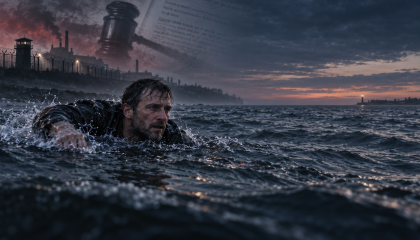
One of the most powerful interventions came from Fredi Seprizal, an Indonesian fisher who described 16 months spent aboard a Chinese fishing vessel as an experience of modern slavery. He told MEPs that his days regularly stretched from 16 to 20 hours, while on some occasions he worked continuously for 24 hours. Rest could be limited to as little as three hours, and never exceeded six hours.
Seprizal also described poor food, water that he said was inadequately cleaned, and a lack of suitable safety equipment at sea. The conditions left him fearing for his survival.
“The food was in very poor condition and I could only drink seawater that had been filtered. I had no other choice, it was never properly clean.”
His ability to leave was restricted because the ship’s captain retained his documents. Seprizal said he was even expected to pay in order to recover them.
“The thought of jumping off the ship or setting it on fire crossed my mind; but I could not escape because the captain kept hold of my documents. I even had to pay to get them back.”
Document confiscation can leave workers isolated from their legal identity, travel options and ability to seek help. In remote fishing operations, where crews may spend long periods far from shore, those constraints can become especially severe.
Research points to widespread problems
The discussion also considered research by Sallie Yea, a professor and researcher at Charles Sturt University. Her study drew on interviews with 121 fishers and 32 family members in the Philippines, Indonesia, Cambodia and Fiji.
The findings painted a troubling picture of employment practices across parts of the sector. Ninety-four percent of the fishers interviewed said they had experienced unpaid wages at some stage. Every fisher in the study had encountered contracts that were changed for less favourable terms.
Safety was another central concern. One in four fishers said they had seen a fellow crew member die, while deaths were recorded on one-quarter of the vessels examined. Such figures underline why employment conditions cannot be separated from the wider debate about responsible fishing and seafood supply chains.
“We need to move from purely formal compliance to the effective protection of labour rights, including checks on contracts and wages, arbitration mechanisms to resolve labour complaints, protection against reprisals and accountability mechanisms for recruitment agencies, and not only for fishing fleets and seafood companies.”
Yea’s argument places attention not only on vessels and seafood businesses, but also on recruitment agencies. Workers may be recruited in one country, employed on ships operating far away and paid through arrangements that are difficult for them to challenge. Effective protections therefore depend on clear contracts, credible complaint routes and safeguards for people who raise concerns.
Market access and enforcement under scrutiny
Crespo told the meeting that Europe’s fishing industry should compete through high standards rather than weaker ones. She stressed the importance of protecting sustainability, safety and labour rights in the European fleet, while ensuring that workers are not undercut by exploitative practices elsewhere in the supply chain.
“Europe cannot compete by lowering its standards, but by turning them into its greatest asset.”
The round table included representatives of the International Labour Organization, the European Transport Workers’ Federation, the Environmental Justice Foundation and Oxfam. They called for more rigorous enforcement of labour rules affecting the fishing industry.
Tariq Haq, an economist with the International Labour Organization, highlighted the Work in Fishing Convention, which sets minimum requirements for life and work aboard fishing vessels. Only 27 member states have ratified it, limiting its reach despite the global nature of maritime labour.
The European Union has also adopted legislation targeting forced labour, with implementation continuing until December 2027. The measures are intended to strengthen the EU’s capacity to prevent products made with forced labour from reaching the internal market.
For OPAGAC, the Organisation of Associated Producers of Large Frozen Tuna Vessels, access to the European market should depend on meeting standards equivalent to those imposed on European fleets. The organisation supported the event alongside Hands for the Oceans.
“We hope that the EU rules on due diligence and forced labour can become a turning point.”
Julio Morón, OPAGAC’s director-general, framed the issue as one that directly affects consumers as well as crews. Seafood buyers often have little visibility into conditions on distant-water vessels, making traceability and enforceable labour protections important parts of responsible purchasing.
The parliamentary debate made clear that sustainable fisheries involve more than fish stocks and environmental management. For the people working on vessels, sustainability also means decent hours, safe workplaces, reliable pay and a real ability to seek help without retaliation. Seprizal’s testimony offered a stark reminder of what is at stake when those protections fail.
Related Reading
Frequently Asked Questions
What is EU debates harsh working conditions for fishers?
EU debates harsh working conditions for fishers is the main topic of this guide. The article explains the context, practical details, and next steps readers should understand.
Why does EU debates harsh working conditions for fishers matter?
EU debates harsh working conditions for fishers matters because readers are looking for a useful answer, not just a short summary. Good content should match search intent and help them decide what to do next.