French Government Promises Response as Student Protests Continue
Usagevpn.com – France’s government has sought to ease mounting tensions with secondary school students, with Prime Minister Sébastien Lecornu acknowledging that the frustration driving protests is rooted in genuine concerns about the education system.
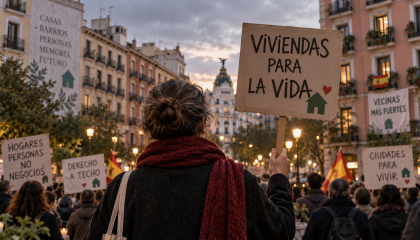
In a televised address on Wednesday, Lecornu spoke directly to young people as demonstrations and school strikes continued across the country. He said authorities could not ignore the concerns raised by pupils, while stressing that police had not been instructed to engage in confrontations with teenage demonstrators.
“The anger of young people does not come from nowhere.”
The statement came after several days of unrest involving students, teachers and police. The movement began with demands for better learning conditions in high schools and has since placed broader pressure on the government at a time of political and economic uncertainty.
Schools at the centre of the dispute
Students have called for more staff, additional resources and repairs to deteriorating school buildings. They are also demanding changes to Parcoursup, the system used by students applying for first-year higher education places. Many participants view the platform as difficult to understand and unfair in the way it affects applicants.
Education unions have called for another nationwide day of strikes and demonstrations on Thursday, suggesting that the mobilisation is not fading after Tuesday’s protests. The prospect of further disruption has raised the stakes for ministers trying to show that they are responding without allowing the situation to escalate.
Hundreds of students, teachers and police officers have been injured since the protest movement began. More than 6,500 people have been arrested, most of them minors. Those figures underline the scale of a movement that has rapidly become a national issue rather than a dispute limited to individual schools.
The government has already opened a consultation involving secondary school students. It has also launched work on several areas raised during the protests, including replacement arrangements for absent teachers, the repair of school facilities, the organisation of school schedules and the future of Parcoursup.
Lecornu said a broader government plan addressing the crisis would be presented by the end of October. He also pointed to Agora, an application designed to collect young people’s concerns anonymously, which has received 30,000 contributions.
Questions over policing
The demonstrations have also intensified scrutiny of police tactics. Allegations of excessive force have grown following clashes around high schools, and the government’s response has included changes to crowd-control procedures.
Interior Minister Laurent Nuñez has confirmed that stun grenades will no longer be used in operations connected to the secondary school protests. The decision followed a serious injury to a 15-year-old boy in Lens, in northern France. His hand was torn off by a police grenade; he has undergone an amputation and remains in hospital.
The suspension has met resistance from some police unions. They have argued that officers may be unable to respond effectively if disorder breaks out and have invoked the possibility of withdrawing from duty in certain circumstances.
Lecornu sought to distance the government from the idea that security forces had been directed to treat high school students as adversaries.
French security forces do not have orders to “confront” protesting high school students.
That message is likely intended to reassure families and school communities while preserving the government’s ability to maintain public order during further demonstrations. The challenge is particularly sensitive because many of those involved in the protests are under 18.
Economic pressure adds to the government’s difficulties
The education crisis is unfolding alongside wider concerns over household budgets, public finances and the country’s political future. Lecornu also announced plans to release diesel stocks in an effort to reduce fuel prices, which have again moved above €2.36 per litre.
High fuel costs have sharpened worries about purchasing power, while farmers continue to seek support after a severe drought. Wine production forecasts have been revised slightly higher to almost 35 million hectolitres, but that level remains historically low.
At the same time, the government is preparing its 2027 budget and attempting to reduce France’s debt burden. Lecornu reiterated the objective of bringing the deficit down to 5% of gross domestic product next year. The task is politically difficult: the draft budget includes higher education spending, yet the government must also identify savings worth several tens of billions of euros.
Parliamentary deadlock remains a risk, and the pressure is compounded by next year’s election to choose President Emmanuel Macron’s successor. Marine Le Pen, the far-right candidate, is performing strongly in opinion polls.
For the government, the immediate test is whether concrete measures on schools, staffing and student admissions can persuade protesters that their concerns are being heard. Lecornu’s address recognised the depth of the anger, but expectations will now focus on the plan promised for late October and on whether it offers solutions visible in classrooms rather than only broad commitments.
Related Reading
Frequently Asked Questions
What is French prime minister says government not indifferent?
French prime minister says government not indifferent is the main topic of this guide. The article explains the context, practical details, and next steps readers should understand.
Why does French prime minister says government not indifferent matter?
French prime minister says government not indifferent matters because readers are looking for a useful answer, not just a short summary. Good content should match search intent and help them decide what to do next.