Shooting and scoring: World Cup memories through Getty photographers’ lenses
Usagevpn.com – Shooting and scoring are inseparable at the World Cup, but the tournament’s most lasting memories are not always the goals themselves. Getty Images photographers reflecting on five tournaments have selected images defined by emotion, pressure, timing and the fleeting details that surround football’s biggest moments.
From trophy celebrations to a disputed tackle, these photographs show how a single frame can preserve the atmosphere of a final long after the final whistle. The photographers’ accounts also reveal the preparation, access and luck behind iconic World Cup pictures.
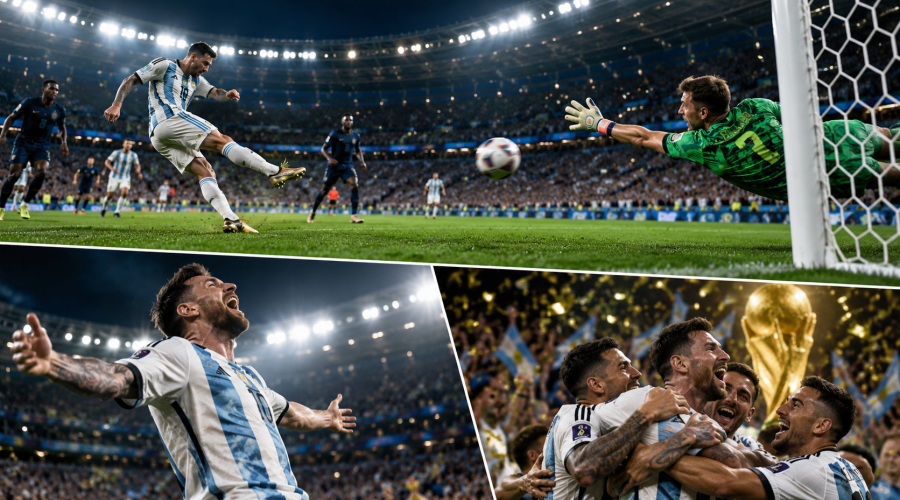
Messi’s open-armed celebration
Shaun Botterill chose an image of Lionel Messi following Argentina’s World Cup triumph. It was taken well after the main trophy lift, as Messi moved toward Argentina supporters who had waited to see their captain acknowledge them.
This photo was taken at least 30 minutes after the main trophy lift. All the Argentina fans and photographers are waiting for Messi to go over to acknowledge the fans. All the Getty Images photographers had a loose plan of what we’d capture, but luck also kicked in with this picture.
For Botterill, the image came when Messi opened his arms and smiled just metres away. The moment illustrates why shooting and scoring at a World Cup is about more than covering the scheduled ceremony: the most revealing expression can emerge once the formal celebrations have passed.
Pogba and the haze at Luzhniki Stadium
David Ramos selected a photograph of Paul Pogba holding the trophy after France’s 2018 World Cup victory at Moscow’s Luzhniki Stadium. The picture was made after the fireworks, when rain, smoke and stadium lighting changed the scene around the player.
Thanks to FIFA’s exclusive access, I was the only photographer allowed on the pitch after the celebrations, which gave me a very different perspective on the aftermath of the World Cup final.
The remaining haze caught the light and created visible rays above Pogba. By using a wider composition, Ramos included the stadium, crowd, pitch and empty space, turning a familiar trophy image into a quieter portrait of the final’s aftermath.
Italy’s shared moment with the trophy
Michael Steele looked back to Italy’s 2006 World Cup win over France, decided by a penalty shootout. While initially concentrating on captain Fabio Cannavaro with a 400mm lens, Steele saw Italy’s players reach together toward the trophy during their lap of honour.
He climbed onto a metal barrier near the front seats to gain height before the chance vanished. Confetti and pyrotechnic smoke added to an image that captured the team’s spontaneous connection rather than a staged presentation.
Trophy presentations can sometimes feel staged, but this felt like a more impulsive and natural way of a team coming together, bonding in their historic moment.
A controversial challenge in the 2010 final
Not every memorable World Cup photograph is a celebration. Laurence Griffiths chose his image of Nigel de Jong’s challenge on Xabi Alonso during the 2010 final. The frame freezes De Jong’s raised boot as it meets Alonso’s chest, preserving one of South Africa 2010’s defining controversies.
Referee Howard Webb showed De Jong a yellow card, prompting immediate debate over whether the Netherlands midfielder should have been sent off. The image remains closely linked to a final remembered for its intensity and physical confrontation.
Why shooting and scoring create enduring World Cup images
These photographs show that shooting and scoring are connected by anticipation. Photographers must be ready for expected scenes such as a trophy lift, while remaining alert to the unscripted seconds that give an image its emotional force: a player’s gesture, a team’s shared reaction or the atmosphere left behind by fireworks and rain.
The strongest World Cup frames also place football within its setting. Stadium light, smoke, confetti, crowd reactions and empty space can all change the meaning of a picture, helping an individual sporting moment feel like part of a larger event.
World Cup photography FAQ
Why are post-match photographs often so memorable?
Post-match scenes can show players more naturally than formal presentations. Once the main ceremony has ended, photographers may capture quieter reactions, spontaneous celebrations and personal exchanges with supporters.
What makes a World Cup photo iconic?
An iconic image can capture victory, controversy or emotion in a single instant. Context matters too: the stadium, weather, light and crowd can make a photograph feel inseparable from a particular final.
Is photographing a goal the only priority at a World Cup?
No. Goals are central to football, but shooting and scoring also involves documenting what follows: the response of players and fans, the pressure of a decisive match and the moments that shape how a tournament is remembered.
Related Reading
Frequently Asked Questions
What is Shooting and scoring?
Shooting and scoring is the main topic of this guide. The article explains the context, practical details, and next steps readers should understand.
Why does Shooting and scoring matter?
Shooting and scoring matters because readers are looking for a useful answer, not just a short summary. Good content should match search intent and help them decide what to do next.