Most waste ends up in landfill: giving scraps new life
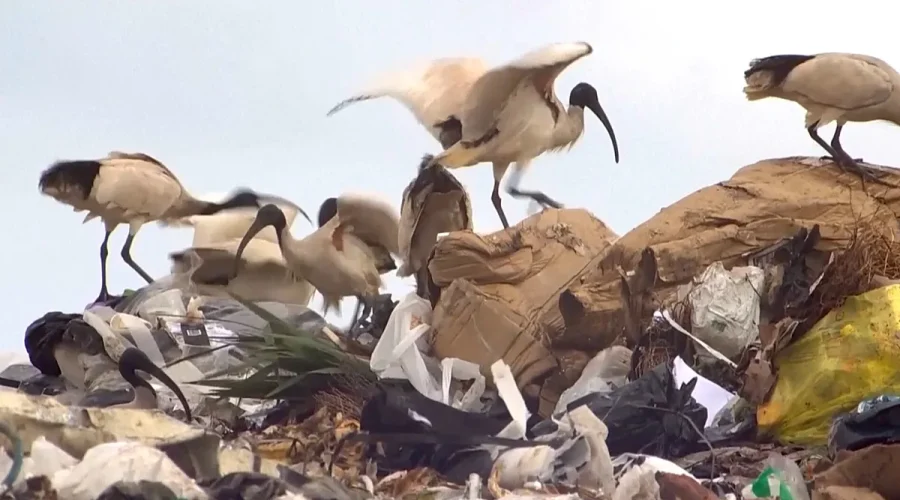
Usagevpn.com – Most waste ends up in landfill, but Australian researchers and businesses are looking at discarded materials differently. Food scraps, biomass residues and municipal waste can sometimes become useful inputs for new products instead of being buried.
Australia generates 76 million tonnes of waste each year, according to the Department of Climate Change, Energy, the Environment and Water. That amounts to 2.9 million tonnes per person, and a significant portion still goes to landfill despite its potential value.
Scientist Lynne Loo has spent more than a decade exploring ways to reuse materials that are often treated as worthless. Her earlier work examined possible uses for by-products from the abalone industry, before expanding into support for businesses trying to turn waste-based ideas into viable products.
Helping waste ideas reach the market
A promising material is only the first step. Start-ups also need dependable supplies, processing capacity, customers and a practical route to market. Loo helps emerging ventures navigate those commercial challenges.
One such entrepreneur is Matt Barber, who extracts cellulose from food waste in a home-made laboratory. The resulting material can be processed into paper, leather and wood alternatives, while potentially offering a feedstock for bioplastics.
“So, what I get is pure cellulose that comes out and then from there, I process that into other paper, leather or wood products,” Barber says.
His approach shows how food waste can be used as a manufacturing resource. Rather than waiting decades for a tree to grow, Barber says the material can be grown in about a week.
Waste conversion at an industrial scale
In Collie, Western Australia, Renergi is taking a larger-scale approach. Its facility uses thermal conversion technology to transform waste into products including vinegar, biochar and oil.
The operation can process just under 30,000 tonnes of biomass waste each year, along with 4,000 tonnes of the town’s municipal solar waste. More than 70 per cent of incoming material is recovered and converted into new outputs.
“We can process just under about 30,000 tonnes of biomass waste per year and 4,000 tonnes per annum of the town’s municipal solar waste,” says Renergi’s Deejay Parker.
Biochar produced at the facility is already used on fruit farms and at a winery in southern Western Australia. The project has received support from the Australian Renewable Energy Agency and, at full production, Renergi is expected to become one of Australia’s largest producers in its field.
Why changing waste perceptions matters
Most waste ends up in landfill because collection, sorting, quality control and processing remain difficult. Not every discarded material can be reused in the same way, and food waste, biomass and municipal waste each require different handling methods.
Still, the projects led by Barber, Loo and Renergi demonstrate how recovered materials can serve new purposes. Their work suggests that reducing landfill reliance depends on both scientific innovation and practical businesses able to make reuse work at scale.
FAQ: Reducing landfill waste in Australia
What can be made from food waste?
Food waste can provide materials such as cellulose, which may be processed into paper, leather or wood alternatives and could also be used in bioplastics.
How does thermal conversion help reduce landfill?
Thermal conversion processes waste material into other products, such as biochar, oil and vinegar. This can recover material that might otherwise be sent to landfill.
Can regional communities benefit from waste recovery projects?
Yes. Facilities such as Renergi’s operation in Collie can process local waste streams while producing materials that may be used by nearby farms, businesses and industries.