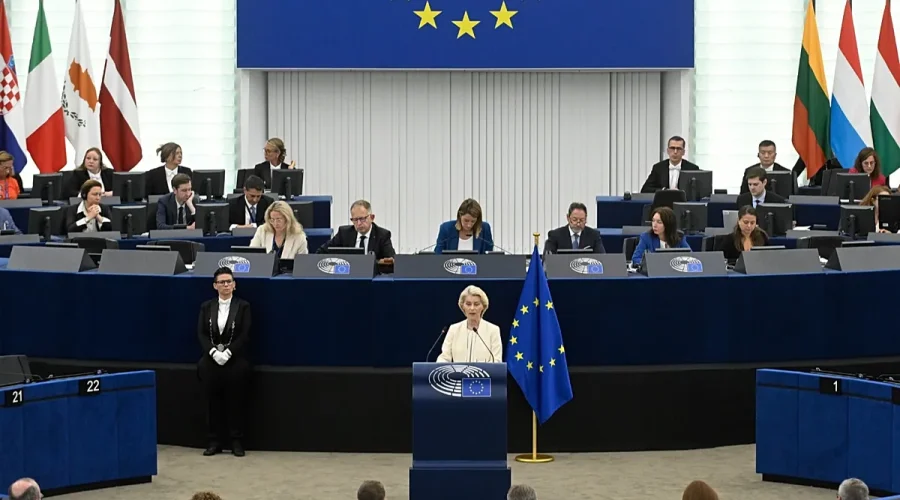
AI in health must be done with doctors in control, von der Leyen says
Usagevpn.com – AI in health must be done in a European way that supports doctors rather than replaces them, European Commission President Ursula von der Leyen has said. She argued that artificial intelligence can improve diagnosis, treatment and healthcare services, provided patients and medical professionals remain at the centre of decisions.
Speaking during her annual State of the European Union address at the European Parliament, von der Leyen described healthcare as an area where AI could bring clear benefits to citizens. But she stressed that Europe’s approach should be guided by human oversight, responsibility and trust.
“Do I want my doctor to have instant AI access to all the data needed to make the best diagnostic or treatment choice? Yes, of course. But do I want my doctor to be a robot, AI-assisted? No, of course not. I do not want a robot to tell me whether I have cancer or not,” von der Leyen said.
Von der Leyen, who trained as a doctor, drew a line between technology that helps clinicians reach informed decisions and systems that could displace professional judgement. Medical care involves more than processing data: doctors must assess uncertainty, understand a patient’s circumstances, explain options and accept responsibility for the final decision.
Earlier cancer detection could benefit from AI
AI in health must be done carefully, but von der Leyen said it could make a meaningful difference in cancer screening. She pointed to mammography, where AI-supported tools can examine large quantities of imaging data and flag signs that may require closer review.
“AI-supported mammography can identify earlier and more cancers during screening. And as a result, more women can survive. So we need AI for health,” she said.
Earlier detection is a key aim of cancer screening programmes because it can expand treatment options and improve outcomes. AI may help screening teams identify possible abnormalities, yet qualified medical staff remain responsible for interpreting results and advising patients.
The technology is also being explored for diagnostic support, medicine development and administrative work that takes time away from patient care. By helping analyse complex datasets, medical images and routine workflows, AI could give clinicians more relevant information and more time with patients.
Trust, training and safeguards will shape adoption
AI in health must be done with strong protection for personal data. Health information is especially sensitive, so patients need confidence that it is handled securely and responsibly, while healthcare workers need clear guidance on the limits of the systems they use.
Experts have warned against relying on language models for medical advice. Such systems may not correctly assess the urgency of a health problem, which can be dangerous if people use them instead of seeking timely professional care. A convincing answer from an AI tool is not the same as a reliable clinical assessment.
Human oversight is therefore essential. AI can organise evidence, detect an unusual pattern in a scan or process large volumes of information, but it cannot replace the doctor’s responsibility to weigh evidence, discuss risks and make a decision with the patient.
The World Health Organization has said that governance has not kept pace everywhere with the rapid growth of AI in health. It highlighted questions around legal accountability, investment in training health workers and the risk that some communities may miss out on the benefits. The organisation found that only 8% of its member states had adopted a national AI strategy specifically focused on health.
FAQ: AI in healthcare in Europe
Will AI replace doctors in Europe?
No. Von der Leyen’s position is that AI should assist healthcare professionals, not replace them. Doctors remain responsible for diagnosis, treatment choices and discussions with patients.
How can AI help cancer screening?
AI-supported mammography can help analyse screening images and identify findings that may need further attention. Clinicians must still review the results and determine the appropriate next steps.
Should patients use AI for urgent medical symptoms?
Patients should seek professional medical care for urgent or worrying symptoms. AI-generated health guidance may be inaccurate or fail to recognise when immediate care is needed.