Sweden’s centre-left holds a one-seat advantage in early election count
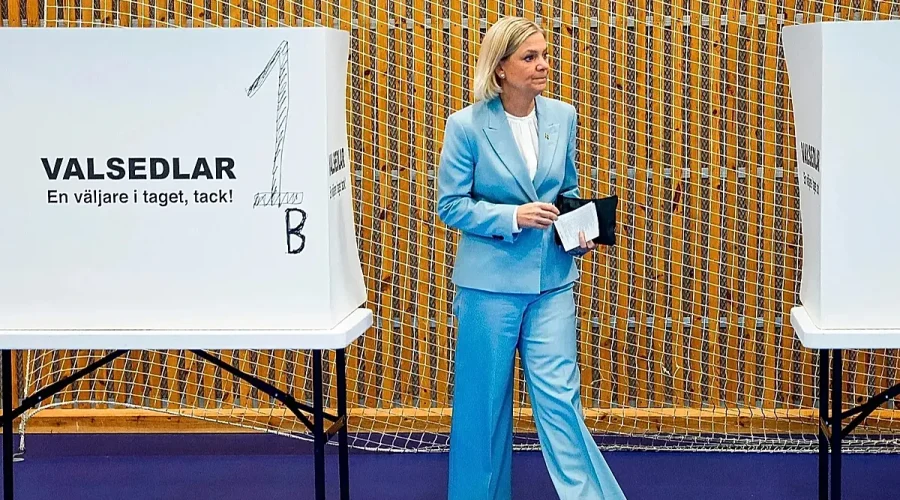
Usagevpn.com – Sweden’s parliamentary election remained on a knife edge on Sunday, with preliminary figures giving the centre-left opposition a narrow lead of just one seat in the 349-member Riksdag.
The early allocation puts the bloc supporting Social Democrat leader Magdalena Andersson for prime minister at 175 seats. Parties on the right were projected to take 174 seats, leaving the eventual balance of power highly uncertain while the count continues.
Such a slim margin could shape the political negotiations that follow. Even if the centre-left retains its advantage when the final tally is complete, Andersson would need to assemble support for a workable government in a parliament divided almost exactly in half.
Social Democrats remain largest party
The Social Democrats were set to remain Sweden’s biggest individual party, taking 28% in the preliminary vote count. That result places Andersson’s party ahead of its rivals, but it would still represent one of the party’s poorest electoral performances in more than 100 years.
In the 2022 election, the Social Democrats won 30.3% of the vote. The latest preliminary figure therefore points to a reduced share even as the party remains central to the effort to return the centre-left to power.
Sweden’s electoral system makes bloc arithmetic especially important. Voters elect representatives to the national parliament, while governments must be able to survive parliamentary votes. A party does not need to hold more than half the seats alone, but it must secure enough support—or avoid sufficient opposition—to govern.
That means the race is not simply a contest over which party finishes first. The crucial question is whether allied parties can collectively create a viable governing majority or allow a minority administration to take office.
Kristersson’s alliance faces pressure
Prime Minister Ulf Kristersson was seeking a further term after leading a minority administration centred on his Moderate Party. The government has included the Moderates, Christian Democrats and Liberals, with parliamentary backing from the Sweden Democrats.
In the preliminary count, the Moderates stood at 19.9%, ahead of the Sweden Democrats on 17.6%. The result placed the Sweden Democrats third overall, while underlining their continued weight within the right-wing camp.
The party has grown steadily more influential in national politics and has spent the past four years supporting Kristersson’s governing arrangement from outside the cabinet. A victory for the right could open the door to a more formal role for the Sweden Democrats in government if Kristersson carries out his stated willingness to include them in a new coalition.
That would be a major milestone for the far-right party, giving it direct participation in governing Sweden for the first time. The early figures, however, indicate that the broader right-wing alliance may not have enough seats to stay in power.
Final result could take days
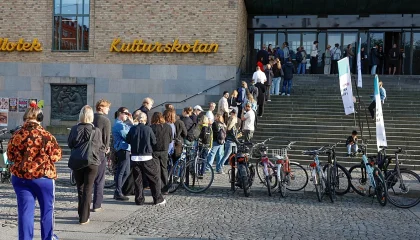
Roughly eight million people are entitled to vote in Sweden, a Nordic country with a population of about 10.6 million. More than half of eligible voters had already submitted ballots before election day, reflecting the country’s long-established practice of advance voting and typically strong electoral participation.
Preliminary totals can shift as additional ballots are checked and counted. The one-seat gap means that even small changes could prove politically significant, especially in a parliament where 175 seats marks the threshold for an outright majority.
Official results are expected within a week. Until then, neither bloc can claim a settled mandate, and party leaders will be watching closely for changes in the final distribution of seats.
If the centre-left finishes ahead, Andersson may have the first opportunity to explore a path to government. Yet a one-seat advantage would not automatically remove the need for complex talks among potential partners. If the right recovers ground, Kristersson could instead seek to preserve his current governing model or pursue a broader arrangement involving the Sweden Democrats.
The close result highlights a wider reality of Swedish politics: the country’s largest parties remain important, but neither side can easily govern without cooperation. The coming days will determine not only who wins the election, but also whether Sweden is heading for a change of government and a new political balance in Stockholm.
Related Reading
Frequently Asked Questions
What is Sweden s centre left edges ahead?
Sweden s centre left edges ahead is the main topic of this guide. The article explains the context, practical details, and next steps readers should understand.
Why does Sweden s centre left edges ahead matter?
Sweden s centre left edges ahead matters because readers are looking for a useful answer, not just a short summary. Good content should match search intent and help them decide what to do next.