Record-Breaking Diesel Prices Trigger Nationwide Road Protests in Portugal
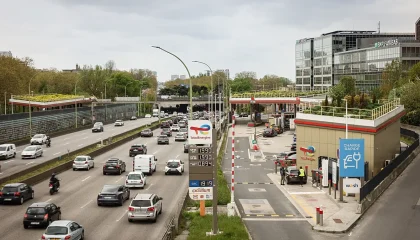
Usagevpn.com – Drivers across Portugal took to the roads this Monday in a spontaneous, decentralized show of frustration as diesel fuel prices climbed to a level never before recorded in the country’s history. What began as a routine morning commute turned into a rolling demonstration stretching from the Tagus River crossings to the industrial corridors of the south, with honking cars and slow-moving convoys filling highways for hours.
From the Bridge to the Refinery
The most visible flashpoint came on the 25 de Abril bridge, the major crossing linking Lisbon’s downtown to Almada on the river’s southern bank. Commuters stopped their vehicles and sounded horns in unison, creating a wall of noise that echoed across the water. Simultaneously, further south in the Setúbal district, a slow-moving column of cars began its crawl toward the Galp refinery complex at Sines. Organized entirely through WhatsApp groups and social media posts, the action had no formal schedule, no designated endpoint, and was still unfolding well past midday.
Footage circulating online captured vehicles draped with Portuguese flags on their hoods, drivers leaning out to blast horns. Placards were visible in several clips, bearing messages such as:
“Enough of fuel price rises”
“Families can’t take any more”
The national gendarmerie (GNR) confirmed that between 60 and 100 vehicles participated in the Sines-bound convoy. No injuries or traffic accidents were reported.
The Numbers Behind the Anger
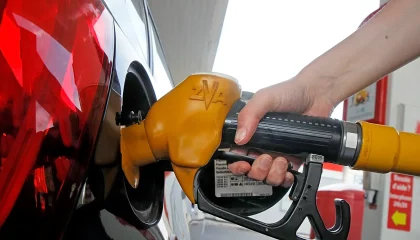
Forecasts published by the Automobile Club of Portugal (ACP) placed Monday’s diesel price at 2.169 euros per litre, a jump of 15 cents from the previous week. Petrol, meanwhile, edged up 12 cents to reach 2.142 euros per litre. Those headline figures, however, already reflect a temporary government intervention: an exceptional reduction in the Tax on Petroleum Products (ISP) that capped the weekly increase at 12 cents for diesel and 9 cents for petrol. Without that fiscal brake, the spike would have been even steeper.
By any measure, the diesel figure is unprecedented. Petrol, while not at an all-time peak, has not been this expensive since the energy shock that followed Russia’s full-scale invasion of Ukraine in March 2022. For Portuguese households already stretched by inflation in food, housing, and utilities, the fuel line item has become a flashpoint that no amount of political rhetoric seems to defuse.
Where Portugal Sits in Europe
The domestic pain is compounded by Portugal’s position in the broader European fuel-price landscape. Data aggregating pump prices across 21 EU member states placed Portugal at the 19th most expensive country for petrol this Monday, behind only France and Denmark. For diesel, the ranking improved slightly to 17th, still ahead of the United Kingdom, Italy, France, and Denmark.
The trend is not isolated to the Iberian Peninsula. In Germany, pump prices have also breached previous records, with petrol surpassing the 2.203-euro-per-litre mark set during the 2022 crisis. Across the continent, the upward trajectory has persisted through the summer months, eroding the brief relief that followed the initial post-invasion spike.
Regulator Finds No Operator Profiteering
The sustained climb prompted Environment and Energy Minister Maria da Graça Carvalho to commission a formal inquiry from the Energy Services Regulatory Authority (ERSE). The resulting study, released in mid-August, concluded that there was “no evidence of profiteering by operators” at the retail level. It also examined whether a so-called “rockets and feathers” dynamic was at play — the pattern in which prices shoot up quickly but drift down slowly.
“The results do not therefore support the notion that reductions are passed through persistently more slowly or less completely than increases.”
ERSE attributed the price gap between Portugal and neighbouring Spain primarily to differing tax structures, while noting that Portugal’s own tax burden on fuel has remained stable and broadly in line with most EU and eurozone members.
Geopolitics, Refining Bottlenecks, and a Tax Question
Analysts trace the broader European price surge to two converging pressures. First, the ongoing conflict in the Middle East and the partial blockage of the Strait of Hormuz have disrupted key maritime trade routes, tightening supply of refined products. Second, even where crude oil is available, limited refining capacity — particularly for diesel — constrains the volume that can reach European markets. Diesel, the fuel that powers trucks, buses, and much of the agricultural and construction sectors, is disproportionately affected by that bottleneck.
On the fiscal front, a more contentious proposal is now circulating among European capitals. An extraordinary levy on oil-company profits has been floated as a mechanism to offset consumer costs. Ministers from Portugal, Germany, Italy, Austria, Poland, and Spain have jointly written to Ireland’s finance minister, requesting that the matter be placed on the agenda of the next Eurozone finance-ministers meeting. That gathering is scheduled for 18 and 19 September in Dublin, where Ireland currently holds the rotating presidency of the European Union.
Whether the levy materialises, and in what form, will shape the political temperature in Lisbon and beyond. For now, the honking on the 25 de Abril bridge and the slow crawl toward Sines signal that Portuguese drivers have reached a patience threshold that no mid-August regulatory report has managed to lower.
Related Reading
Frequently Asked Questions
What is Record fuel price rise sparks protests?
Record fuel price rise sparks protests is the main topic of this guide. The article explains the context, practical details, and next steps readers should understand.
Why does Record fuel price rise sparks protests matter?
Record fuel price rise sparks protests matters because readers are looking for a useful answer, not just a short summary. Good content should match search intent and help them decide what to do next.