Germany’s Chainsaw Giant Demands a 40-Hour Workweek With No Pay Raise
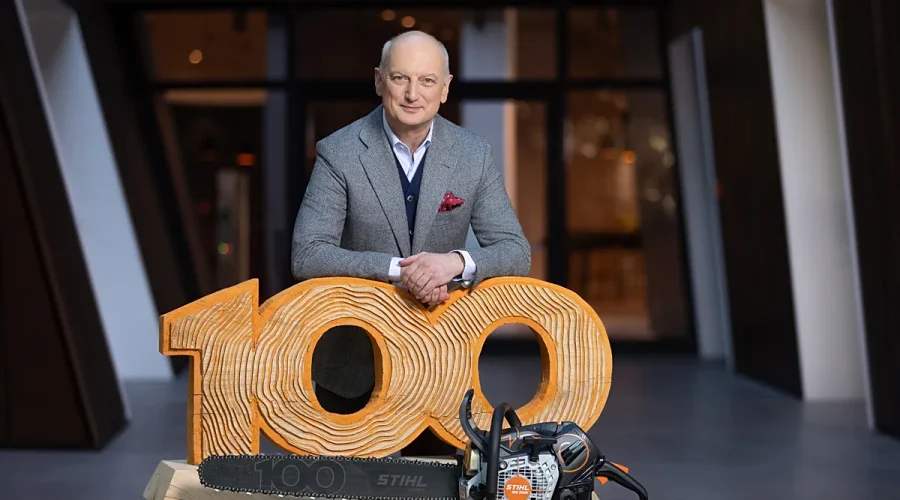
Usagevpn.com – As collective bargaining negotiations in Germany’s metalworking and electrical sectors prepare to open in October 2026, one of the country’s most prominent family-run industrialists has laid out a proposal that is likely to ignite fierce debate across the labour market: extend the standard weekly working hours to 40, with no corresponding increase in wages. Nikolas Stihl, grandson of the company’s 1926 founder and now at the helm of STIHL, the Waiblingen-based manufacturer that has topped global chainsaw sales charts since 1971, framed the demand not as a cost-cutting exercise but as an existential necessity for German industry.
The timing is pointed. With union-employer talks imminent in sectors that employ millions, Stihl’s intervention lands at a moment when German manufacturing is already under sustained pressure. He pointed to a roughly 15 percent contraction in industrial output over the preceding eight years and cited monthly losses of approximately 15,000 factory positions as evidence that the country’s productive base is eroding at an alarming pace.
“The German economy has been stuck in crisis mode for years. The prerequisite for overcoming the persistent weakness in growth is better framework conditions.”
A Century-Old Company at a Crossroads
STIHL, which generated €5.48 billion in revenue in 2025 and employs 20,246 people across its global operations, is marking its centenary this year. The company maintains production facilities in eight countries, operates 40 dedicated sales and marketing subsidiaries, and distributes through more than 50,000 specialist dealers worldwide. Its scale makes Stihl’s public commentary on macroeconomic policy a signal that many in German industry watch closely.
Stihl, who takes what he describes as a long-term view of the business environment, acknowledged external headwinds: American tariff measures, Beijing’s aggressive industrial subsidies, and broader geopolitical friction all weigh on export-dependent manufacturers. Yet he insisted the dominant drag is domestic.
“An overregulated economy, high energy costs, high labour costs, high taxes and a declining level of weaning and qualifications.”
Diagnosing the Structural Malaise
The entrepreneur’s diagnosis extends beyond any single policy lever. He warned that the welfare state and the prosperity it underwrites are both at risk if the industrial base continues to shrink. In his framing, Germany’s problem is not cyclical but structural: a compounding of regulatory burden, energy pricing that penalises heavy industry, a tax architecture that discourages investment, and an education pipeline that no longer supplies the skilled labour the sector requires.
He gave credit where due to the federal government’s planned reform package, which touches statutory health insurance, pension financing, tax policy, and labour-market regulation. Calling those measures “good compromises,” he nonetheless argued they fall short of what is needed to reverse the structural decline. His sharpest warning was aimed at political backsliding: if the coalition were to reverse those compromises, the damage to business confidence in politics would be, in his words, devastating.
“Now we need to muster all our strength for further reforms that will then generate tangible investment and growth impulses. For that, the governing coalition and the social partners must overcome their own reservations in order to live up to their responsibility towards Germany.”
The Work-Volume Argument
At the centre of Stihl’s platform is a simple arithmetic: if Germany wishes to sustain its social-benefit levels and its standard of living, the aggregate volume of labour input must rise. He rejected the framing that this debate is about worker laziness.
“If we want to maintain our prosperity and keep social benefits at a high level, the total volume of work in the economy has to increase. A higher volume of work boosts economic output. In that sense, the debate about more work is a debate about preserving our prosperity, and by no means a debate about employees being lazy.”
He outlined several levers: incentivising overtime, extending working lives with fair carve-outs for physically demanding occupations, drawing more fully on the existing labour pool (including unemployed and part-time workers), and attracting skilled migrants. He also proposed that statutory sick pay begin only from the second day of illness and that telephone-based sick notes be eliminated entirely.
Stihl was explicit that productivity gains from digitalisation and expanding AI adoption will not, in his assessment, offset the labour-supply contraction driven by demographic ageing. The gap, he argued, must be closed through policy choices about hours and participation, not through technological substitution alone.
Administrative Overhaul and the 40-Hour Demand
Beyond labour hours, Stihl called for what he termed “high-quality public administration”: clear rules, streamlined and swift procedures, proportionate reporting obligations, and digital processes supported by artificial intelligence. He proposed that statutory reporting requirements be abolished as a default and retained only where their necessity is explicitly and individually justified. In his view, reorienting public authorities toward a service-provider role would rebuild trust in Germany as a business location and in its political institutions.
The most contentious element of his programme, however, is the 40-hour week without pay compensation. Stihl acknowledged he was asking a great deal of employees and stressed that his aim was not to take anything away from anyone. The objective, he insisted, was to preserve competitiveness, keep production on German soil, and safeguard existing jobs.
“We no longer have the productivity advantage over key competitors that used to justify our high labour costs. That is why I advocate increasing weekly working hours to 40, without any pay compensation.”
For German workers accustomed to a 35-to-38-hour week in many manufacturing sectors, the proposal represents a significant shift. Union leaders are expected to respond sharply when the metalworking and electrical-industry bargaining round opens later this year. Whether Stihl’s century-old family firm can convert its public advocacy into bargaining-room leverage remains to be seen, but the intervention has already sharpened the political debate over how Germany intends to defend its industrial base in an era of demographic contraction, global competition, and rising energy costs.
Related Reading
Frequently Asked Questions
What is Chainsaw maker STIHL chief calls for longer?
Chainsaw maker STIHL chief calls for longer is the main topic of this guide. The article explains the context, practical details, and next steps readers should understand.
Why does Chainsaw maker STIHL chief calls for longer matter?
Chainsaw maker STIHL chief calls for longer matters because readers are looking for a useful answer, not just a short summary. Good content should match search intent and help them decide what to do next.