Confidence as Currency: How Mexican Teens Are Rewriting the Rules of Social Media Competition
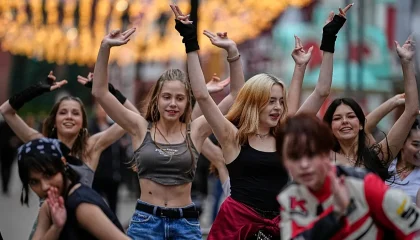
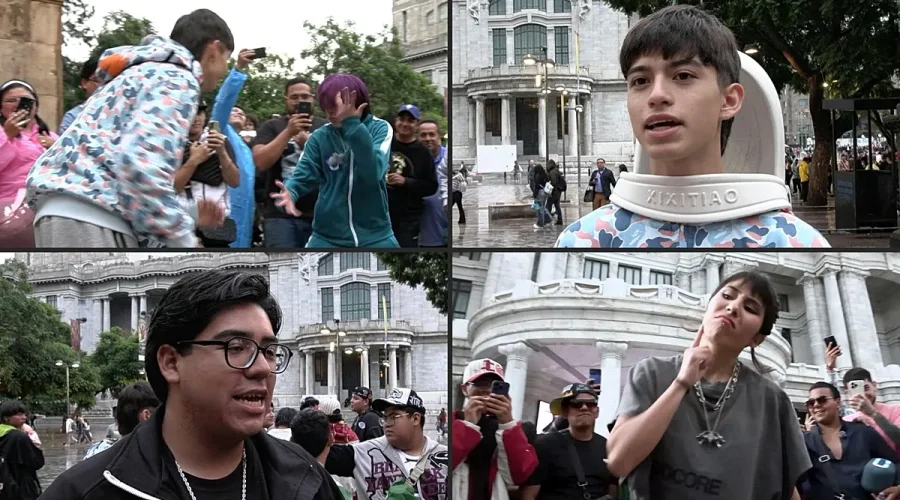
Usagevpn.com – A new wave of street-level spectacle is sweeping through Mexico’s urban youth culture, and its currency is not money, followers, or viral clips — it is raw, unapologetic self-assurance. Across social platforms, a format called the “Aura Battle” has moved from scattered phone videos into organized, judged competitions where teenagers step into a ring of onlookers and perform improvised physical comedy, dance flourishes, and theatrical gestures to claim the title of whoever radiates the most “aura.” The phenomenon, which gained visible traction in 2026, represents a sharp departure from the polished, algorithm-optimized content that dominates most short-form video platforms. Here, the metric is not production value but the sheer audacity of showing up and performing without apology.
What the Format Actually Looks Like
In practice, an Aura Battle pits two or more participants against one another in a loosely structured showdown. There is no fixed choreography, no scripted dialogue, and no requirement for musical accompaniment. Contestants improvise — mixing exaggerated dance steps, mock-aggressive postures, comedic facial expressions, and playful taunts directed at their opponent. Judges, typically a small panel assembled by the event organizers, score each round on originality, comedic timing, and the degree to which the performer projects an unshakeable sense of self. The winner takes home a modest cash prize and, more importantly, the social capital of having “won the aura.”
The term “aura” itself has migrated from internet slang — where it denotes an intangible vibe or gravitational pull a person exudes — into a competitive metric. Young users on TikTok, Instagram, and YouTube Shorts had already been tagging videos with “aura points” for months before the format crystallized into a live, judged event. The leap from screen to sidewalk was, by the organizers’ own account, a matter of speed: they noticed the hashtag momentum climbing and decided to build a physical stage around it before the moment passed.
The Winner’s Philosophy
Kaled Rosales Salazar, sixteen years old and based in Mexico City, claimed the most recent final and walked away with 2,000 Mexican pesos — roughly one hundred euros. The cash, however, is not what he highlights. In his own words, the experience validated a personal stance he had been refining long before any camera pointed at him:
“I do like being myself, you know, making a fool of myself. I don’t really care what people think or say about me, because no matter what you do or don’t do, people are going to criticize you anyway. So I thought, why not? If I could do this for free at home, I might as well do it for a reward, right?”
That last line captures the economic logic of the trend: the marginal cost of performing is essentially zero, so attaching a prize to the act simply converts a private habit into a public spectacle with stakes. For a teenager in a city where entertainment options range from streaming services to crowded plazas, the Aura Battle offers a low-barrier entry point into performance culture without requiring instruments, training, or institutional affiliation.
Creativity Over Aggression
Fourteen-year-old Carlos Irving Quintana, who competes under the stage name “Thanos,” emphasizes that the format rewards wit rather than intimidation. His description of what judges are actually looking for:
“It’s based on who does the most creative, funniest and most entertaining moves, on the ‘respect,’ I mean playful, tongue-in-cheek moves that are funny.”
The emphasis on playfulness distinguishes Aura Battles from other youth competition formats — sports leagues, dance-offs, or rap battles — where technical skill or lyrical density often dominates scoring. Here, the bar is comedic intelligence and the willingness to be visibly ridiculous in front of peers. That lowers the intimidation threshold dramatically and explains why participants skew toward early teens who have not yet internalized the social penalty for looking foolish.
The Organizer’s Framing: Ego as Engine
Aldhir Gonzalez, who coordinates the events, frames the competition explicitly as a contest of self-belief rather than talent:
“Whoever has the most confidence. I would say it’s kind of a battle of ego and self-confidence, not ego in a negative sense, but rather who has the confidence to believe they’re the best, to dance the best and show off their moves. I think that’s the real battle right now.”
Gonzalez’s language — “ego” stripped of its negative connotation and repurposed as a performance fuel — mirrors a broader shift in how Gen Z and Gen Alpha participants talk about self-presentation. Where older generations often counseled humility in public settings, this cohort treats visible self-assertion as a skill to be practiced, iterated, and refined in front of an audience. The Aura Battle, in that reading, functions less like a contest and more like a confidence gym: a structured environment where the act of showing up repeatedly rewires the participant’s relationship to judgment.
Why the Trend Is Gaining Ground Now
Several converging factors explain the timing. First, short-form video platforms have normalized the idea that anyone can be a performer; the production gap between a professional dancer and a teenager with a phone has collapsed. Second, post-pandemic social re-engagement has left many young people hungry for low-stakes, in-person interaction that does not require the polish of a concert or the preparation of a sport. Third, Mexican urban youth culture has always carried a strong tradition of improvisational performance — from cumbia dance circles to street theater — and the Aura Battle slots neatly into that lineage while updating its distribution channel.
The organizers note that online momentum preceded the first physical event by weeks. Hashtag volumes climbed, remix videos proliferated, and local creators began staging informal showdowns in parks and schoolyards. Formalizing the format with judges, prizes, and a named event structure gave the scattered energy a repeatable skeleton, which in turn attracted media attention and, consequently, larger audiences.
What Comes Next
As the format scales beyond Mexico City’s initial circuits, organizers are experimenting with larger venues, multi-city qualifiers, and hybrid online-offline scoring where audience votes supplement panel judgments. The prize pool remains modest by professional-competition standards, but the organizers are explicit that the prize is secondary; the primary product is the experience of stepping into a frame of expectation and choosing, in real time, to be seen. Whether the trend stabilizes into a recurring cultural institution or burns through its novelty cycle within a season remains to be seen. What is already clear is that for a generation raised on curated feeds, the unpolished, improvised, gloriously awkward act of performing in public has become its own genre — and its own competition.
Related Reading
Frequently Asked Questions
What is What is an Aura Battle Young?
What is an Aura Battle Young is the main topic of this guide. The article explains the context, practical details, and next steps readers should understand.
Why does What is an Aura Battle Young matter?
What is an Aura Battle Young matters because readers are looking for a useful answer, not just a short summary. Good content should match search intent and help them decide what to do next.