Doha’s Kitchen: How a Gulf State Built a World-Class Food Identity
Usagevpn.com – Walk through the narrow lanes of Doha’s Old Port on a Tuesday evening and you will hear the clatter of copper pans, smell woodsmoke curling over grilled lamb, and watch a chef plate a dish that would not look out of place in Lisbon or Bangkok. That scene — part heritage, part haute cuisine, entirely unexpected for a country many outsiders still picture as little more than a strip of desert coastline — captures the essence of what Qatar has done with its food culture over the past two decades. The peninsula has moved from a place where expatriate workers ate simple rice-and-curry meals in dormitory canteens to one where a single Michelin-starred restaurant sits inside a luxury hotel and a Bib Gourmand–honoured eatery occupies a restored warehouse by the water.
Roots in the Sand and the Sea
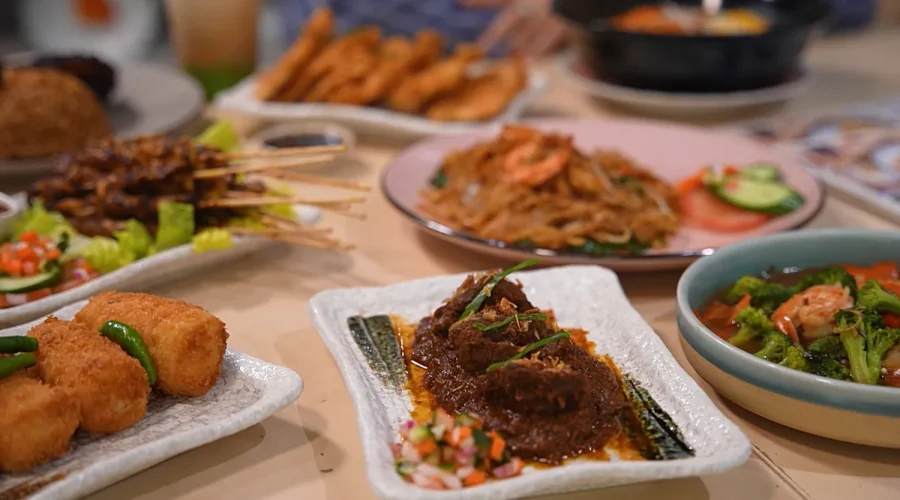
Before the oil boom reshaped every facet of daily life, Qatari cooking was anchored in a handful of staples: basmati rice cooked with saffron and dried lime, slow-braised lamb, flatbreads baked in clay ovens, and dates served alongside Arabic coffee sweetened with cardamom. Fishing villages along the northern coast supplied shrimp and mullet, while Bedouin traditions contributed dried meat and fermented milk products. These ingredients and techniques remain the backbone of home cooking and of the country’s most celebrated traditional restaurants, where families still gather around communal platters of machboos and haneeth.
What changed was not the heritage itself but the scale and ambition layered on top of it. Qatar’s population, roughly 3.3 million, includes workers and residents from South Asia, Southeast Asia, the Levant, Sub-Saharan Africa, and Europe. Each wave of migration brought spice racks, fermentation techniques, noodle traditions, and pastry know-how that settled into the country’s commercial kitchens almost as naturally as they had settled into its residential compounds.
The Fine-Dining Turn
The most visible marker of Qatar’s gastronomic maturation arrived with the Michelin Guide’s expansion into the Middle East. Among the earliest and most prominent honours went to Alba, the Italian restaurant housed within the Raffles Doha hotel. Its single Michelin star signalled to the international culinary establishment that Doha was no longer a stopover between Dubai and Riyadh but a destination in its own right. The recognition validated years of investment in chef recruitment, ingredient sourcing, and dining-room design that had been quietly building beneath the city’s glass towers.
A different register of achievement belongs to Baron, located at the Old Doha Port. Awarded the Bib Gourmand distinction — Michelin’s designation for restaurants delivering exceptional value relative to their quality — Baron occupies a converted structure in the port’s heritage district. Its menu leans on Mediterranean and Middle Eastern ingredients prepared with contemporary technique, and its setting places diners within sight of the very warehouses where, a century ago, pearl divers unloaded their catches. The juxtaposition of heritage architecture and modern plating is, in miniature, a portrait of Qatar’s broader cultural strategy: preserve the shell, reinvent the contents.
Why It Matters Beyond the Plate
For a nation whose economy has long been read through the lens of hydrocarbons, a thriving food scene carries symbolic weight. It signals diversification not only in revenue streams but in creative output. Restaurants become laboratories where a Qatari chef might fold a Persian fesenjan technique into a locally sourced fish preparation, or where a Korean barbecue concept is adapted to halal specifications without losing its charred, smoky character. The result is a cuisine that is neither purely “Qatari” in the narrow ethnic sense nor a generic import, but a hybrid that could only have emerged in this particular place, at this particular moment of demographic density and economic confidence.
The practical implications extend to tourism planning, urban development, and soft-power projection. A city that can point to a Michelin-starred address and a Bib Gourmand–listed neighbourhood gains a narrative that complements its museums, sports venues, and cultural festivals. It gives visitors a reason to stay an extra night, to book a table rather than merely pass through an airport terminal.
The Unfinished Menu
Qatar’s culinary story is still being written. New openings continue to appear across West Bay, Msheireb, and the port district, each adding another thread to the tapestry. What distinguishes the current moment from the earlier phase of simple appetite-satisfaction is intentionality: chefs, restaurateurs, and cultural institutions now speak openly about building a recognisable Qatari dining identity rather than merely importing foreign brands. The ambition is to make the peninsula’s name synonymous not just with wealth or sport but with a table where tradition and innovation sit side by side, fork in hand.
The transformation is not about replacing what came before. It is about giving the old flavours a new vocabulary — one that the world can taste, recognise, and remember.
Related Reading
Frequently Asked Questions
What is Qatar in Motion?
Qatar in Motion is the main topic of this guide. The article explains the context, practical details, and next steps readers should understand.
Why does Qatar in Motion matter?
Qatar in Motion matters because readers are looking for a useful answer, not just a short summary. Good content should match search intent and help them decide what to do next.