Revolutionary Bone Metamaterial Implant Saves Patient’s Leg from Amputation in Madrid
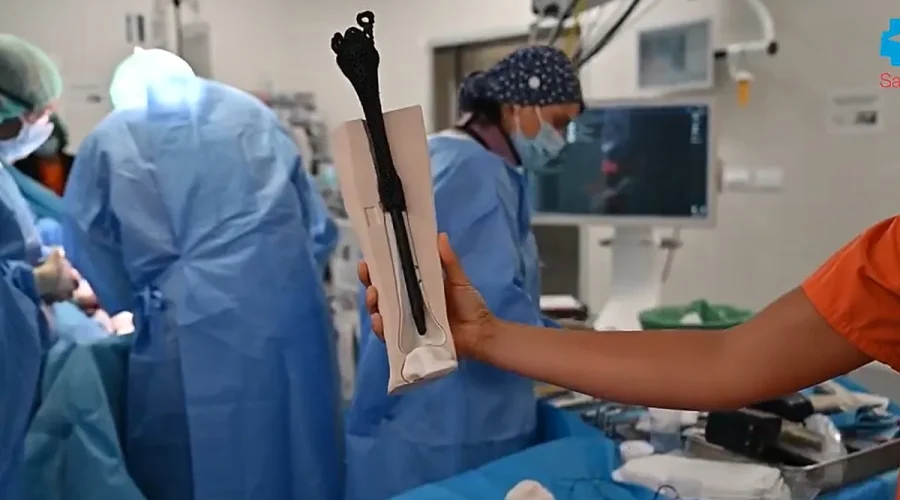
Usagevpn.com – A groundbreaking medical achievement has emerged from Spain’s capital, where surgeons at Gregorio Marañón Hospital have successfully prevented a leg amputation using an innovative bone implant. This pioneering treatment involved a custom-designed prosthesis crafted specifically for a 38-year-old patient suffering from a bone tumor in his lower leg. The device represents the first of its kind globally, combining aerospace engineering with medical science to create a structure that mimics natural bone properties.
A Patient’s Journey Toward Recovery
Pierre Chazel, the patient at the center of this medical milestone, faced a difficult prognosis after developing a high-grade bone sarcoma within his tibia. The condition worsened when an infection developed alongside significant bone density loss, making conventional prosthetic solutions impossible. Rather than proceeding with amputation, medical professionals chose to develop a completely personalized implant tailored to his unique anatomical structure.
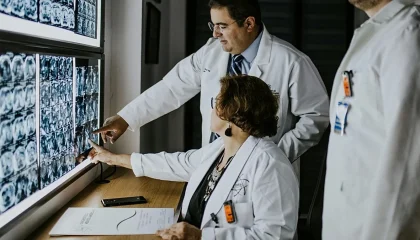
Using advanced radiological imaging, researchers constructed a digital replica of Mr. Chazel’s healthy leg. This virtual model enabled them to simulate various physical activities, including walking, ascending stairs, and navigating unexpected obstacles. The simulation data informed every aspect of the prosthesis design, from internal structural patterns to precise screw placement in areas offering optimal bone quality. This millimetre-level planning allowed surgeons to execute the procedure with remarkable accuracy.
Understanding the Metamaterial Technology
The implant’s revolutionary nature stems from its metamaterial composition, a technology originally pioneered in aerospace applications. Unlike traditional prostheses that replace damaged bone with solid replacement pieces, this device recreates bone architecture through an intricate network of microscopic titanium rods. These millimetre-scale structures work together to distribute mechanical loads in patterns remarkably similar to natural bone tissue.
The collaboration between medical specialists and engineers from the Polytechnic University of Madrid proved essential to this achievement. Together, they developed a titanium framework that not only supports weight but also encourages the patient’s own bone to grow and integrate with the implant. This biological integration significantly reduces rejection risks and potential complications that commonly plague conventional prosthetic treatments.
Unprecedented Mechanical Performance
The performance specifications of this metamaterial prosthesis far exceed those of traditional implants. While weighing merely 300 grams, the device can support loads exceeding 500 kilograms. In stark contrast, conventional prostheses typically weigh several kilograms yet accommodate only 100 to 150 kilograms of force. This dramatic improvement in strength-to-weight ratio represents a substantial advancement in orthopedic engineering.
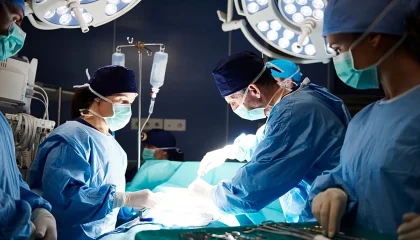
The 3D printing manufacturing process also delivered significant surgical benefits. Because the prosthesis was precisely adapted to each patient’s anatomy before surgery, operating time was reduced by nearly half compared to traditional procedures. This efficiency not only benefits patients through shorter recovery periods but also optimizes hospital resource utilization.
Clinical Outcomes and Future Applications
One year following the surgical intervention, Mr. Chazel has achieved remarkable recovery milestones. After spending nearly two years without placing weight on his affected leg, he reports that mobility is finally returning to his daily life. He can now walk independently, demonstrating the prosthesis’s ability to restore functional movement.
The success of this initial case has prompted Gregorio Marañón Hospital to expand its program. A second similar procedure has already been completed, and two additional personalized implants are currently in development. These upcoming projects target different anatomical regions, including a wrist implant and a sternum replacement, showcasing the versatility of the technology across multiple body areas.
Implications for Public Healthcare Systems
This technological breakthrough carries significant implications for healthcare delivery beyond individual patient outcomes. Hospital administrators envision implementing this approach across the public health system to deliver hyper-personalised medicine at scale. The ability to manufacture custom implants efficiently through 3D printing could transform how orthopedic conditions are treated, particularly for complex cases requiring precise anatomical matching.
The aerospace-derived metamaterial approach demonstrates how cross-industry innovation can solve longstanding medical challenges. As manufacturing costs decrease and production capabilities expand, such personalized solutions may become accessible to broader patient populations. This evolution toward precision medicine represents a fundamental shift from one-size-fits-all treatments toward solutions designed for individual biological characteristics.
The successful integration of digital twin technology, 3D printing, and materials science in this case study provides a template for future developments. Researchers continue to explore how these principles might address other orthopedic conditions, potentially reducing amputation rates and improving quality of life for patients worldwide. The Madrid hospital’s commitment to expanding this program suggests that metamaterial prostheses could soon transition from experimental innovation to standard clinical practice.
Related Reading
Frequently Asked Questions
What is Madrid hospital creates first bone metamaterial?
Madrid hospital creates first bone metamaterial is the main topic of this guide. The article explains the context, practical details, and next steps readers should understand.
Why does Madrid hospital creates first bone metamaterial matter?
Madrid hospital creates first bone metamaterial matters because readers are looking for a useful answer, not just a short summary. Good content should match search intent and help them decide what to do next.