Europe’s Summer Exhibition Scene: A Curator’s Guide to Must-See Shows
Usagevpn.com – The continent’s cultural calendar reaches its peak during the warmer months, offering visitors an unparalleled opportunity to engage with transformative artistic experiences. From London to Florence, Oslo to Berlin, museums and galleries are presenting exhibitions that challenge conventional thinking and invite audiences to reconsider familiar narratives through fresh perspectives.
This season’s programming demonstrates remarkable diversity, spanning fashion, painting, performance art, and multimedia installations. While autumn promises additional highlights—including a major Bayeux Tapestry presentation at London’s British Museum and Monet’s exploration of temporal perception at Paris’s Musée de l’Orangerie—several exhibitions currently running deserve immediate attention, particularly for travelers seeking climate-controlled cultural immersion during peak summer heat.
Schiaparelli’s Avant-Garde Vision at the V&A
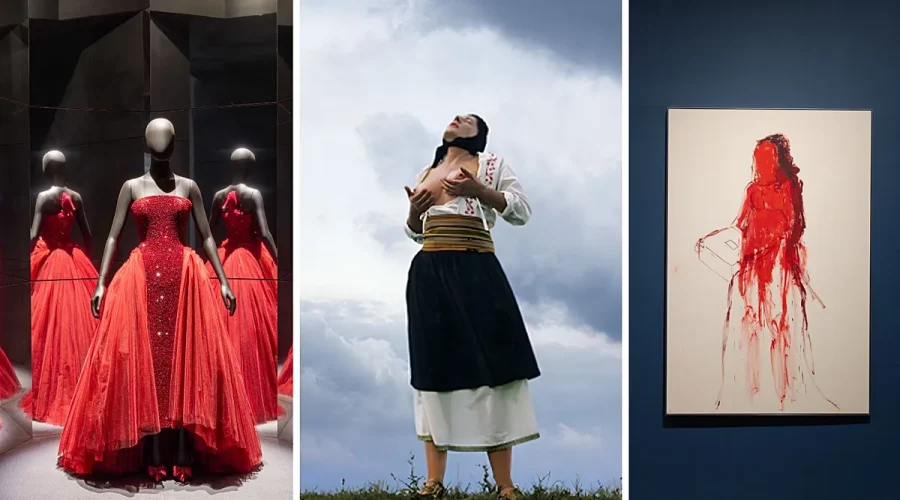
The Victoria and Albert Museum has mounted what represents a watershed moment in fashion scholarship: its inaugural comprehensive exhibition dedicated to Elsa Schiaparelli. Running through the summer, this landmark presentation traces the Italian designer’s extraordinary trajectory from her 1920s emergence through her enduring influence on contemporary design.
Visitors encounter an immersive environment where Schiaparelli’s signature whimsy meets sophisticated craftsmanship. Lobster-printed garments, pinecone-adorned accessories, and footwear-inspired headpieces demonstrate her capacity to transform the mundane into the extraordinary. The exhibition’s curatorial approach deliberately bridges historical artifacts with contemporary interpretations, revealing how Schiaparelli’s creative methodology anticipated modern interdisciplinary practices.
What distinguishes this presentation is its emphasis on the designer’s collaborative spirit. Schiaparelli worked alongside artists, sculptors, and architects, creating garments that functioned as wearable art. The exhibition illuminates these creative intersections through carefully selected pieces that showcase both her technical innovation and her willingness to challenge sartorial conventions.
Munch Beyond Expressionism: The Chocolate Connection
While Edvard Munch’s The Scream dominates popular consciousness, Oslo’s MUNCH museum presents compelling evidence that the Norwegian master’s artistic range extended far beyond psychological intensity. The current exhibition reveals an unexpected chapter in Munch’s career: his 1923 commission to create vibrant oil portraits for Freia, Norway’s beloved chocolate manufacturer.
These works, many featuring female subjects who constituted the majority of Freia’s workforce, capture a transformative period in Norwegian social history. The exhibition layers archival documentation, documentary footage, and the chocolate portraits themselves to construct a multidimensional portrait of Munch as both artist and social observer. This approach demonstrates how his work reflected broader socioeconomic shifts occurring across Scandinavia during the early twentieth century.
The presentation challenges visitors to reconsider Munch’s artistic evolution, positioning these commercial commissions not as departures from his expressionist roots but as complementary explorations of human experience through a different lens.
Abramović’s Spiritual and Sexual Epic
Marina Abramović’s latest performance work in Berlin represents perhaps her most ambitious undertaking to date. Balkan Erotic Epic brings together more than seventy performers in a visceral exploration of Slavic cultural heritage, examining the complex relationship between physical endurance and spiritual transcendence.
The performance incorporates elements that have defined Abramović’s career—prolonged stillness, bodily vulnerability, audience participation—while introducing new dimensions related to her Balkan ancestry. Critics have described the work as simultaneously shocking and cathartic, creating an environment where audiences experience collective emotional release through shared witnessing.
Rothko’s Florence Resonance
The Palazzo Strozzi hosts what curators Christopher Rothko and Elena Geuna have assembled as one of the most significant Rothko retrospectives ever mounted. Drawing over seventy works from private collections and international museums, the exhibition emphasizes Florence’s profound influence on the American painter’s mature style.
The presentation suggests that Rothko’s color field paintings—often perceived as transcendent voids—derive their emotional power from specific architectural and spiritual qualities embedded in the Italian city. Each brushstroke, according to this interpretation, carries within it the memory of Florentine light and atmosphere.
Emin’s Unapologetic Retrospective
The Tate Modern’s comprehensive examination of Tracey Emin’s career traces her evolution from the controversial My Bed installation that earned Turner Prize nomination in the 1990s to her current status as a defining voice in British contemporary art. The exhibition presents works spanning multiple mediums, unified by their raw emotional honesty and refusal to conform to artistic expectations.
Visitors encounter intimate objects alongside large-scale works, creating the impression of navigating through a personal archive. The presentation emphasizes Emin’s consistent thematic concerns—pain, love, mortality, and resilience—while demonstrating her willingness to experiment across different artistic forms.
As summer progresses, these exhibitions offer compelling reasons to explore Europe’s cultural institutions, each providing distinct pathways for understanding how art continues to shape our perception of human experience.
Related Reading
Frequently Asked Questions
What is Lobster dresses and unmade beds?
Lobster dresses and unmade beds is the main topic of this guide. The article explains the context, practical details, and next steps readers should understand.
Why does Lobster dresses and unmade beds matter?
Lobster dresses and unmade beds matters because readers are looking for a useful answer, not just a short summary. Good content should match search intent and help them decide what to do next.