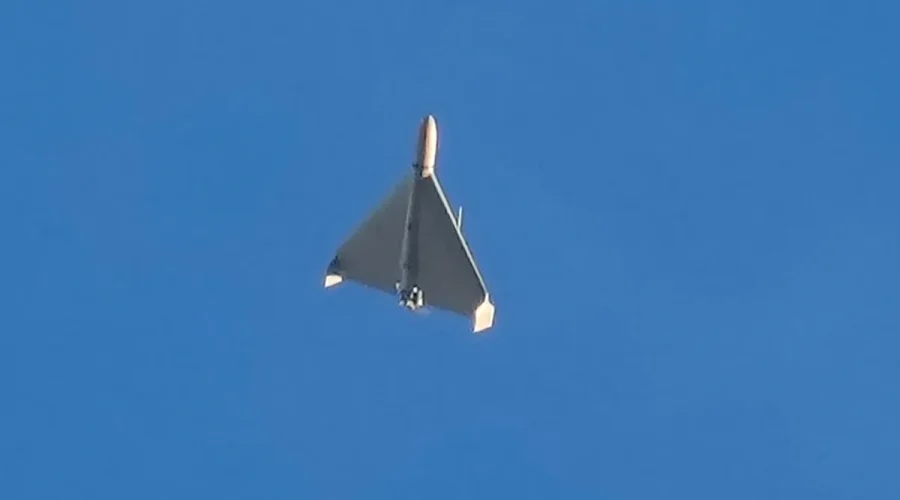
Unidentified Aerial Vehicle Triggers Security Alert Across Romania’s Eastern Border
Usagevpn.com – A drone that managed to slip past Romania’s radar systems crashed in a forested region near the Ukrainian frontier this past Friday, adding to a growing series of airspace violations that have tested NATO’s eastern defenses. The incident underscores the persistent security challenges facing countries positioned along the alliance’s eastern flank as Russia continues its military campaign in Ukraine.
Low-Altitude Flight Evades Detection Systems
According to the Romanian Defence Ministry, emergency operators received a report about a downed aerial vehicle near Luncavița, a locality situated approximately five kilometers from the international boundary with Ukraine. The ministry’s official statement highlighted a critical detail: the unmanned aircraft was not picked up by ground-based radar surveillance equipment because it maintained a very low flight path.
Based on currently available data, the aerial target was not detected by the Ministry’s radar surveillance systems, as it was flying at a very low altitude.
The ministry confirmed that the drone came to rest in a wooded zone and noted that preliminary assessments revealed no injuries to personnel and no damage to nearby infrastructure or private property.
Parallel Incidents Highlight Regional Tensions
The Romanian incident occurred on the same day that an Italian Eurofighter jet, participating in NATO’s Baltic Air Policing mission, destroyed a foreign drone in Latvian territory. NATO Air Command reported that two Italian Eurofighters launched from Šiauliai air base in Lithuania, working alongside two Turkish F-16 aircraft stationed at Ämari air base in Estonia, to track and intercept the unidentified aerial vehicle. Latvian military authorities stated that the drone had penetrated their airspace as a consequence of Russian electromagnetic warfare operations. The interception took place above the Balvi region, further demonstrating the cross-border nature of these aerial disturbances.
Romania’s Strategic Vulnerability
Romania’s geographic positioning places it at the center of European security concerns. Sharing a lengthy border with Ukraine and maintaining a coastline along the Black Sea, the nation faces multiple dimensions of threat stemming from Russia’s full-scale invasion that commenced in February 2022. This dual exposure has transformed Romania into a focal point for drone-related incidents over recent months. The country’s security apparatus has responded to an escalating pattern of aerial intrusions. Earlier this week, Romanian military divers executed a controlled detonation of two Gerbera-type drones discovered in the Black Sea waters near the Neptun Deep natural gas facility. This incident highlighted the threat to critical energy infrastructure in the region.
A Timeline of Aerial Incidents
The frequency of drone encounters has accelerated dramatically. In July, Romanian F-16 fighter jets intercepted and destroyed three separate drones within a three-day period. The month before, a Ukrainian maritime drone detonated in the port city of Constanța, disrupting commercial shipping operations. Perhaps the most consequential incident occurred in May when a Russian unmanned aerial vehicle loaded with explosives crashed in the city of Galați. The collision triggered a fire in a residential apartment building and resulted in injuries to two individuals, demonstrating the potential for civilian harm from these aerial incursions.
NATO’s Collective Response
European and NATO officials have issued strong condemnations of the escalating incidents, pledging solidarity with Romania and other nations experiencing airspace violations. The North Atlantic Council convened on Wednesday specifically to address the recent wave of incidents across Eastern Europe.
Allies reiterated that Russia bears full responsibility for the airspace violations, which are dangerous and unacceptable, and demonstrate Russia’s increasing tolerance for risk.
The alliance emphasized that its forces remain prepared to counter and defend against any form of aggression directed at member states. The repeated nature of these incidents suggests a coordinated pattern rather than isolated occurrences, with Russia potentially testing NATO’s response capabilities through incremental violations. The Romanian Defence Ministry’s observation about low-altitude flight evading radar systems points to a tactical adaptation in how aerial threats approach NATO territory. By flying beneath the detection envelope of conventional radar installations, unmanned vehicles can penetrate deeper into allied airspace before being identified. This development has implications for how NATO structures its air defense architecture across the eastern flank, potentially requiring enhanced sensor networks and improved coordination between ground-based and airborne detection systems. As winter approaches, the frequency of these incidents may increase, with colder weather potentially affecting both drone operations and radar performance. The international community continues to monitor the situation closely, recognizing that the airspace violations represent not merely isolated incidents but a broader challenge to European security stability.
Related Reading
Frequently Asked Questions
What is Drone crashes in Romania after flying?
Drone crashes in Romania after flying is the main topic of this guide. The article explains the context, practical details, and next steps readers should understand.
Why does Drone crashes in Romania after flying matter?
Drone crashes in Romania after flying matters because readers are looking for a useful answer, not just a short summary. Good content should match search intent and help them decide what to do next.