Ebola Crisis Deepens as Outbreak Reaches New Province in Democratic Republic of Congo
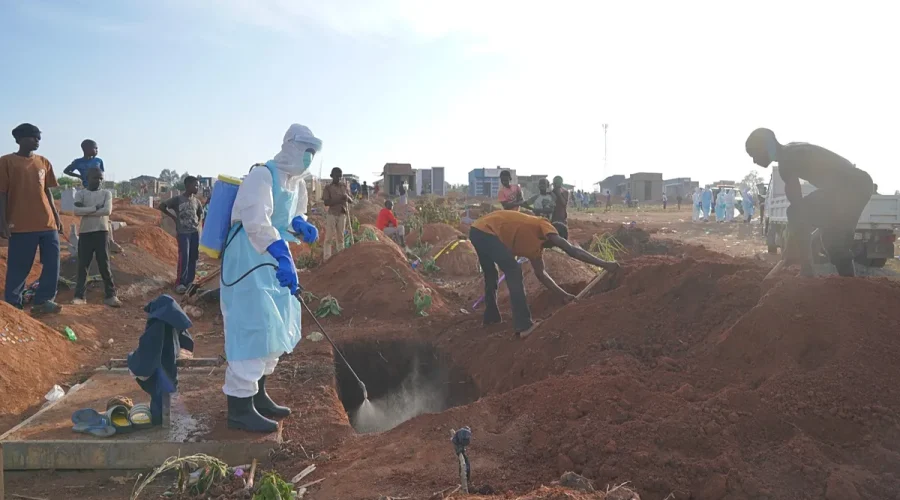
Usagevpn.com – The Democratic Republic of Congo is confronting what may become the most lethal Ebola epidemic in its history, with the virus now confirmed in six provinces and threatening to cross into neighboring South Sudan. Health officials are racing against time as case numbers climb at a pace not seen in previous outbreaks, while logistical and security challenges continue to hamper containment efforts across the vast central African nation.
Unprecedented Spread Across Multiple Regions
Since being officially declared on May 15, the current outbreak has already surpassed many of its predecessors in both speed and severity. The disease originated in Ituri, a northeastern province long scarred by armed conflict, and has since expanded into North Kivu, South Kivu, Haut-Uele, Tshopo, and most recently Bas-Uele. The latest case emerged in northern Bas-Uele after a patient traveled from the adjacent Haut-Uele region, according to Jean Kaseya, who leads the Africa Centres for Disease Control and Prevention.
The velocity of transmission has caught epidemiologists off guard. Within just three months of the official declaration, the DRC recorded seven times more infections and five times more fatalities than occurred during the initial three-month period of the 2014 West Africa epidemic, which remains the largest Ebola outbreak ever documented globally. This accelerated trajectory has prompted urgent calls for expanded intervention strategies.
Confirmed cases now sit just 35 kilometres from the South Sudan border, along high-risk travel corridors.
The proximity to South Sudan represents a critical vulnerability. Both Ituri and Haut-Uele share boundaries with the neighboring country, and established travel routes facilitate movement between communities on either side of the frontier. Mercy Corps, an international humanitarian organization, emphasized that these corridors could serve as conduits for cross-border transmission if containment measures fail to gain traction.
Healthcare System Under Severe Strain
Containment operations face multiple compounding obstacles. Health infrastructure in affected provinces remains fragile, with many communities lacking adequate medical facilities, clean water supplies, and proper sanitation systems. Trust between local populations and health workers has been eroded by years of conflict and misinformation campaigns, complicating vaccination campaigns and contact tracing efforts.
Security conditions further complicate the response. North Kivu and South Kivu provinces are divided by active front lines between the Congolese national army and the M23 rebel group, which has received backing from Rwanda and captured substantial territory in recent months. These fighting zones limit access for medical teams and disrupt supply chains essential for outbreak management.
Some of the hardest-hit areas feature dense populations combined with minimal government presence and limited healthcare infrastructure. The combination of crowded settlements, porous borders, and ongoing violence creates conditions where the virus can circulate undetected before being identified by surveillance systems.
Historical Context and Future Outlook
The current death toll has already approached the peak of the 2018-2020 outbreak, which claimed nearly 2,300 lives out of 3,500 recorded cases. At present, more than 2,128 fatalities have been confirmed among 4,566 cases, suggesting the epidemic could ultimately exceed its previous record. The 2018-2020 crisis was notable not only for its scale but also for the deployment of experimental vaccines that helped slow transmission in later stages.
The World Health Organisation expressed optimism that the trajectory could be reversed within three months, contingent on scaling up interventions and addressing the root causes of rapid spread. Ebola, which transmits through direct contact with bodily fluids and produces hemorrhagic fever symptoms, has killed over 15,000 people across Africa during the past half-century, making each new outbreak a significant public health challenge.
As international aid organizations mobilize additional resources, the coming weeks will prove critical in determining whether the DRC can contain this outbreak before it reaches new heights or spills beyond its borders into South Sudan and other neighboring nations.
Related Reading
Frequently Asked Questions
What is Ebola spreads to sixth DR Congo?
Ebola spreads to sixth DR Congo is the main topic of this guide. The article explains the context, practical details, and next steps readers should understand.
Why does Ebola spreads to sixth DR Congo matter?
Ebola spreads to sixth DR Congo matters because readers are looking for a useful answer, not just a short summary. Good content should match search intent and help them decide what to do next.