Eurovision Introduces New Hosting Restrictions for Nations in Conflict
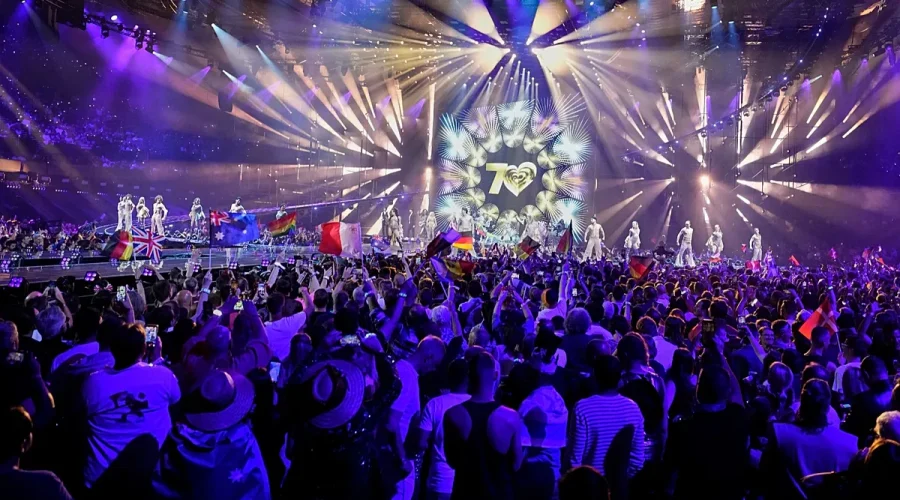
Usagevpn.com – The Eurovision Song Contest has unveiled a significant modification to its hosting regulations, establishing that nations engaged in armed conflict will no longer be eligible to organize the prestigious annual music competition. This policy shift was communicated on Wednesday by the event’s organizing committee, marking a pivotal moment in the contest’s long history of bringing together diverse nations through song.
Understanding the New Framework
Eurovision operates on a straightforward principle: each year, the television broadcaster from the nation that triumphed in the previous edition assumes responsibility for staging the competition. The event functions as a collaborative production among public broadcasting organizations that form part of the European Broadcasting Union, commonly referred to as the EBU. This organizational structure has remained largely consistent since the contest’s inception, though the new rules introduce important flexibility for challenging circumstances.
“The winning broadcaster will automatically be ineligible to host the Contest if an armed conflict, a sensitive geopolitical situation, or any other situation materially affects the security, safety or stability of their state or immediate region,” the EBU explained in an official statement.
One notable aspect of this framework is that Eurovision extends beyond European borders. The EBU encompasses member organizations from various regions worldwide, meaning the competition welcomes participants from outside the European continent. This global dimension adds complexity to hosting decisions, particularly when geopolitical tensions arise in non-European nations.
Security Assessment and Decision-Making
The EBU has clarified that it reserves the authority to commission an independent security evaluation before determining whether a victorious country possesses the capacity to host the event safely. This assessment mechanism provides a structured approach to evaluating potential hosting nations during uncertain times, ensuring that decisions are based on comprehensive analysis rather than political considerations alone.
While the official statement avoided naming specific countries, several observers noted that Israel had come remarkably close to victory in both 2025 and 2026, ultimately securing second place on each occasion. This near-miss performance has placed Israeli hosting prospects under particular scrutiny within the Eurovision community.
The Vienna Boycott: A Historic Precedent
The 2026 edition held in Vienna witnessed an unprecedented development when five nations chose to boycott the competition entirely. Spain, Ireland, the Netherlands, Slovenia, and Iceland announced they would not participate alongside Israel, citing the ongoing conflict in Gaza as their primary concern. This boycott was triggered by Hamas’s attack on Israel on October 7, 2023, which initiated a prolonged military response that continues to shape regional dynamics.
This marked the first time in Eurovision history that multiple countries simultaneously withdrew from the contest over geopolitical concerns. The boycott demonstrated the growing awareness of international conflicts among Eurovision audiences and participants, reflecting how the contest has evolved from a purely musical celebration into a platform that acknowledges broader global issues.
Contingency Plans for Unforeseen Circumstances
Under the revised regulations, should a winning nation be deemed incapable of hosting the contest, the EBU will designate an alternative host country. Importantly, this replacement nation will organize the event “in its own right” rather than “on behalf of another Member,” establishing a clear distinction between temporary hosting arrangements and full organizational responsibility.
This provision has historical relevance for Eurovision. Ukraine successfully hosted the competition in 2017 despite maintaining an ongoing conflict in the country’s eastern regions between Ukrainian military forces and separatists supported by Moscow. However, the situation proved more complex when Ukraine won the contest in 2022. The subsequent Russian full-scale invasion rendered hosting impossible, leading to Eurovision 2023 being held in Liverpool, United Kingdom, on Ukraine’s behalf.
Looking Ahead: Implications for Future Editions
The new rules provide a clearer framework for addressing hosting challenges while maintaining the contest’s tradition of inclusivity. By establishing objective criteria for eligibility and creating mechanisms for independent assessment, the EBU has positioned Eurovision to navigate future geopolitical uncertainties with greater confidence.
The contest’s ability to adapt its hosting model while preserving its core mission of uniting nations through music will likely be tested repeatedly in the coming years. As international relations continue to evolve, the Eurovision Song Contest stands ready to accommodate these changes while remaining true to its foundational values of cultural exchange and peaceful competition.
Related Reading
Frequently Asked Questions
What is Eurovision to exclude countries at war?
Eurovision to exclude countries at war is the main topic of this guide. The article explains the context, practical details, and next steps readers should understand.
Why does Eurovision to exclude countries at war matter?
Eurovision to exclude countries at war matters because readers are looking for a useful answer, not just a short summary. Good content should match search intent and help them decide what to do next.