Gulf States and the US Forge Unified Front Against Iran Amid Hormuz Tensions
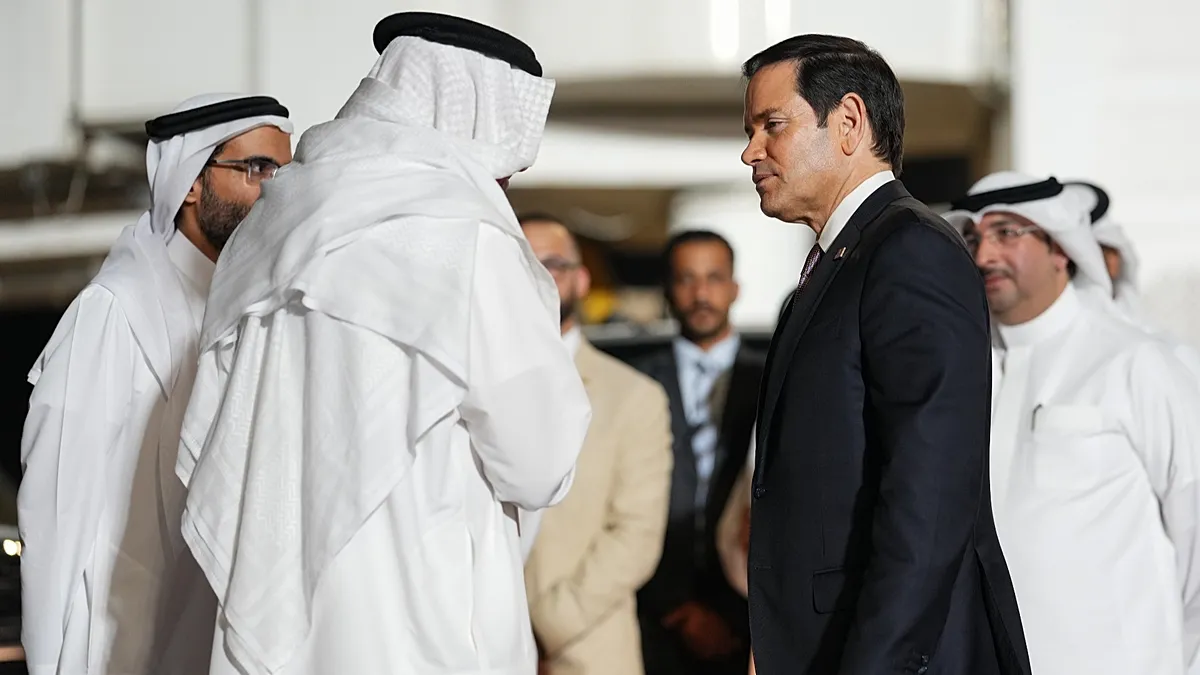
Gulf states weigh living side by side – On Thursday, June 26, 2026, the Gulf Cooperation Council (GCC) nations convened in Manama for a summit that marked a significant shift in their approach to Iran. For the first time since the US-Iran framework deal was signed to end the war, these countries united to reaffirm their alliance with the United States and counter Tehran’s growing influence. The summit, attended by Saudi Arabia, the United Arab Emirates, Qatar, Kuwait, Bahrain, and Oman, was held in collaboration with US Secretary of State Marco Rubio. Their primary focus was to strengthen the US-GCC strategic partnership and ensure the return of unrestricted navigation in the Strait of Hormuz, a vital waterway for global trade.
The Gulf states emphasized their urgent economic concerns, which had become increasingly critical during the ongoing conflict. They sought clarity from the US on concrete steps to restore pre-war conditions in the strait, relying on President Donald Trump’s repeated assurances that Iran would not block maritime access. This move underscores the region’s reliance on the United States to mitigate the economic fallout of the war, particularly given Iran’s attempts to disrupt shipping routes through its military presence in the area.
Shared Goals and Strategic Priorities
The joint GCC-US statement highlighted a shared objective: preventing Iran from acquiring or developing a nuclear weapon. This aligns with Washington’s stated goal of containing Tehran’s nuclear ambitions, which have long been a point of contention. Additionally, the nations called for a comprehensive approach to address all of Iran’s threats, including its ballistic missile programs, drone capabilities, and support for regional proxies. These actions, they argued, are essential for achieving lasting peace and security in the Gulf.
“The ministers rejected any tolls, fees, or attempts to assert control over the Strait and welcomed the Sultanate of Oman and the International Maritime Organisation’s announcement on the launch of an evacuation plan for over 11,000 seafarers stranded in the region,” the US-GCC statement said.
The summit also addressed the issue of Iran retaining its missile stocks, a key point of contention in the framework deal. The Gulf states expressed concern that this allows Tehran to maintain a persistent threat to regional stability, even as negotiations progress. They stressed that Iran’s compliance with the Memorandum of Understanding (MOU) and the final agreement would be critical for any future economic cooperation.
Testing the Limits of the US-Iran MOU
The meeting coincided with renewed tensions in the Strait of Hormuz, as Iran’s Islamic Revolutionary Guard Corps (IRGC) challenged Trump’s position by asserting control over the waterway. The IRGC warned ships to obtain Iranian permits before crossing the strait, culminating in an attack on a cargo vessel late Thursday. This incident tested the boundaries of the US-Iran MOU, which aims to ensure safe passage for maritime traffic in the region.
Iran’s actions signal its intent to use Hormuz as a geopolitical leverage point, potentially sowing discord among Gulf nations. The strait’s strategic importance as a global chokepoint for oil exports has made it a focal point of conflict, with the Gulf states now voicing apprehension about Tehran’s ability to dominate its operations. The attack on the cargo ship was seen as a deliberate provocation, highlighting the IRGC’s readiness to assert dominance despite the US-Iran agreement.
Conditional Engagement and Regional Stability
While the GCC nations acknowledged the possibility of future economic ties with Iran, they made it clear such engagement would be conditional. The joint statement emphasized that Iran must comply with the MOU and cease its destabilizing behavior to create the conditions for renewed cooperation. This stance reflects the Gulf states’ determination to balance pragmatism with principle, ensuring that any agreements with Iran serve the region’s long-term interests.
Rubio, during his brief visit to the Gulf, downplayed the debate as a matter of semantics. He argued that the focus should remain on securing the safety of the GCC’s enduring allies. “You can call it a toll, you can call it a fee, at the end of the day it’s all semantics,” he said, aiming to reassure the Gulf states that security for their partners would not be compromised. The ministers, however, remained vigilant, underscoring the need for tangible actions to safeguard the region’s interests.
Broader Political Actions and Peace Negotiations
Expanding the scope of their political collaboration, the GCC nations and the US declared that peace negotiations are not contingent on the outcomes of other conflicts. This includes Iran’s insistence that Israel end its operations against Hezbollah in Lebanon. The Gulf states called for the full disarmament of Hezbollah, arguing that Lebanon’s sovereignty cannot be secured while non-state armed groups operate beyond its control. They also reaffirmed their support for Trump’s vision to end the Gaza conflict, stating that no one should be forced to leave the region and that freedom of movement must be guaranteed.
Their emphasis on Lebanon’s sovereignty ties into a broader strategy to stabilize the entire Middle East. By linking the peace process in Gaza with Lebanon’s internal security, the GCC aims to create a cohesive front against regional destabilization. This approach highlights the interconnected nature of conflicts in the area and the Gulf states’ desire to address them holistically.
The Path Forward
As the Gulf states and the US work to solidify their partnership, the focus remains on ensuring Hormuz remains a conduit for global trade rather than a battleground. The evacuation plan launched by Oman and the International Maritime Organisation is a critical step in alleviating the immediate crisis, but long-term solutions require sustained diplomatic efforts. The joint statement serves as a blueprint for future interactions, outlining a path where the Gulf states can coexist with Iran while maintaining their security and economic priorities.
The challenges ahead are considerable, but the unified response from the GCC and the US signals a renewed commitment to regional stability. As Iran continues to test the limits of the MOU, the Gulf states remain resolute in their demands, ensuring that any compromise with Tehran does not come at the expense of their allies or their strategic interests. This summit marks not just a response to current tensions, but a pivotal moment in shaping the Gulf’s future in the evolving Middle East landscape.