France Takes Nuclear Reactors Offline Amid Record Heatwave
France takes nuclear reactors offline amid – As scorching temperatures grip much of Europe, France’s energy provider, Électricité de France (EDF), has taken steps to mitigate environmental impact by temporarily halting operations at two nuclear reactors. The decision comes amid a heatwave that has already claimed lives and disrupted daily activities across the country. With temperatures soaring to unprecedented levels, the nation’s power grid faces mounting pressure, prompting EDF to adjust its strategy to safeguard ecosystems and maintain stability.
Heatwave Claims Lives and Sparks Warnings
At least 18 heat-related fatalities have been confirmed in France as of Monday, with the death toll expected to rise. The extreme weather has also led to at least 40 drowning incidents since June 18, highlighting the dual threats posed by the sweltering conditions. Health authorities have issued urgent alerts, urging citizens to take precautions such as limiting sun exposure and staying hydrated. Meanwhile, the environmental impact of the heatwave is becoming evident, particularly on France’s nuclear infrastructure.
“France has sufficient generation capacity to meet electricity demand, including in the event of outages at certain production facilities,” stated France’s grid operator RTE on Wednesday.
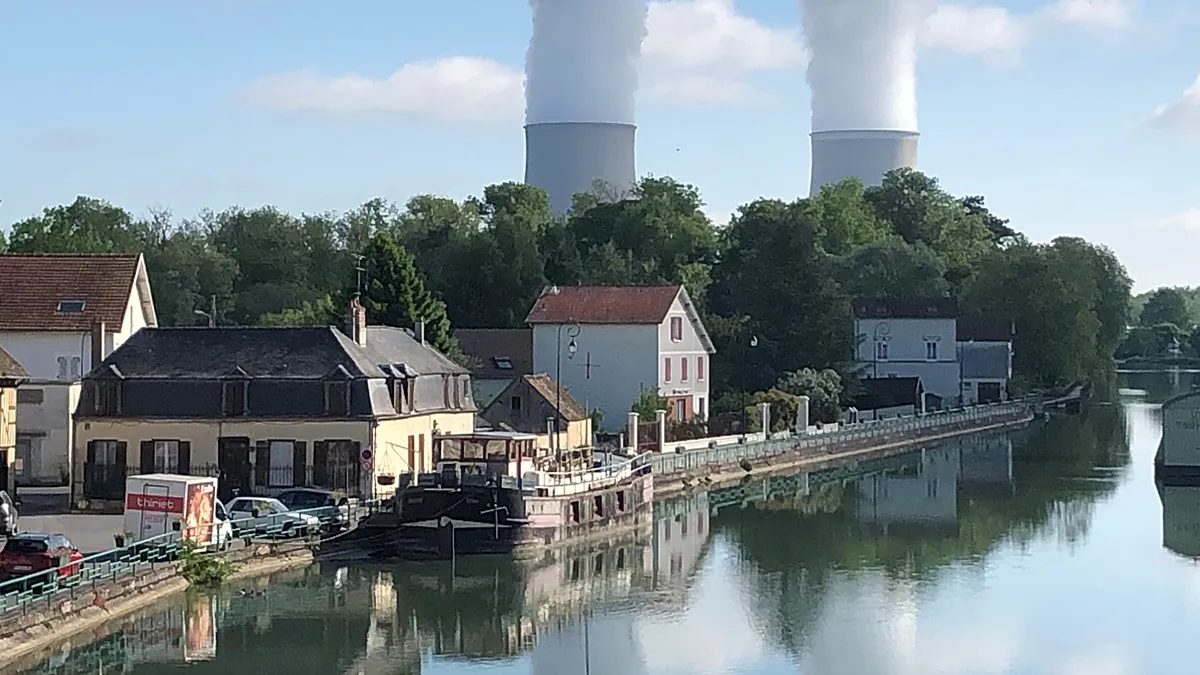
The reactors at the Nogent-sur-Seine plant near Paris and the Bugey facility southeast of Lyon were both shut down on Thursday due to rising river temperatures. EDF, which operates France’s 57 nuclear reactors, is legally obligated to monitor water temperatures in rivers to prevent discharges that could harm aquatic life. During the heatwave, these waterways have warmed rapidly, forcing operators to reduce output at key sites to stay within permitted limits.
Impact on Water Cooling Systems
Nuclear power plants rely on river water to cool their reactors before releasing it back into the environment. Typically, the discharged water is 0.1 to several degrees warmer than when it was drawn, depending on the location. However, during heatwaves, natural water temperatures can climb beyond safe thresholds, necessitating immediate action. At the Nogent-sur-Seine plant, one reactor had already been scaled back earlier in the week to minimize temperature differences between intake and discharge water, protecting aquatic ecosystems from thermal stress.
EDF also reduced output at the Golfech plant on the Garonne River in southwestern France, as well as at multiple other sites. These adjustments are part of a broader effort to balance energy production with environmental protection. While the temporary shutdowns may affect power generation, officials insist the nation’s energy reserves are adequate to meet current needs. “We are prepared to manage fluctuations in supply without compromising grid stability,” RTE emphasized in its latest update.
Broader European Heat Crisis
The heatwave is not confined to France, with neighboring countries like Germany, Spain, Portugal, and Switzerland also bracing for blistering temperatures. In cities such as Paris and Brussels, train services have been scaled back to reduce the risk of overheating, while schools have closed early or shut down entirely. The situation is particularly dire in the Mediterranean region, where meteorologists predict temperatures could reach 43°C, exacerbating the strain on energy systems and public health.
This is the third heatwave of the year in Europe, a trend that scientists warn is intensifying. A recent study revealed that parts of the continent are now experiencing up to 40 additional days of extreme heat stress compared to the 1970s. Such prolonged periods of high temperatures are not only affecting human health but also challenging the resilience of critical infrastructure, including power plants and transportation networks.
France has placed more than half of its 96 administrative departments under a red alert for danger to life, urging citizens to take extreme caution. Météo-France reported that June 23 marked the hottest day recorded since measurements began in 1947, underscoring the severity of the current event. As the crisis unfolds, the interplay between energy production and environmental safeguards is coming under scrutiny, with EDF’s actions serving as a case study in adaptive management.
Despite the temporary outages, France’s energy sector remains confident in its ability to maintain supply. RTE highlighted that the country’s nuclear reactors, which contributed nearly 70% of its electricity generation last year, are not the only sources of power. However, the heatwave has exposed vulnerabilities in the system, particularly in regions where water temperatures have spiked. “We must prioritize both energy security and ecological balance,” said an EDF spokesperson, emphasizing the dual challenges facing the nation.
Looking Ahead: Climate Patterns and Future Risks
As the heatwave continues, experts caution that the pattern of extreme weather is likely to persist. Last year’s June and July heatwave saw daily power demand surge by up to 14%, leading to a significant rise in electricity prices. This year’s crisis could mirror or even surpass those figures, placing further stress on both the environment and the economy. The situation also raises questions about the long-term viability of nuclear power in a warming world.
For EDF, the shutdowns at Nogent-sur-Seine and Bugey are a necessary but temporary measure. The company has reiterated that it is working closely with environmental agencies to monitor conditions and adjust operations accordingly. Yet, the incident highlights the growing pressure on energy providers to adapt to climate change. With temperatures projected to rise further, the nation may need to implement more frequent shutdowns or invest in alternative cooling methods to prevent ecological damage.
As the heatwave lingers, the impact on France’s energy infrastructure and daily life will likely deepen. From health warnings to transport disruptions, the effects are already visible. The coming weeks will be crucial in determining how effectively the country can manage these challenges while maintaining its reliance on nuclear power as a cornerstone of its energy strategy.