Kazakhstan Concludes Brussels Visit with €10 Billion in European Business Deals
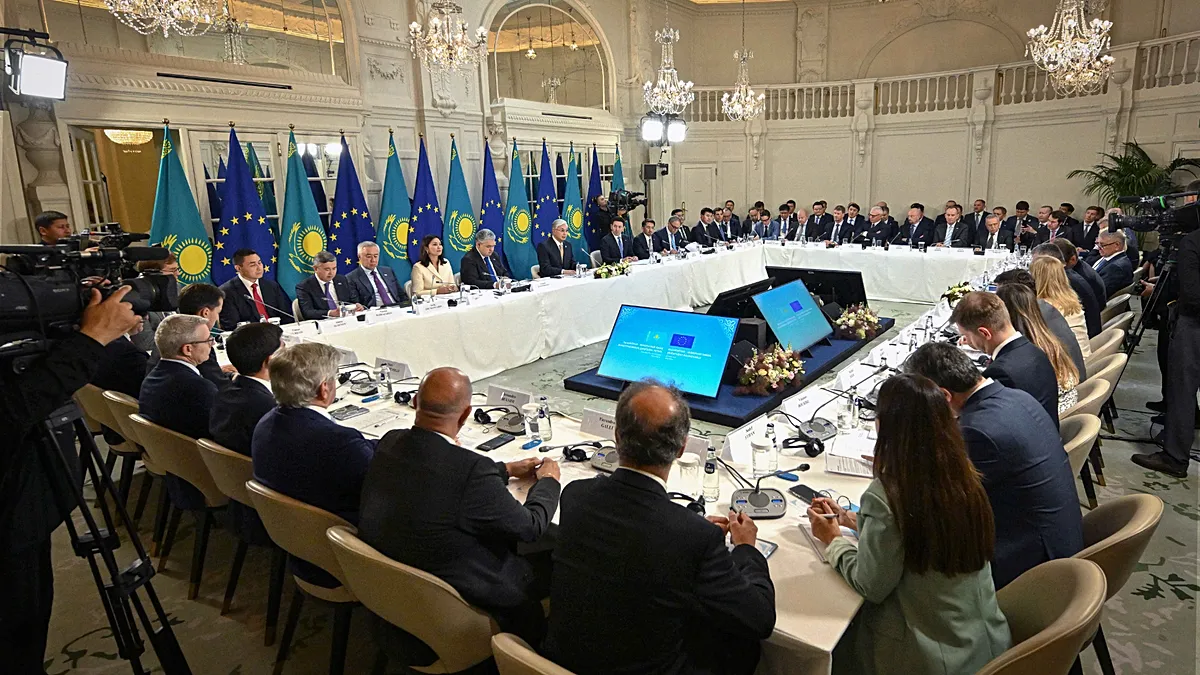
Kazakhstan signs 10bn in deals – During a pivotal trip to Brussels, President Kassym-Jomart Tokayev concluded his engagement with European counterparts by hosting a major business forum. This event brought together Kazakh business executives, government officials, and European industry leaders, resulting in the signing of commercial agreements valued at approximately €10 billion. The summit underscored Kazakhstan’s growing role as a central hub for trade and investment, with European companies playing a critical part in the country’s economic landscape.
A New Chapter in EU-Central Asian Collaboration
The visit followed a landmark summit held in Samarkand, Uzbekistan, a year earlier, where EU leaders and Central Asian nations agreed to deepen their partnership. At that gathering, European Commission President Ursula von der Leyen highlighted the potential for collaboration across energy, tourism, trade, and transport sectors. She announced a €12 billion investment initiative, emphasizing the EU’s commitment to fostering growth in the region. “This will bring together investments from our European Union and member states. We call it a Team Europe approach. And it will launch a new pipeline of projects to Central Asia. This is truly the start of a new era in our ancient friendship,” von der Leyen stated, alongside European Council President Antonio Costa.
Strategic Position and Global Connectivity
One year later, during the Brussels meetings, von der Leyen and Costa reaffirmed their belief in Kazakhstan’s strategic importance. The country’s location on the Middle Corridor—connecting Europe to China and East Asia—has made it a vital link in global supply chains. Von der Leyen noted on X that “Kazakhstan and Central Asia as a whole, is a natural global gateway,” and highlighted efforts to transform this role into a pathway for economic development. “Today we will discuss how Global Gateway can bring our regions closer together. Turning a gateway into a pathway for jobs, opportunity and prosperity,” she added, underscoring the EU’s focus on leveraging Kazakhstan’s geography for mutual benefit.
Infrastructure Investments and Trade Growth
A key theme of the visit was the expansion of interconnectivity. Kazakhstan, as a central node in the Middle Corridor, manages 13 international transit routes—road, rail, and maritime—that have seen significant growth. Over the past six years, cargo volumes on these corridors have surged fivefold, rising from 800,000 to 4.1 million tonnes annually. The country aims to further boost capacity to 10 million tonnes, positioning itself as a critical artery for global logistics. To support this goal, Kazakhstan has allocated over $35 billion in transport and logistics infrastructure since 2010, a testament to its long-term vision for economic integration.
Breaking Barriers: Key Agreements Signed
The Brussels summit yielded five major agreements, addressing remaining challenges in cross-border trade. Among these was the Horizontal Aviation Agreement, which aims to streamline air travel between the EU and Kazakhstan. This pact allows any EU airline to operate flights to the 17 member states without prior bilateral air service agreements, replacing previous restrictions that limited routes to carriers owned by nationals of specific countries or Kazakhstan itself. “This milestone reflects our shared commitment to strengthening cooperation, enhancing connectivity between our regions, and bringing our people and economies closer together,” said Apostolos Tzitzikostas, the European Commissioner for Sustainable Transport and Tourism.
Tzitzikostas also emphasized the agreement’s potential to foster growth. “By opening new opportunities for air services, the pact will support exchanges, investment, and economic development on both sides,” he added, outlining plans to expand the aviation partnership in the years to come. These agreements are part of broader efforts to solidify the EU’s presence in Kazakhstan, with the goal of creating seamless links between the region and Europe.
Visa Reforms to Facilitate Movement
Another notable outcome of the visit was a commitment to simplify the visa process for Kazakh citizens traveling to Europe. While Schengen visas remain necessary, the reforms will lower costs, reduce processing times, and standardize required documentation across EU member states. This change is expected to enhance mobility for Kazakh professionals and tourists, easing the flow of people and ideas between the two regions.
European Partnerships and Economic Resilience
President Tokayev, during the forum, acknowledged the EU’s role as Kazakhstan’s largest trading and investment partner. He stated that the European Union accounts for nearly half of all foreign direct investment entering the country, with bilateral trade surpassing $45 billion in the previous year. “Nearly 4,000 European companies already operate in Kazakhstan, and they are long-term trusted partners,” Tokayev noted, praising the collaboration that has driven progress in the region.
Tokayev also highlighted the importance of European support in navigating global uncertainties. “Kazakhstan stands ready to assist Europe in its industrial transformation, using its resources to drive stability amid supply chain disruptions and economic volatility,” he said. The partnership, he argued, is essential for securing long-term growth and resilience in both regions.
Looking Ahead: A Pathway for Prosperity
The forum marked a critical step in advancing the EU’s vision for Central Asia, as outlined during the Samarkand summit. By addressing logistical bottlenecks and fostering closer ties, the agreements aim to solidify Kazakhstan’s role as a bridge between continents. The European Commission’s investment package and the Team Europe strategy have already catalyzed projects in energy, transport, and trade, with the Brussels visit serving as a milestone in their implementation.
As the two sides look to the future, the focus remains on expanding infrastructure, reducing trade barriers, and enhancing people-to-people connections. The €10 billion in signed deals represents a tangible outcome of this collaboration, showcasing the potential for mutual growth. With the Middle Corridor’s capacity projected to reach 10 million tonnes, Kazakhstan is poised to become a cornerstone of Eurasian economic integration, supported by the EU’s strategic investments and shared ambitions.
In summary, the Brussels visit highlighted the deepening ties between Kazakhstan and Europe, with the business forum acting as a platform to translate pledges into action. From air connectivity to visa reforms, the agreements signed reflect a commitment to fostering a more integrated and prosperous future for both regions. As Tokayev concluded, the partnership is not just about economic gains but also about building a lasting framework for collaboration in an ever-changing global landscape.