SZA Condemns AI Music for Using Her Work Without Permission
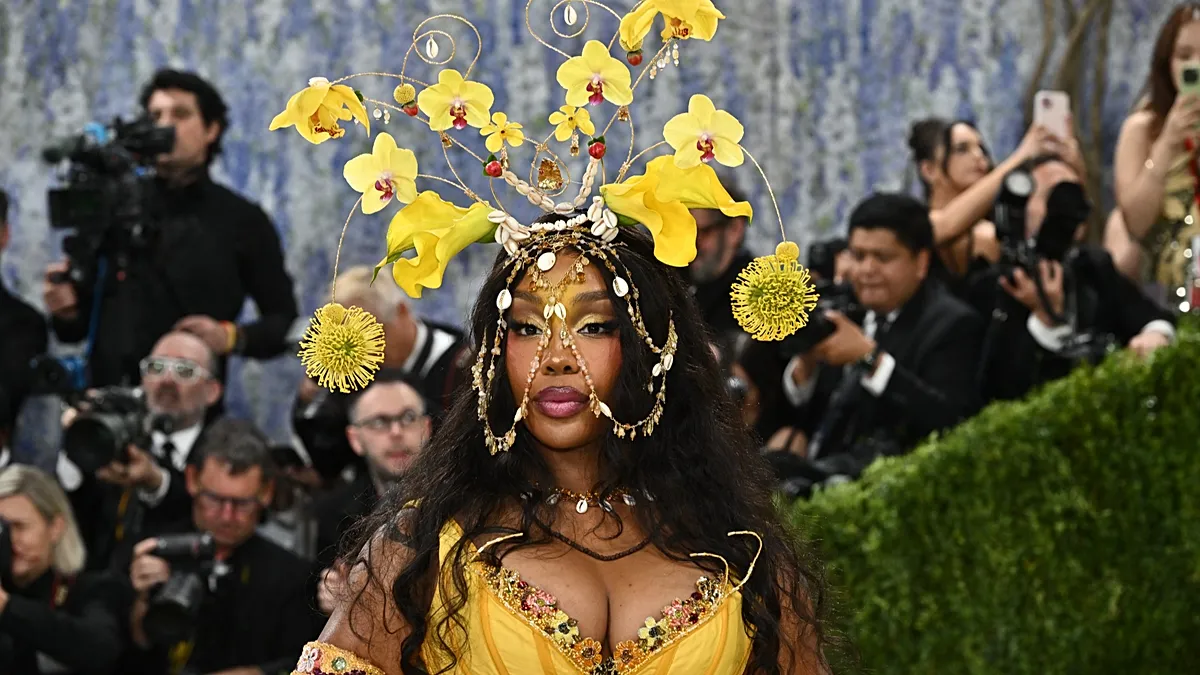
SZA hits out at disgusting AI music – Grammy-winning American singer-songwriter SZA has voiced strong criticism toward AI technology and its creators, calling the practice of using her music in training data “disgusting.” The 36-year-old artist, known for hits like “Kill Bill” and “Luther” with Kendrick Lamar, discovered that over 200 of her songs had been incorporated into AI training datasets. In a recent Instagram Stories post, she shared the results of a search on an AI music database, revealing that 238 of her tracks were being used to fuel machine learning models. “Checked and found that AI has trained on 238 of my songs,” she wrote. “I’m sure some of them are unreleased. If you’re a musician and you support this degenerate shit? You’re disgusting. There’s nothing you could ever say to me to make this okay. I hope you have the life you deserve,” she added, expressing her frustration with the lack of recognition for artists.
Targeting Specific Companies and Figures
SZA’s critique extended to specific entities, notably the AI music platform Suno and producer Diplo. In a subsequent post, she highlighted Diplo’s involvement with Suno, accusing him of holding equity in the company and actively training its models on the works of Black writers and producers. “Ionno who needs to hear this but Diplo has equity in Suno and is trying to train it on the best and brightest Black minds of writers and producers,” she wrote. “We make up 13% of the American population yet influence the world with our sound and perspective.”
She further questioned the imbalance, stating: “I AINT HEARD A WHITE AI SONG YET… why so disproportionate? We have no protection in legislative or creative spaces,” she continued. “The easiest to steal from. DO NOT GIVE AWAY YOUR VIBRANIUM!!! DO NOT TRAIN AI WITH YOUR GENIUS. F–k these weird a– vultures.” The term “vultures” underscores her view that AI developers are exploiting Black artists without fair compensation or acknowledgment.
Suno’s Defense of Its AI Music Generator
In response to SZA’s allegations, Jack Brody, Suno’s chief product officer, defended the company’s approach on LinkedIn. “At Suno, preserving artistry and human creativity is just as important as product innovation itself,” Brody stated. “We know it’s easy to be skeptical—especially if you haven’t actually immersed yourself in our product. But most of the people building Suno are musicians.”
He emphasized the company’s commitment to empowering creativity, not just corporate branding. “Empowering human creativity is why we show up, not just some corporate positioning,” Brody added. “We believe companies building AI have a responsibility to invest in safeguards with the same ambition and rigor they bring to their products.”
Brodys outlined the steps taken to protect intellectual property, including “clear rules prohibiting users from uploading or distributing content they don’t own or have the rights to use,” as well as “meaningful enforcement when those rules are violated.” The platform also collaborates with industry-standard providers like Audible Magic, Musixmatch, and ACRCloud to identify and prevent misuse. “From our earliest days, we worked to build protections directly into the foundation of our platform,” he said. “That includes rules against unauthorized content, enforcement mechanisms, and partnerships with trusted services to ensure compliance.”
Addressing concerns about AI replication, Brody stated: “One of the most common questions people ask about AI is whether models can reproduce material from their training data. Our answer is simple: no, that should not happen. Our philosophy has always been that AI should help people create new music, not replicate someone else’s.” He explained that Suno’s models are designed with “Original Creation, By Design” strategies to reduce the risk of generating unauthorized reproductions. “For example, we do not use artist names as a category of training metadata,” he wrote. “That means we intentionally avoid teaching models to mimic existing artists, aiming instead to help users craft entirely new compositions.”
Historical Context of SZA’s AI Criticisms
SZA’s disdain for AI is not a new development. In March, she told i-D Magazine that she feels “at war because of AI,” citing its disproportionate impact on Black music. “It’s happening disproportionately with Black music,” she explained. “Why am I hearing AI covers of Olivia Dean when Olivia Dean just came the fuck out? She can’t even collect the streams.” She criticized the AI-generated versions of Black artists for sounding overly familiar, calling them “weird, stereotypical struggle music.”
Her concerns have also been tied to environmental and social justice. Last year, she accused AI users of being “codependent on a machine,” urging them to research the energy and pollution costs of running AI systems. “Please Google how much energy and pollution it takes to run AI,” she said. “Please Google the beautiful Black cities like Memphis that are SUFFERING because of Twitter’s new AI system.” She warned that Black and Brown communities will bear the brunt of AI’s impact, stating: “AI doesn’t give a fuck if you live or die. I promise. There is a price for convenience, and Black and Brown [communities] will pay the brunt of it every time,” she added, highlighting the systemic nature of the issue.
SZA’s public stance reflects a growing concern among musicians about the ethical implications of AI. While companies like Suno argue that their platforms are designed to support creativity, she sees the process as a form of exploitation. Her messages blend personal frustration with broader social commentary, framing AI as a tool that not only appropriates artistic work but also perpetuates racial and environmental inequalities. By using vivid language and targeted accusations, she aims to draw attention to the need for stronger protections and more equitable practices in the evolving AI music landscape.
Call to Action for Artists and Industry Stakeholders
Through her posts, SZA has called on both artists and industry leaders to reconsider their support for AI systems. She challenges musicians to recognize the potential harm of allowing their work to be used without consent or compensation. “If you’re a musician and you support this degenerate shit? You’re disgusting,” she reiterated, urging a collective reevaluation of the ethical standards in AI development. Her words resonate with a community that feels increasingly marginalized by technology that prioritizes efficiency over fairness.
Her critique is part of a larger conversation about ownership and representation in the digital age. By highlighting the overuse of Black music in AI training, she emphasizes the importance of cultural preservation and the need for legislative safeguards. “We have no protection in legislative or creative spaces,” she said, underscoring the vulnerability of Black artists in an industry dominated by AI. This sentiment is echoed in her demand for accountability: “DO NOT TRAIN AI WITH YOUR GENIUS,” she urged, framing the issue as a battle for creative rights and recognition.
As AI continues to reshape the music industry, SZA’s voice serves as a reminder of the human stories behind the algorithms. Her frustration highlights a gap between technological innovation and the voices it seeks to amplify. By blending personal experience with systemic critique, she challenges the industry to rethink its approach to AI and ensure that the contributions of Black artists are not erased or exploited in the process. Her message, though fiery, carries the weight of a deeper concern: the future of artistry in an age where machines can replicate human creativity without credit or care.